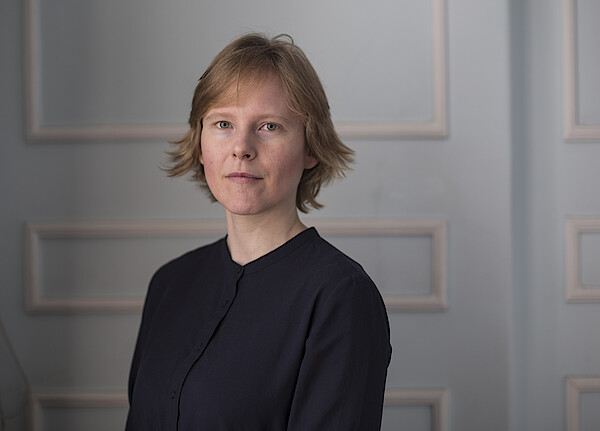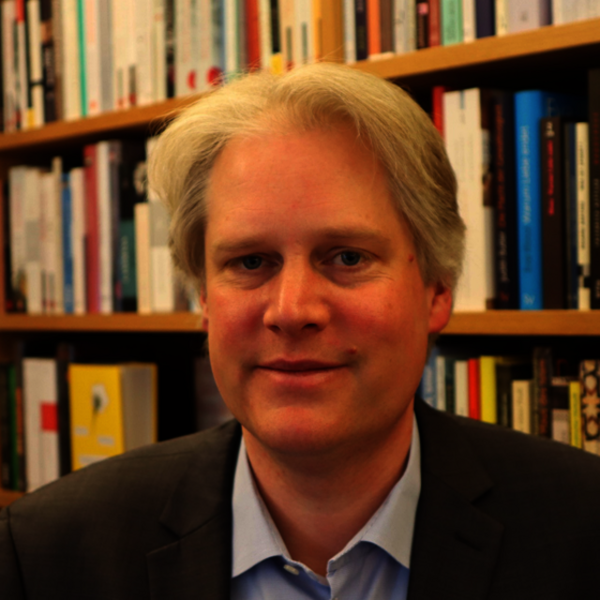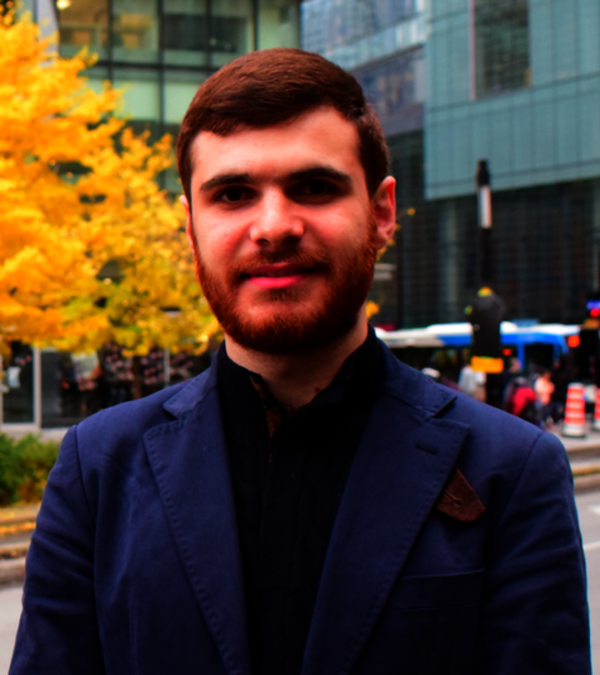
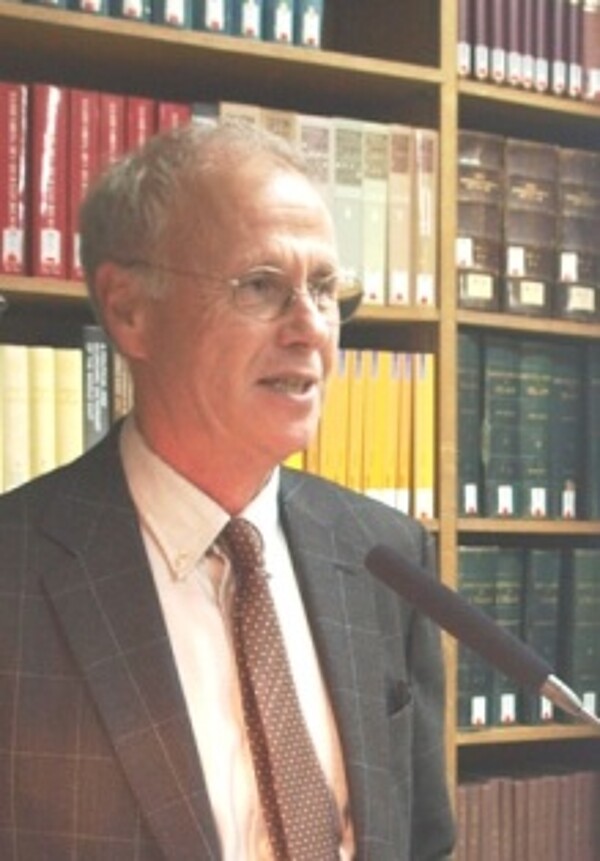
Stefan Leder is Professor of Arabic and Islamic Studies at Martin-Luther-University in Halle/Germany and was the director of the Orient-Institut Beirut from October 2007 to September 2017, including the institute's Istanbul branch (Orient-Institut Istanbul) till 2010.
Prior to his engagement with the OIB, he was chairman of interdisciplinary research institutions funded by the DFG (German Research Foundation) and by his home university. His research topics combine history, literature & textuality, applying text criticism, discourse analysis and intertextual analysis. His published work covers Arabic historiography, with particular attention given to narrativity; Islamic Tradition under the perspectives of authority of knowledge, transmission and moral politics; and the Bedouin patrimony in Arabic thought and discourse. He also writes on the history of Oriental Studies in Europe. His current research projects concern medieval political literature, and the intellectual and political role of the Ayyubid chancery exemplified by the critical edition of al-Qadi al-Fadil’s correspondence.
As head of Saladin's chancellery, al-Qāḍī al-Fāḍil (1135-1200) designed and carried out diplomatic correspondence, engaged in the organization of state finances and politics, and entertained an extensive literary communication with most of the conspicuous intellectuals of his time.
Political thought in the Middle East, nourished by the traditions of Antiquity and of Asiatic, mainly Iranian, Indian and of Arabic origins, elaborated a variety of conceptual frameworks. Political philosophy, teachings of wisdom, ethics, Islamic law and examples from history play an important part, but authors also discuss particular political matters.
Book
[Editor] Crossroads between Latin Europe and the Near East: Corollaries of the Frankish Presence in the Eastern Mediterranean (12th – 14th centuries). Istanbuler Texte und Studien 24. Würzburg 2011.
Episteme der Theologie Interreligiös. Religion und Offenbarung Dogma. Hrsg. von Stefan Leder. Beirut: Orient-Institut Beirut 2013
Episteme der Theologie Interreligiös. Schrift, Tradition und Dogma. Hrsg. von Stefan Leder. Beirut: Orient-Institut Beirut 2012
Journal Article
Sultanic rule in the mirror of medieval political literature. In: Neguin Yavari, Regula Forster (eds.): Global Medieval: Mirrors for princes revisited, Harvard: Harvard University Press (Ilex Foundation) 2015, 93-111.
Nasab as Idiom and Discourse. In: The Arab East and the Bedouin Component. From the Ottoman Period to the 20th Century = Journal of the Economic and Social History of the Orient 58 (2015), 56-74.
Towards a historical semantic of the Bedouin, 7th to 15th centuries: A survey. In: The Arab East and the Bedouin Component. From Late Antiquity to the Ottoman Period = Der Islam 92 (2015), 85-123.
Max Weber in der arabischen Welt, in: Max Weber Stiftung (Hrsg.): Max Weber in der Welt. Tübingen: Mohr Siebeck 2013, 24-31.
Religious texts and the Islamic purity regime. In: Matthias Bley, Nikolas Jaspert, Stefan Köck (eds.): Discourses of purity in transcultural perspective (300–1600). Leiden: Brill 2015 (Dynamics in the history of religion 5), 285-296.
Gewalt der Ordnungen: Religiöses Recht, politische Herrschaft, tribale Ordnung. In: Jörg Rogge, Martin Kintzinger (Hg.), Gewalt und Widerstand in der politischen Kultur des späten Mittelalters. Ostfildern: Jan Thorbecke 2014 (= Vorträge und Forschungen 80), 83-98.
Sunni Resurgence, Jihād Discourse and the Impact of the Frankish Presence in the Near East. In: Crossroads between Latin Europe and the Near East. Würzburg 2011, p. 81-101.
Research Associate; Coordinator “LAWHA”
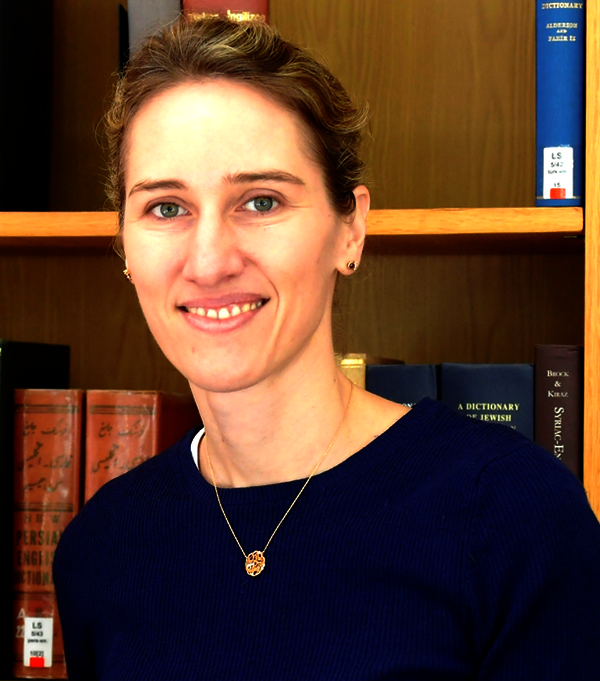
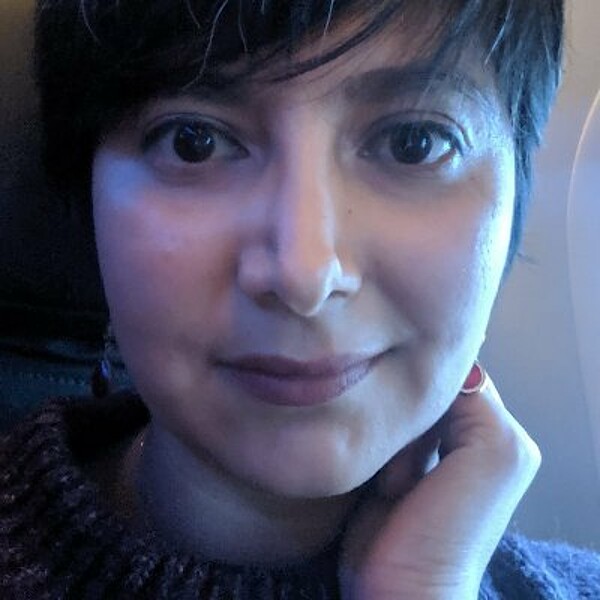
Nadia von Maltzahn is the Principal Investigator of the ERC-funded project "Lebanon's Art World at Home and Abroad: Trajectories of artists and artworks in/from Lebanon since 1943 (LAWHA)".
Nadia von Maltzahn is the Principal Investigator of the ERC-funded project "Lebanon's Art World at Home and Abroad: Trajectories of artists and artworks in/from Lebanon since 1943 (LAWHA)", which has started in October 2020. She joined the OIB in 2013, first as a research associate (2013-2018) before being appointed deputy director (2018-2020, partly on parental leave).
Nadia’s publications include The Art Salon in the Arab Region: Politics of Taste Making, co-edited with Monique Bellan (Beiruter Texte und Studien 132, 2018), The Syria-Iran Axis: Cultural Diplomacy and International Relations in the Middle East (I.B. Tauris, 2013/2015), and other publications revolving around cultural practices in Lebanon and the Middle East. She holds a DPhil and an MSt in Modern Middle Eastern Studies from St Antony's College, University of Oxford. She received her BA Honours in Middle Eastern and Islamic Studies from King’s College, Cambridge.
Nadia’s research interests include cultural policies, artistic practices and the circulation of knowledge. Her current research project, LAWHA, is about the forces that have shaped the emergence of a professional field of art in Lebanon within its local, regional and global context, against the background that Lebanon is regularly portrayed as a country with weak public institutions but vibrant cultural sector. It follows up from her previous research project at the OIB, which has dealt with cultural policies in Lebanon, looking in particular at cultural institutions and their role in the public sphere.
This project is about the forces that have shaped the emergence of a professional field of art in Lebanon within its local, regional and global context, against the background that Lebanon is regularly portrayed as a country with weak public institutions but vibrant cultural sector. The project proposes a shift of perspective in approaching Lebanon’s art world by focusing on the multi-dimensionality of artists’ individual trajectories. LAWHA aims to identify new methods on how to interrelate context and artistic production, to serve as a model for revisiting art histories in contexts where institutionalized local art histories are largely absent.
This project examines the relationship between cultural policies, cultural production and the public sphere, that is the relationship between political frameworks, institutional actors, cultural players and society.
(2013, 2015) The Syria-Iran Axis. Cultural Diplomacy and International Relations in the Middle East. London: I.B. Tauris.
OIS 6 (2021) Insights into Cultural Policies in Lebanon. Hanane Hajj Ali and Nadia von Maltzahn (eds.).
دراسات المعاهد الشرقية 6. نظرة حول السياسات الثقافية في لبنان. إعداد وتحرير حنان الحاج علي وناديا فون مالتسان
BTS 132 (2018) The Art Salon in the Arab Region: Politics of Taste Making. Nadia von Maltzahn and Monique Bellan (eds.). Beirut: Orient-Institut Beirut. View PDF (open access).
OIS 3 (2015) Divercities: Competing Narratives and Urban Practices in Beirut, Cairo and Tehran. Nadia von Maltzahn and Monique Bellan (eds.).
OIS 2 (2013) Inverted Worlds: Cultural Motion in the Arab Region. Syrinx von Hees, Nadia von Maltzahn and Ines Weinrich (eds.).
Krieger, Peter, Kuban, Zeynep, von Maltzahn, Nadia and Dogramaci, Burcu. “Kunstgeschichtliche Forschungspraxis in globalen Kontexten” Zeitschrift für Kunstgeschichte, vol. 85, no. 1, 2022, pp. 3-12. https://doi.org/10.1515/ZKG-2022-1002
Débats sur les politiques culturelles au Liban. Incertain regards. Cahiers dramaturgiques.HS3 (2021), 13-18.
Heritage, tourism, and the politics of national pride. The Baalbeck International Festival in Lebanon. Quaderni storici 2 (2019), 371-389. https://www.rivisteweb.it/doi/10.1408/96904.
The Museum as an Egalitarian Space? Women artists in Beirut's Sursock Museum in the 1960s and 1970s. Manazir 1 (2019), The Arab Apocalypse. Art, Abstraction & Activism in the Middle East, ed. Silvia Naef & Nadia Radwan: 70-82. https://www.manazir.art/files/8015/7228/3067/von_Maltzahn.pdf
Guiding the Artist and the Public? The Salon d'Automne at Beirut's Sursock Museum. In The Art Salon in the Arab Region: Politics of Taste Making. Edited by Nadia von Maltzahn and Monique Bellan. Beirut: Orient-Institut Beirut, 2018, 253-280.
Ministry of Culture or No Ministry of Culture? Lebanese cultural players and authority. Comparative Studies of South Asia, Africa and the Middle East (2018) 38 (2): 330-343. https://doi.org/10.1215/1089201x-6982101
"What Cultural Policies?" Explicit and Implicit Cultural Policies in Lebanon. Middle East - Topics & Arguments, 7 (2017), 75-84. http://meta-journal.net/article/view/5088
with Monique Bellan, Introduction. In Divercities: Competing Narratives and Urban Identities in Beirut, Cairo and Tehran (Orient-Institut Studies 3, 2015)
Cultural Exchange Within and Across the Eastern Mediterranean. In Dialogue in the Med: Exploring Identity through Networks. Valletta: Fondation de Malte, 2015, 145-162.
with Rana Yazaji. Syrian Culture in Turbulent Times. In Another Europe. Amsterdam: European Cultural Foundation, 2015, 440-463.
Governance of Culture in the Wake of the Arab Revolutions: Preliminary Observations on the Case of Egypt. In N. Belakhdar, I. Eickhof, A. el Khawaga, O. el Khawaga, A. Hamada, C. Harders and S. Sandri (eds.), Arab Revolutions and Beyond: Change and Persistence. (Working Paper No.11, August 2014), 225-240.
One Side of the Coin: The Official Sphere of Syrian-Iranian Cultural Relations. Orient II (2014), 12-15.
with Rana Yazaji. Syrian Culture in Turbulent Times. In Cultural policy and management Yearbook 2012-2013. Istanbul: Istanbul Bilgi University Press, 2014, 35-46.
Kulturforschung: Die arabische Gruppe für Kulturpolitik. In itb infoservice, 6. Schwerpunktausgabe 05/13, 36-37.
Iran’s Cultural Diplomacy. In H.E. Chehabi, C. Therme and F. Khosrokhavar (eds.), Iran and the Challenges of the Twenty-First Century. (Costa Mesa, CA: Mazda, 2013).
The Case of Iranian Cultural Diplomacy in Syria. Middle East Journal of Culture and Communication 2 (2009), 1-18.
Reviews. Iranian Studies, 42:2 (2009), 347-352. Book review of Syria and Iran. Diplomatic Alliance and Power Politics in the Middle East by J. Goodarzi.
Co-applicant with Peggy Levitt (Wellesley College), Sonja Mejcher-Atassi, and Kirsten Scheid (both AUB): Summer School “Moving Biography”, Volkswagen Foundation, 47960 EUR, 1–8 June 2022.
Principle Investigator: “LAWHA – Lebanon’s Art World at Home and Abroad: Trajectories of artists and artworks in/from Lebanon since 1943”, European Research Council (ERC) Starting Grant, 1498813 EUR, 2020–25.
Co-applicant with Hanane Hajj Ali: Publication of short research studies “Insights into Cultural Policies in Lebanon”, Al Mawred Al Thaqafy, 10000 USD, 2015–20.
Symposium: “Contextualising the Art Salon in the Arab Region”, Volkswagen Foundation, Programme “Research in Museums”, 13600 EUR, 2017–18.
Co-organiser, International Summer School “Moving Biography”, Beirut, Lebanon (in cooperation with the American University of Beirut and the Global (De)Centre and funded by the Volkswagen Foundation), 2022.
Co-organiser, Symposium “Contextualising the Art Salon in the Arab Region”, Beirut, Lebanon (in cooperation with the Sursock Museum and funded by the Volkswagen Foundation), 2017.
Co-organiser, Panel “Circulations of Exhibition Practices between Asia and Europe and Mechanisms of Canon Building” at 33. Deutscher Orientalistentag, Friedrich-Schiller-Universität Jena, 2017.
Co-organiser, Panel “The Art Salon in the Arab Region – Migration of institutional patronage and its challenges” at the annual conference of the Italian Society for Middle Eastern Studies (Part I) and Annual conference of the Middle East Studies Association of North America (Part II), 2016.
Co-organiser, Panel “Pushing the Status Quo – Liberation in art and cultural practices in the modern Middle East”, at the annual conference of the British Society for Middle Eastern Studies, London, UK, 2015.
Co-organiser, Conference “DiverCities: Contested Space and Urban Identities in Beirut, Cairo and Tehran”, OIB in cooperation with the Goethe Institut Lebanon, 2013.
Organiser, “Inverted Worlds: Congress on Cultural Motion in the Arab Region”, OIB, 2012.
„Ein Brief des Künstlers Vladimir Tamari. Exil, Freundschaft und die Rolle von Ephemera in der Kunstgeschichtsschreibung“, at the workshop “dis:connected objects“, Kaethe Hamburger Research Centre global dis:connect, 15 June 2022, Munich.
“Boycotting the Museum: Power relations and canon-building in Lebanon”, at the series of encounters “Visiting (In)Visible Museums, Session 2: The Construction of Art Canons in and around the Nicolas Sursock Museum”, Sursock Museum, 29 April 2022, Beirut.
“A Thoughtful Exaggeration: Lebanon’s Early Independence Period through the Eyes of Diran”, Templeton Colloquium in Art History, “Of Satire and Bigotry: Press Culture, Women’s Rights, and Liminal Modernity in West Asia”, UC Davis Manetti Shrem Museum of Art, 25 February 2022, Davis CA. (Watch here)
“Lebanese Cultural Players and Authority: Ministry of Culture or No Ministry of Culture?”, lecture at the Arab-German Young Researchers Exchange “Cultural Policy & Cultural Mediation in Transforming Societies”, 23 October 2018, Beirut.
“Researching Cultural Policies: Achievements and challenges in Lebanon”, workshop at the Arab-German Young Researchers Exchange “Cultural Policy & Cultural Mediation in Transforming Societies”, 18–24 October 2018, Beirut.
“The Museum as a Platform for Emancipation? Women artists in Beirut’s Sursock Museum”, at the Etel Adnan Symposium “‘The Arab Apocalypse’: Art, Abstraction and Activism in the Middle East”, Zentrum Paul Klee, 27-28 September 2018, Bern.
“Archivisme as a local disease or communicating the National Library project”, at the conference “Performing Human Rights: Contested Amnesia and Historical Justice in Latin America and the Middle East”, 28-29 June 2018, Zurich.
“Cultural Policies in Lebanon: Cultural institutions between state and society”, as part of the workshop “Area Knowledges and Disciplinary/Interdisciplinary Knowledge”, Max-Weber-Kolleg, 18-21 June 2018, Erfurt.
“Débats sur les politiques culturelles au Liban”, at the conference « Combats pour la culture, Combats de la culture », Lebanese University and Université Aix-Marseille, 8-9 December 2017, Beirut.
“Art Institutions and Canon-building in Lebanon: Beirut’s Sursock Museum”, at Oxford Middle East Studies at 60, St Antony’s College, University of Oxford, 15-16 September 2017, Oxford.
“Der Kunstsalon als egalitärer Raum? Der Salon d'Automne des Sursock Museums in Beirut”. Presentation at the research colloquium Gender Studies, University of Zurich, 3 May 2017, Zurich.
“Beirut’s Sursock Museum – Building a Canon of Lebanese Art?” Seminar at the working group “Imagining the Global: Ideas, people and culture on the move”, Studienstiftung Gesellschaftswissenschaftliches Kolleg Gesellschaftswissenschaftliches Kolleg der Studienstiftung, 28 March 2017, Ellwangen.
“Research in the Heart of Beirut: Researching cultural policies at the Orient-Institut Beirut”. Evening lecture at the Gesellschaftswissenschaftliches Kolleg der Studienstiftung, 27 March 2017, Ellwangen.
“The Salon d'Automne at the Sursock Museum”. Presentation at public talk on “The Art Salon in the Arab Region”, Sursock Museum, 26 January 2017, Beirut.
“Overview of the Cultural Policy Context in the Arab Region and State of the Arts”. Keynote lecture at 9th^ ENCATC Young Researchers' Forum, 16 December 2016, Brussels.
“Cultural Policies and Cultural Activism in Lebanon – An Exception?” Seminar at the Tri-National Research Atelier “The Role of Arts in Transitional Tunisia – Rethinking cultural policy & international cultural relations”, University of Hildesheim, University of Tunis and University Hassan II Casablanca, 22-28 November 2016, Tunis.
“Cultural Policy and International Cooperation in the Arab World: Lebanon.” Satellite Beirut 2016, International Network for Contemporary Performing Arts (IETM), 6-9 October 2016, Beirut.
“Ministry of Culture or No Ministry of Culture?‘ Lebanese Cultural Players and Authority.” Lecture at Université Saint-Joseph, 13 May 2016, Beirut.
“Cultural Diplomacy and Cultural Policies” (in Arabic). Tajamu'a al-Bahithat al-Lubnaniyat, 21 April 2016, Beirut.
“Saifi Village, Quartier des Arts ?” Rencontres ‘Espaces publics à Beyrouth: vie, mort, renaissance?’ (20-22 Mai 2015), Ifpo und Institut Français Liban, 16 Mai 2015, Beirut.
“Cultural Policies in Germany and the Arab Region”. Lecture at the Lebanese University, Master Professionnel en Médiation Culturelle, 16 Mai 2015, Beirut.
“Cultural Diplomacy: an introduction.” Lecture at Université Saint-Joseph, Faculty of Sociology, 15 April 2015, Beirut.
“The sociopolitical and cultural situation of Lebanon”. Lecture followed by a city tour as part of the programme “MENA/European Training in Culture and Creative Sector Management 2014/2015”, Institut Français Liban, 7 April 2015, Beirut.
“Cultural exchange within and across the Eastern Mediterranean”, International conference “Dialogue in the Med: exploring identity through networks. First Annual Valletta 2018 International Conference on Cultural Relations in Europe and the Mediterranean”, Valletta 2018 Foundation, 4-5 September 2014, Valletta.
“Bürger, Blogger, Botschafter: Diplomatie im 21. Jahrhundert”. Participation 1st^ Weber World Café of the Max Weber Stiftung and the Forum Transregionale Studien, 28 April 2014, Bonn.
“Understanding Social and Cultural Challenges for Arab Countries”, ENCATC Academy on Cultural Relations & Diplomacy, Focus: Middle East, North Africa & Arabian Peninsula, 22 November 2013, Brussels.
“Cultural Diplomacy and Regional Relations in the Contemporary Middle East”, German Science Day 2013, 16 November 2013, Cairo.
“Iran’s Cultural Diplomacy”, conference “Iran Confronting 21st^ Century Challenges”, Graduate Institute of International Studies Geneva, June 2010, Geneva.
Affiliated Researcher
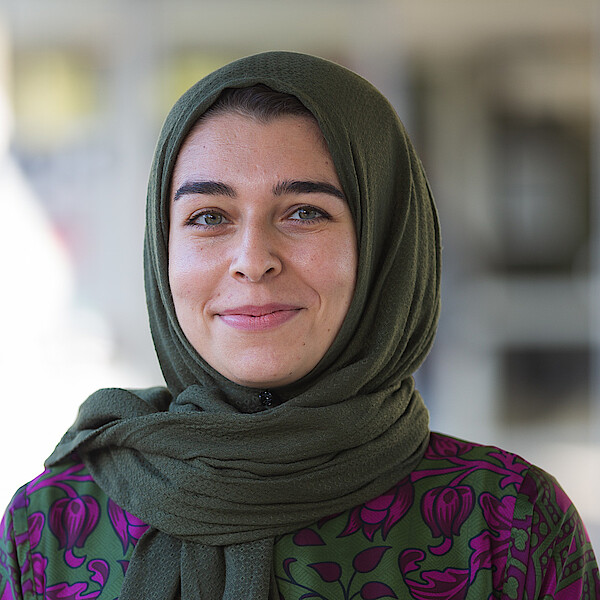
Monique Bellan works as a postdoctoral researcher in the LAWHA project. She previously worked as research associate at the Orient-Institut Beirut (2013-2019) where she examined aesthetic reflection and art critique in twentieth-century Lebanon and Egypt. She also worked at the collaborative research centre Aesthetic Experience and the Dissolution of Artistic Limits at Freie Universität Berlin and the Performing Arts Section of the Academy of Arts in Berlin
She holds a PhD in Arabic Studies from Freie Universität Berlin, an MA in Islamic Studies, Sociology and Political Science from the University of Bonn, and an MA in Library and Information Science from Humboldt Universität zu Berlin. Within LAWHA she focuses in particular on exhibition practices, art critique and the database and digital platform (DDP).
Monograph
Bellan, Monique. Dismember remember: Das anatomische Theater von Lina Saneh und Rabih Mroué. Wiesbaden: Reichert 2013.
Edited Volumes
Bellan, Monique; Drost, Julia (eds.). Surrealism in North Africa and Western Asia: Crossings and Encounters. Beirut: Beiruter Texte und Studien 2021.
Maltzahn, Nadia von; Bellan, Monique (eds.). The Art Salon in the Arab Region: Politics of Taste Making. Beirut: Beiruter Texte und Studien 2018.
View PDF (open access).
Maltzahn, Nadia von; Bellan, Monique (eds.). Divercities: Competing narratives and urban identities in Beirut, Cairo and Tehran. Orient-Institut Studies 3. Beirut: Orient-Institut 2015. Available at https://perspectivia.net//publikationen/orient-institut-studies/3-2015
Journal Articles and Book Chapters
Bellan, Monique “Modern art from the Arab region — Digitization as a chance? The research and database project LAWHA as a case study”. Magazén 2022. [forthcoming].
Bellan, Monique. “Embedded Chronicler: Victor Hakim”. Söntgen, Beate; Voss, Julia (eds.). Why Art Criticism? A Reader. Berlin: Hatje Cantz 2022. 158-164.
Bellan, Monique. “Three eccentric manifestos: Art et Liberté, the Arab Surrealist Movement in Exile and Habib Tengour´s “non-message”. Bellan, Monique; Drost, Julia (eds.). Surrealism in North Africa and Western Asia: Crossings and Encounters. Beirut: Beiruter Texte und Studien 2021. 31-50.
Bellan, Monique; Drost, Julia. “Introduction”. Bellan, Monique; Drost, Julia (eds.). Surrealism in North Africa and Western Asia: Crossings and Encounters. Beirut: Beiruter Texte und Studien 2021. 15-27.
Bellan, Monique. »Looking for a missing…« Auf der Suche nach dem Abwesenden in Rabih Mroués »The Pixelated Revolution«. Busch, Isabelle; Fleckner, Uwe; Waldmann, Judith (eds.). Nähe auf Distanz. Eigendynamik und mobilisierende Kraft politischer Bilder im Internet. Berlin/Boston: Walter de Gruyter 2020. 79-100.
Bellan, Monique. „Defying the Order from Within: Art et Liberté and its Reordering of Visual Codes”. Maltzahn, Nadia von; Bellan, Monique (eds.). The Art Salon in the Arab Region: Politics of Taste Making. Beirut: Beiruter Texte und Studien 2018. 135-164. View PDF (open access).
Bellan, Monique. „...ich bin sicher, dass es keine Grenzen gibt“ – Theatrale Dekonstruktionen bei Lina Saneh und Rabih Mroué. Jakiša, Miranda and Andreas Pflitsch (eds.). Jugoslawien, Libanon: Verhandlung von Zugehörigkeit in den Künsten fragmentierter Kulturen. Berlin: Kadmos 2012. 296–317.
Bellan, Monique. “Des représentations de l’histoire et de la mémoire dans l’art contemporain au Liban”. Mermier, Franck; Puig, Nicolas (eds.). Itinéraires esthétiques et scènes culturelles au Proche-Orient. Beyrouth: Institut Français du Proche-Orient 2007. 223–232. Available at https://books.openedition.org/ifpo/517
Other
Bellan, Monique. „Die multiplizierte Biografie“. Schauspielhaus Zürich Zeitung 2011.14–15.
Bellan, Monique. “Lina Saneh: Le Corps, champ de bataille/Lina Saneh: Body as Battleground”. Artpress. 2008 (341). 29–33.
Affiliated Researcher Thomas Scheffler was a Research Associate at the Orient-Institut Beirut (OIB) of the Max Weber Foundation until October 2015.
From 2011-2013 he was the institute’s Deputy Director. He holds a Ph.D. in Political Science from the Free University of Berlin (1993). Before joining the OIB in 2009, he served as a research associate at the Center for Modern Oriental Studies, Berlin (1993-1995), the Orient-Institut of the German Oriental Association (1996-1999), the Free University of Berlin (2000-2001), the University of Notre Dame, Indiana (2001-2002), the University of Copenhagen (2005-2008), Saint-Joseph’s University, Beirut, and Notre Dame University (NDU), in Zouk Mosbeh, Lebanon (2008-2009).
His research areas include: religion and political order; interreligious dialogue and peace-building; communal identities, minorities, and conflict management in the Middle East; German-Middle Eastern relations; and the history of Oriental Studies. His main research project at the OIB, Clergy and Conflict Management, examines the impact of Christian and Muslim religious leaders on the escalation and de-escalation of political conflict before, during, and after the Lebanese civil war(s) of 1975-1990.
This project examines the impact of Christian and Muslim religious leaders on the escalation and de-escalation of political conflict before, during, and after the Lebanese civil war(s) of 1975-1990.
Book
Monographs
Thomas Scheffler, Die SPD und der Algerienkrieg, 1954-1962, Berlin: Das Arabische Buch, 1995 (= Arbeitshefte des Forschungsschwerpunkts Moderner Orient; vol. 7), 159 pp.
Thomas Scheffler, Von der “Orientalischen Frage” zum “Tragischen Dreieck”. Die Nahostpolitik der Sozialdemokratischen Partei Deutschlands vom Zerfall des Osmanischen Reichs bis zum deutsch-israelischen Wiedergutmachungsabkommen (Ph.D. thesis, Freie Universität Berlin), V, 366 pp.
Thomas Scheffler, Ethnisch-religiöse Konflikte und gesellschaftliche Integration im Vorderen und Mittleren Orient: Literaturstudie. Berlin: Das Arabische Buch, 1985, 251 pp. (2nd ed., Berlin: Das Arabische Buch, 1990).
Edited volumes
Thomas Scheffler (ed.), Religion between Violence and Reconciliation, Beirut: Orient-Institut der Deutschen Morgenländischen Gesellschaft / Würzburg: Ergon Verlag, 2002 (= Beiruter Texte und Studien; vol. 76). XIV, 578 pp.
Thomas Scheffler (ed.), Fritz Steppat, Islam als Partner: Islamkundliche Aufsätze 1944-1996, eingeleitet und herausgegeben von Thomas Scheffler, Würzburg: Ergon / Beirut: Orient-Institut, 2001 (= Beiruter Texte und Studien; vol. 78), XXX, 424 pp., 8 plates.
Thomas Scheffler, Hélène Sader and Angelika Neuwirth (eds.), Baalbek: Image and Monument, 1898-1998, Stuttgart: Steiner / Beirut: Orient-Institut der Deutschen Morgenländischen Gesellschaft, 1998 (= Beiruter Texte und Studien; 69), XIV, 350 pp.
Thomas Scheffler (ed.), Ethnizität und Gewalt, Hamburg: Deutsches Orient-Institut, 1991 (Schriften des Deutschen Orient-Instituts), 273 pp.
Journal Article
Thomas Scheffler (2013), “Political religion and autocracy: Wilhelm II’s encounter with Ottoman Islam”, in: Haldun Gülalp and Günter Seufert (ed.), Religion, Identity and Politics: Germany and Turkey in Interaction, Abingdon/New York: Routledge, 2013 (= Routledge /European Sociological Association Studies in European Societies; vol. 18), pp. 19-33.
Thomas Scheffler (2013), „Der ‚Arabische Frühling‘ als Herausforderung für die christlichen Minderheiten im Nahen Osten“, Armenisch-Deutsche Korrespondenz, Nr. 158, Jg. 2013, Nr. 1, pp. 14-15.
Thomas Scheffler (2012), „Interreligiöser Dialog und Friedensarbeit im Nahen Osten“, in: Mariano Delgado, Adrian Holderegger, and Guido Vergauwen (eds.), Friedensfähigkeit und Friedensvisionen in Religionen und Kulturen, Stuttgart: Kohlhammer, 2012 (= Religionsforum; vol. 9), pp. 319-344.
Thomas Scheffler (2012), „Zur Theologie des Drahtseilakts: Kirchen- und Volksführer im libanesischen Maronitentum“, in: Bernd Oberdorfer and Peter Waldmann (eds.), Machtfaktor Religion: Formen religiöser Einflussnahme auf Politik und Gesellschaft, Köln-Weimar-Wien: Böhlau, 2012, pp. 167-199.
Thomas Scheffler (2012), „Auf der Suche nach dem radikalen Milieu: »Zeloten«, »Sikarier« und »messianischer Terror« im antiken Judentum“, in: Stefan Malthaner and Peter Waldmann (eds.), Radikale Milieus. Das soziale Umfeld terroristischer Gruppen, Frankfurt a.M. /New York: Campus, 2012 (= Mikropolitik der Gewalt; vol. 6), pp. 45-71.
Thomas Scheffler (2011), „‘Eure Welt ist für mich wertloser als das Niesen einer Ziege‘: Ambivalenzen von Märtyrertum und Weltentsagung in der Zwölferschia“, in: Silvia Horsch and Martin Treml (eds.), Grenzgänger der Religionskulturen: Kulturwissenschaftliche Beiträge zu Gegenwart und Geschichte der Märtyrer, München (Paderborn): Wilhelm Fink Verlag, 2011, pp. 173-190.
Thomas Scheffler (2011), „Transzendenz und indirekte Macht in christlichen und islamischen politischen Theologien“, in: Wolfgang Palaver, Andreas Oberprantacher, and Dietmar Regensburger (eds.), Politische Philosophie versus Politische Theologie? Die Frage der Gewalt im Spannungsfeld von Politik und Religion, Innsbruck: Innsbruck University Press, 2011 (= Edition Weltordnung – Religion – Gewalt; vol. 7), pp. 193-223.
Thomas Scheffler (2010), "Beirut in the mirrors of the German imaginary: Episodes and observations", in: Beyrouth pionnière des libertés en Orient: Congrès National 5-6-7 novembre 2009, Antelias: Mouvement Culturel – Antelias, 2010, pp. 283-291.
Thomas Scheffler (2009), „Notre Dame University (NDU) in Zouk Mosbeh, Libanon“, in: DAVO-Nachrichten, no. 29, September 2009, pp. 70-72.
Thomas Scheffler (2008), „Kriegerische und zivile Märtyrerdiskurse im Islam“, in: Theologie der Gegenwart, 51:3, 2008, pp. 184-195.
Thomas Scheffler (2008), „Kränkung und Gewalt: Ehre und Blasphemie als Sicherheitsprobleme der Weltgesellschaft“, in: Wolfgang Palaver, Roman Siebenrock, Dietmar Regensburger (eds.), Westliche Moderne, Christentum und Islam: Gewalt als Anfrage an monotheistische Religionen, Innsbruck: Innsbruck University Press, 2008 (= Edition Weltordnung-Religion-Gewalt; 2), pp. 29-58.
Thomas Scheffler (2008), „Die Instrumentalisierung von Religion in gewaltsamen Konflikten“, in: Predrag Jureković and Walter Feichtinger (eds.), Religiöser Extremismus vs. internationale Friedensbemühungen: Lessons learned und präventive Strategien im Nahen Osten und am Westbalkan, Wien: Landesverteidigungsakademie, 2008 (= Schriftenreihe der Landesverteidigungsakademie; 8/2008), pp. 9-30.
Thomas Scheffler (2008), „Vom Umkippen fundamentalistischer Bewegungen in Gewalt“, in: Bernd Oberdorfer and Peter Waldmann (eds.), Die Ambivalenz des Religiösen: Religionen als Friedensstifter und Gewalterzeuger, Freiburg i. Br.: Rombach Verlag, 2008 (= Historiae; 22), pp. 27-52.
Thomas Scheffler (2008), „Dialog und Dialog, Frieden und Frieden: Zur Ambivalenz von interreligiösem Dialog und Friedensarbeit im Nahen Osten“, in: Manfred Brocker and Mathias Hildebrandt (eds.), Friedensstiftende Religionen? Religion und die Deeskalation politischer Konflikte, Wiesbaden: VS Verlag für Sozialwissenschaften, 2008, pp. 284-298.
Thomas Scheffler (2007), “Interreligious Dialogue and Peacebuilding”, Die Friedens-Warte: Journal of International Peace and Organization, 82:2/3 (2007), pp. 173-187.
Thomas Scheffler (2007), “Interreligious Dialogue and the Ambivalence of Peacebuilding in the Middle East”, in: Leslie Tramontini and Chibli Mallat (eds.), From Baghdad to Beirut… Arab and Islamic Studies in Honor of John J. Donohue s.j., Beirut/Würzburg: Ergon, 2007, pp. 407-425.
Thomas Scheffler (2006), “Jihad and Changing Times: The Political Theology of Usama Bin Ladin and His Declarations of War”, in: Hans G. Kippenberg and Tilman Seidensticker (eds.), The 9/11 Handbook: Annotated Translation and Interpretation of the Attackers’ Spiritual Manual, London: Equinox, 2006, 37-47, 94-98.
Thomas Scheffler (2006), “Who’s Afraid of Transnationalism? Arabism, Islamism, and the Prospects of Democratization in the Arab East”, in: Dietrich Jung (ed.), Democratization and Development: New Political Strategies for the Middle East, New York: Palgrave Macmillan, 2006, pp. 61-81.
Thomas Scheffler (2006), “Neither East nor West: Inter-Religious Dialogue and Local Politics in the Age of Globalization”, in: Leslie A. Tramontini (ed.), “East is East and West is West”? Talks on Dialogue in Beirut, Beirut: Orient-Institut Beirut / Würzburg: Ergon, 2006 (= Beiruter Texte und Studien; 80), pp. 87-99.
Thomas Scheffler (2006), „Messianismus und Gewaltkontrolle: Zur Entschärfung gewaltfördernder religiöser Texte“, in: Christoph Wulf, Jacques Poulain, Fathi Triki (eds.), Europäische und islamisch geprägte Länder im Dialog: Gewalt, Religion und interkulturelle Verständigung, Berlin: Akademie Verlag, 2006, pp. 35-47.
Thomas Scheffler (2006), „Defensivkrieg und Terrorismus: Islamistische Kontroversen um den 11. September 2001“, in: Georg Kreis (ed.), Der “gerechte Krieg”: Zur Geschichte einer aktuellen Denkfigur, Basel: Schwabe, 2006, pp. 131-153.
Thomas Scheffler (2006), “Political Theories in Islam: A Brief Historical Outline”, in: Elvira Ganter, Ruth Bigalke (eds.), Development Cooperation in Muslim Countries: The Experience of German Technical Cooperation, Baden-Baden: Nomos, 2006, pp. 13-16 [English translation of Scheffler 2005, “Politische Theorien im Islam”, 2005].
Thomas Scheffler (2005) , “Negotiating with Extremists: Why, When, and How?” in: Auswärtiges Amt [German Foreign Office] (ed.), Dialogue with the Islamic World / Dialog mit der islamischen Welt, Berlin: Auswärtiges Amt, 2005 (= Edition Diplomatie, Schriftenreihe des Auswärtigen Amtes), pp. 32-37.
Thomas Scheffler (2006), „Islamischer Fundamentalismus und Gewalt“, in: Ulrike Kronfeld-Goharani (ed.), Friedensbedrohung Terrorismus: Ursachen, Folgen und Gegenstrategien, Münster: Lit Verlag, 2006 (= Kieler Schriften zur Friedenswissenschaft; 13), pp. 88-111.
Thomas Scheffler (2005), „Politische Theorien im Islam: ein kurzer historischer Abriss“, in: Deutsche Gesellschaft für Technische Zusammenarbeit (ed.), Entwicklungszusammenarbeit in islamisch geprägten Ländern: Beispiele aus der Arbeit der GTZ, Eschborn: GTZ, 2005, pp. 13-15.
Thomas Scheffler (2005), “Religious Hierarchies and the Dynamics of Violence: Christian and Muslim Clerics and the Lebanese War of 1975-1990”, in: Vasilios Makrides and Jörg Rüpke (eds.), Religionen im Konflikt: Vom Bürgerkrieg über Ökogewalt bis zur Gewalterinnerung im Ritual, Münster: Aschendorff, 2005, pp. 97-108.
Thomas Scheffler (2004), “الدراسات الاسلامية في ألمانيا وتحديات حوار الثقافات ” [Islamic Studies in Germany and the Challenges of Intercultural Dialogue], al-Nahār (Beirut), January 26, 2004, p. 17.
Thomas Scheffler (2004), „Zeitenwende und Befreiungskampf: Zur Gegenwartsdiagnose Bin Lādins“, in: Hans G. Kippenberg and Tilman Seidensticker (eds.), Terror im Dienste Gottes: Die »Geistliche Anleitung« der Attentäter des 11. September 2001, Frankfurt/M., New York: Campus, 2004, pp. 87-105.
Thomas Scheffler (2004), „Ein Tod, der zum Leben führt: Selbstmordattentate im Spiegel islamistischer Rechtfertigungstexte“, in: Ines Kappert, Benigna Gerisch, and Georg Fiedler (eds.), Ein Denken, das zum Sterben führt: Selbsttötung – das Tabu und seine Brüche, Göttingen: Vandenhoeck & Ruprecht, 2004 (= Hamburger Beiträge zur Psychotherapie der Suizidalität; vol. 5), pp. 137-157.
Thomas Scheffler (2003), “Religious Communalism and Democratization: The Development of Electoral Law in Lebanon”, Orient (Hamburg), 44 (2003) 1, pp. 15-37.
Thomas Scheffler (2003), “‘Fertile Crescent’, ‘Orient’, ‘Middle East’: The Changing Mental Maps of Southwest Asia”, European Review of History – Revue européenne d’Histoire, 10 (2003) 2, pp. 253-272.”
Thomas Scheffler (2003), “Apocalypticism, Innerwordly Eschatology, and Islamic Extremism”, in: Ildikó Bellér-Hann and Lisette Gebhardt (eds.), Religion und Gewalt: Japan, der Nahe Osten und Südasien, Halle: Orientwissenschaftliches Zentrum der Martin-Luther-Universität Halle-Wittenberg, 2003 (= Orientwissenschaftliche Hefte, Nr. 10), pp. 43-79.
Thomas Scheffler (2003), „Helden, Märtyrer, Selbstmordattentäter: Zur religiösen Semantik des Heldentods“, in: Amr Hamzawy and Ferhad Ibrahim (eds. with Katharina Lenner), Religion, Staat und Politik im Vorderen Orient: Festschrift für Friedemann Büttner, Münster: Lit, 2003, pp. 88-109.
Thomas Scheffler (2003), “ثلاثة دينية تقاليد في العنف مخيال : العجزة تطرّف ”, in: al-Tasāmuh – Fasliyyah fikriyyah islāmiyyah (Masqat, Oman, Wizārat al-awqāf wa-l-shu’ūn al-dīniyya), No. 1, A.H. 1423 / A.D. 2003, pp. 63-91 [Arabic version of Scheffler 2002, “The Radicalism of the Powerless: Imaginations of Violence in Three Religious Traditions”, translation Hasan Shuqayr].
Thomas Scheffler (2003), „Islam und Gewalt“, in: Studienkreis für Tourismus und Entwicklung (Hg.), Islam verstehen (= Sympathie Magazin, Nr. 26), Ammerland/Starnberger See: Studienkreis für Tourismus und Entwicklung, 2003, p. 18.
Thomas Scheffler (2002), “Introduction: Religion between Violence and Reconciliation”, in: Thomas Scheffler (ed.), Religion between Violence and Reconciliation, Beirut: Orient-Institut der DMG / Würzburg: Ergon Verlag, 2002, pp. 1-27.
Thomas Scheffler (2002), “The Radicalism of the Powerless: Imaginations of Violence in Three Religious Traditions”, in: Thomas Scheffler (ed.), Religion between Violence and Reconciliation, Beirut: Orient-Institut der DMG / Würzburg: Ergon Verlag, 2002, pp. 83-107.
Thomas Scheffler (2002), „‘Allahu akbar’: Zur Theologie des Widerstandsgeists im Islam“, in: André Stanisavljević and Ralf Zwengel (eds.), Religion und Gewalt: Der Islam nach dem 11. September, Potsdam: Mostar Friedensprojekt, 2002, pp. 21-46.
Thomas Scheffler (2002), „‘Wenn hinten, weit, in der Türkei die Völker aufeinander schlagen...’: Zum Funktionswandel ‘orientalischer’ Gewalt in europäischen Öffentlichkeiten des 19. und 20. Jahrhunderts“, in: Jörg Requate and Martin Schulze Wessel (eds.), Europäische Öffentlichkeit: Transnationale Kommunikation vom 18. bis 20. Jahrhundert, Frankfurt am Main: Campus, 2002, pp. 205-230.
Thomas Scheffler (2001), Art. “Lebanon”, in: Elections in Asia and the Pacific: A Data Handbook, vol. I: The Middle East, Central Asia, and South Asia, eds. Dieter Nohlen, Florian Grotz, and Christof Hartmann, Oxford: Oxford University Press, 2001, pp. 169-197.
Thomas Scheffler (2001), „Fritz Steppat – Werkbiographische Einführung“, in: Thomas Scheffler (ed.), Fritz Steppat, Islam als Partner: Islamkundliche Aufsätze 1944-1996, Würzburg: Ergon / Beirut: Orient-Institut, 2001, pp. IX-XXX.
Thomas Scheffler (2001), Art. „Geschichtslose Völker“, in: Historisch-Kritisches Wörterbuch des Marxismus, ed. Wolfgang Fritz Haug, vol. 5, Hamburg: Argument, 2001, cols. 457-460.
Thomas Scheffler (2000), “West-Eastern Cultures of Fear: Violence and Terrorism in Islam”, in: Kai Hafez (ed.), The Islamic World and the West: An Introduction to Political Cultures and International Relations, Leiden, Boston, Köln: Brill, 2000 (= Social, Economic and Political Studies of the Middle East and Asia; vol. 71), pp. 70-85 [English version of Scheffler 1997, “West-östliche Angstkulturen”].
Thomas Scheffler (2000), Art. “Terrorismus”, in: Metzler Lexikon Religion, vol. 3, Stuttgart, Weimar: Metzler, 2000, pp. 470-473.
Thomas Scheffler (1999), „Vor hundert Jahren: Wilhelm II. im Libanon: Stationen und Zitate“, Beiruter Blätter, Nr. 6-7 (1998-1999), pp. 149-155. (PDF file: SCHEFFLER 1999, Wilhelm II im Libanon, BB 6-7, 1998-99.pdf).
Thomas Scheffler (1999), „1989-1999: Zehn Jahre Ta’if-Abkommen“, INAMO, No. 20, 1999, pp. 4-8.
Thomas Scheffler (1999), „Vor hundert Jahren: Wilhelm II. im Libanon: Stationen und Zitate“, Beiruter Blätter, Nr. 6-7 (1998-1999), pp. 149-155.
Thomas Scheffler (1999), “Religion, Violence, and the Civilizing Process: The Case of Lebanon”, in: Jean Hannoyer (ed.), Guerres civiles: Économies de la violence, dimensions de la civilité, Paris / Beyrouth: Karthala / CERMOC, 1999, pp. 163-185.
Thomas Scheffler (1999), “The ‘Global Culture’ Debate as a Challenge to Islamic Studies”, in: Katja Füllberg-Stolberg, Petra Heidrich, and Ellinor Schöne (eds.), Dissociation and Appropriation: Responses to Globalization in Asia and Africa, Berlin: Das Arabische Buch, 1999 (= Zentrum Moderner Orient, Studien; vol. 10), pp. 43-52.
Thomas Scheffler (1998), “The Kaiser in Baalbek: Tourism, Archaeology, and the Politics of Imagination”, in: Hélène Sader, Thomas Scheffler, and Angelika Neuwirth (eds.), Baalbek: Image and Monument, 1898-1998, Stuttgart: Steiner / Beirut: Orient-Institut der DMG, 1998, pp. 13-49 (PDF file: SCHEFFLER 1998, The Kaiser in Baalbek, BTS 69.pdf)
Thomas Scheffler (1998), “The Kaiser in Baalbek: Tourism, Archaeology, and the Politics of Imagination”, in: Hélène Sader, Thomas Scheffler, and Angelika Neuwirth (eds.), Baalbek: Image and Monument, 1898-1998, Stuttgart: Steiner / Beirut: Orient-Institut der DMG, 1998, pp. 13-49 [abridged version in: XXI. Festival International de Baalbeck 1998, Beirut: Comité du Festival International de Baalbeck, 1998, pp. 19-31.]
Thomas Scheffler and Hélène Sader (1998), “Introduction. Baalbek: An Imperial Visit and Its Consequences”, in: Hélène Sader, Thomas Scheffler, and Angelika Neuwirth (eds.), Baalbek: Image and Monument, 1898-1998, Stuttgart: Steiner / Beirut: Orient-Institut der DMG, 1998, pp. 1-9.
Thomas Scheffler (1998), „Von der Anarchie zum Oligopol: Die audiovisuellen Massenmedien im Libanon“, INAMO, No. 14/15, 1998, pp. 62-65.
Thomas Scheffler (1998), „Orientalisten und Orientkenner als Väter der deutschen Politikwissenschaft?“, in: Holger Preissler and Heidi Stein (eds.), Annäherung an das Fremde: XXVI. Deutscher Orientalistentag vom 25. bis 29.9. 1995 in Leipzig, Stuttgart: Steiner, 1998 (= ZDMG-Suppl. 11), pp. 63-70.
Thomas Scheffler (1997), „Vom Königsmord zum Attentat: Zur Kulturmorphologie des politischen Mordes“, in: Trutz von Trotha (ed.), Soziologie der Gewalt, Opladen/Wiesbaden: Westdeutscher Verlag, 1997 (= Kölner Zeitschrift für Soziologie und Sozialpsychologie, Sonderheft 37/1997), pp. 183-199.
Thomas Scheffler (1997), „West-östliche Angstkulturen: Gewalt und Terrorismus im Islam“, in: Kai Hafez (ed.), Der Islam und der Westen: Anstiftung zum Dialog, Frankfurt/M., 1997, pp. 80-93, 232.
Thomas Scheffler (1997), “Survival and Leadership at an Interface Periphery: The Druzes in Lebanon”, in: Krisztina Kehl-Bodrogi, Barbara Kellner-Heinkele, Anke Otter-Beaujean (eds.), Syncretistic Religious Communities in the Near East, Leiden u.a.: Brill, 1997 (= Studies in the History of Religions; vol. 76), pp. 227-246.
Thomas Scheffler (1997), „Linker Orientalismus? August Bebels Buch ‘Die mohamedanisch-arabische Kulturperiode’“, in: asien afrika lateinamerika, 25, 1997, pp. 99-109 [reprint in: epd-Entwicklungspolitik, No. 13, July 1997, d1-d9].
Thomas Scheffler (1996), „Worte, Taten, Bilder: Gewaltkult und Realpolitik im palästinensischen Nationalismus“, in: Erwin Orywal, Aparna Rao, Michael Bollig (eds.), Krieg und Kampf: Die Gewalt in unseren Köpfen, Berlin: Reimer, 1996, pp. 121-133.
Thomas Scheffler (1996), „Libanon 1996: Wirtschaftliche und politische Rahmendaten“, Beiruter Blätter, Nr. 4, 1996, pp. 13-27.
Thomas Scheffler (1996), „Islam und Globalisierung: die global-culture-Debatte als Herausforderung der Islamwissenschaft“, Beiruter Blätter, Nr. 4, 1996, pp. 119-121.
Thomas Scheffler (1996), „Abschied vom Konfessionalismus? Die Parlamentswahlen im Libanon“, INAMO, Nr. 8, 1996, pp. 31-34.
Thomas Scheffler (1996), „Im Schatten Gottes? Ethnizität und Gewalt im Vorderen Orient“, in: Eggert Hardten, André Stanisavljević and Dimitris Tsakiris (eds.), Der Balkan in Europa, Frankfurt/M. et al.: Peter Lang, 1996, pp. 165-185.
Thomas Scheffler (1995), „Ethnoradikalismus: Zum Verhältnis von Ethnopolitik und Gewalt“, in: Gerhard Seewann (ed.), Minderheiten als Konfliktpotential in Ostmittel- und Südosteuropa, München: Oldenbourg (= Untersuchungen zur Gegenwartskunde Südosteuropas; vol. 31), pp. 9-47.
Thomas Scheffler (1995), „Exotismus und Orientalismus“, in: kultuRRevolution, Nr. 32/33, 1995, 105-111.
Thomas Scheffler (1994), „Deutsche Sozialdemokraten und israelische Sozialisten im Kalten Krieg (1945-1965)“, in: Wolfgang Schwanitz (ed.), Jenseits der Legenden: Araber, Juden, Deutsche, Berlin: Dietz, 1994, pp. 152-60, 222-225.
Thomas Scheffler (1993), “The Burden of Geography: Germany and the Middle East, 1871-1945”, Journal of Arab Affairs (Fresno, CA), 12:2, 1993, pp. 125-134.
Thomas Scheffler (1993), “The Power of Dependence: The Federal Republic of Germany and the Arab World”, Journal of Arab Affairs (Fresno, CA), 12:2, 1993, pp. 135-159.
Thomas Scheffler (1991), „Einleitung: Ethnizität und Gewalt im Vorderen und Mittleren Orient“, in: Thomas Scheffler (ed.), Ethnizität und Gewalt, Hamburg: Deutsches Orient-Institut, 1991, pp. 9-32.
Thomas Scheffler (1991), „Ethnizität, symbolische Gewalt und internationaler Terrorismus im Vorderen Orient“, in: Thomas Scheffler (ed.), Ethnizität und Gewalt, Hamburg: Deutsches Orient-Institut, 1991, pp. 221-250.
Thomas Scheffler (1991), „Schuld und Politik: Zur Geschichte der Beziehungen zwischen der Bundesrepublik und Israel“, israel & palästina. Zeitschrift für Dialog (Frankfurt/Edenkoben), Sonderheft, No. 27, October 1991, pp. 5-21.
Thomas Scheffler (1991), „Zwischen Sühne und Gerechtigkeit: Die deutsch-israelischen Beziehungen und der Palästinakonflikt“, Der Überblick (Hamburg), 27:2, June 1991, pp. 69-71.
Thomas Scheffler (1991), „Die Drusen und die libanesischen Ḥarakāt (1840-1860)“, in: Gerhard Höpp (ed.), Entwicklung durch Reform: Asien und Afrika im 19. Jahrhundert, Berlin: Akademie Verlag, 1991 (= asien afrika lateinamerika; Sonderheft, no. 3), pp. 109-121.
Thomas Scheffler (1988), „Politische und gesellschaftliche Stellung von Minderheiten“, in: Udo Steinbach and Rüdiger Robert (eds.), Der Nahe und Mittlere Osten, vol. 1, Opladen: Leske + Budrich, 1988, pp. 501-510.
Thomas Scheffler (1986), „Der ‘Sarajewo-Effekt’: Nahöstlicher Terrorismus als Herausforderung europäischer Friedenspolitik“, Die Neue Gesellschaft/Frankfurter Hefte (Bonn), 33:10, October 1986, pp. 870-78.
Thomas Scheffler (1985), „Zwischen ‘Balkanisierung’ und Kommunalismus: ethnisch-religiöse Konflikte im Nahen und Mittleren Osten“, Orient (Hamburg), 26:2, 1985, pp. 181-194.
Thomas Scheffler, Friedemann Büttner and Gerhard Weiher (1985), „Die Entdeckung des Nahen Ostens durch die deutsche Politikwissenschaft“, in: Franz Nuscheler (ed.), Dritte Welt-Forschung. Entwicklungstheorie und Entwicklungspolitik, Opladen: Westdeutscher Verlag (= Politische Vierteljahresschrift, PVS-Sonderheft, No. 16/85), pp. 416-435.
Thomas Scheffler (1985), „Staat und Kommunalismus im Nahen und Mittleren Osten“, Peripherie (Berlin), Nr. 18/19, 1985, pp. 46-59.
Thomas Scheffler and Friedemann Büttner (1984), “الاوسط الشرق في الألمانية السياسة تطور ”, as-Siyāsa ad-duwaliyya (Kairo), No. 78, 1984, pp. 38-53 [revised Arab version of Büttner/Scheffler 1982].
Thomas Scheffler (1983), „Konflikt, Identität und Parteien: Zum Verhältnis von Grenzen und Politik“, in: Marxismus und Theorie der Parteien, Berlin: Das Argument (= Argument, Sonderband, No. 91), 1983, pp. 123-158.
Thomas Scheffler (1983), „Islamische Reisen“, Palaver (München), No. 4, 1983, pp. 78-80.
Thomas Scheffler and Friedemann Büttner (1982), „Die Nahostpolitik der sozial-liberalen Koalition“, in: Reiner Steinweg (ed.), Hilfe + Handel = Frieden? Die Bundesrepublik in der Dritten Welt, Frankfurt/M.: Suhrkamp, 1982, pp. 139-175.
Thomas Scheffler and Gerhard Weiher (1982), „Legitimitäts- und Stabilitätsprobleme im modernen Vorderen und Mittleren Orient“, Die Politische Bildung (Stuttgart), 15:1, 1982, pp. 35-48.
Thomas Scheffler (1980), „‘Außenpolitik’ zwischen Legalität und Legitimität: Henry Kissingers ‘Memoiren’“, Das Argument (Berlin), Nr. 124, 1980, pp. 822-831.
Thomas Scheffler (1979), “Moskou in het Midden Oosten konflikt”, Oost Europa Verkenningen (Utrecht, NL), No. 45, 1979, pp. 26-29.
Office Manager
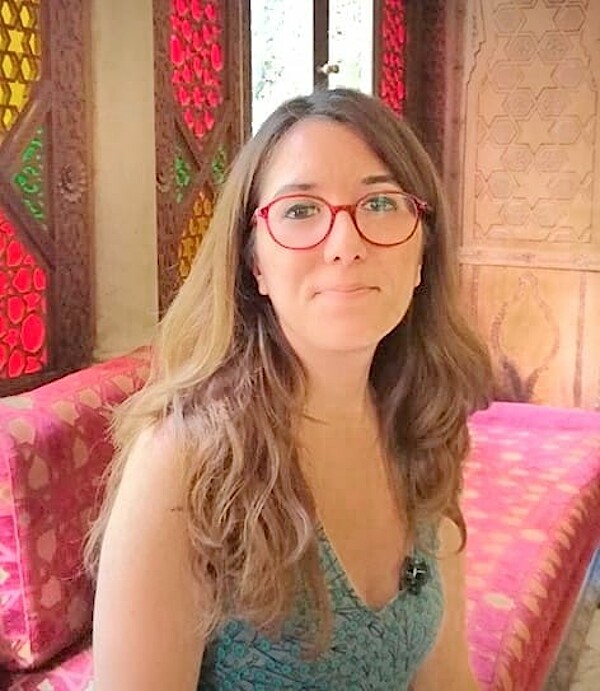
Caroline Kinj works at the OIB's secretariat since June 2013.
IT-Manager
Since August 2009, David Kattan works at the Orient-Institut Beirut as Information Technology Manager (IT-Manager).
He holds a BE in Computer and Communication Engineering from Notre Dame University – Louaize as well as an executive MBA from the Lebanese Canadian University and a Master Management Administration des Entreprises from Université Jean Monnet Saint-Etienne in France.
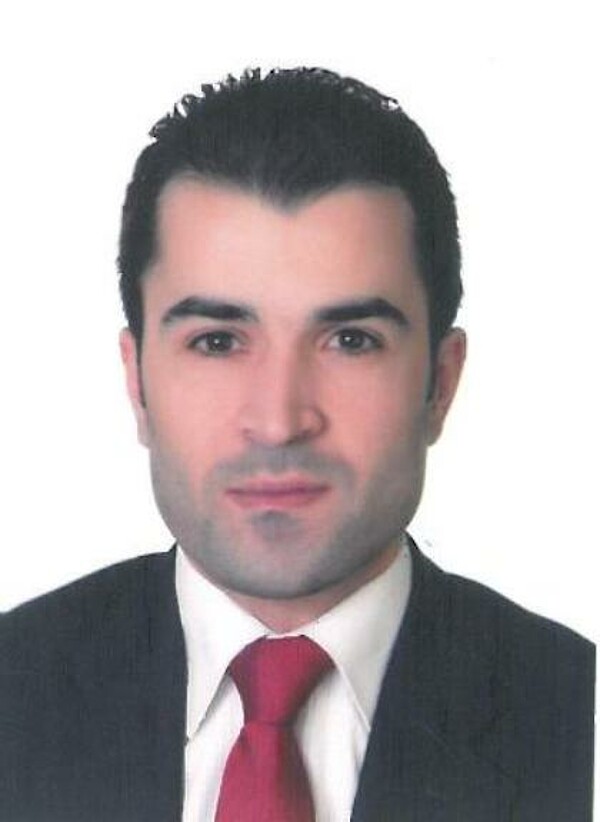
Barraq Zakaria joined the publication section of the OIB in October 2012; his work at the institute focuses on editing Arabic manuscripts and preparing them for publication.
Zakaria holds an MA in Philosophy and is preparing his PhD in Philosophy at the Lebanese University on the topic of "Religious Revival Movements in Christianity and Islam: the USA and Egypt as case studies". He is the author of al-dawla wa al-shari'a fi al-fikr al-arabi al-islami al-mu'asir (Beirut, 2013) and several articles on philosophy and religion, including one on Max Weber. Barraq's research interests revolve around Arab and Islamic political thought, both classical and contemporary, Islamic movements, and the relationship between the East and the West, in addition to his interest in Arabic philology.
Head of Administration
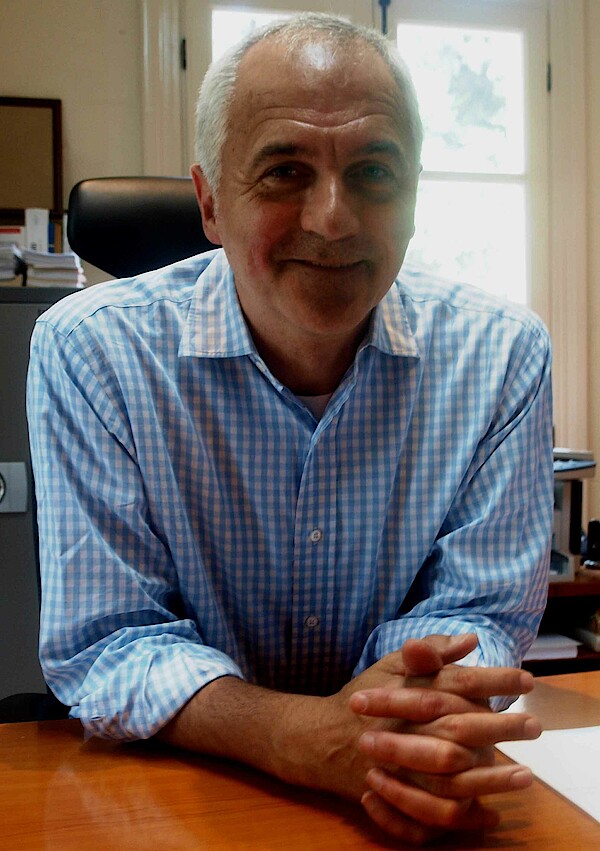
Head of Administration
Deputy Head Librarian
Dina Banna works at the OIB since 1986. She holds a Bachelor of Science in Nutrition and Dietetics from the Faculty of Agriculture and Nutrition Sciences at the American University of Beirut (1986).
Additionally she joined many further vocational trainings in library science in Germany. Since 1986 she is also a member of the Lebanese Librarians Association.
Library Assistant
Nasma Tayyara joined the library team as a library assistant in 1999.
She studied Business Administration at the Lebanese University and gained some working experience at the Allied Business Bank in Beirut.
Juliana Younan is at the OIB as a library assistant since 2011.
She holds a Bachelor degree in Information Science (2006) as well as in Political Science and Public Administration (2010) both from the Lebanese University. She worked, among others, as a cataloger at the Lebanese National Library Rehabilitation Project from 2009 until 2011 and at the Lebanese University (2008-2010).
Visiting Doctoral Fellow
Visiting Doctoral Fellow, February – April 2018
Jennifer Viehl is a political scientist and a PhD candidate in the Department of Arabic and Islamic Studies at Martin-Luther-Universität Halle-Wittenberg working on a critical examination of the discourses on good governance in late medieval Arabic political advice literature. She holds an MA in Islamic Studies and Political Science from Goethe-Universität Frankfurt. She worked as a research assistant on a project on late medieval Islamic political thought funded by the Fritz Thyssen Stiftung and hosted by the OIB between 2012 and 2015. Jennifer’s research is located at the intersection of the history of political ideas, political theory and Islamic studies and it centres around the history of Islamic political thought and methodological problems of political theory.
Postdoctoral research fellow (01.10.2013-31.09.2014)
Dahlia Gubara is a postdoctoral fellow at the Orient-Institut Beirut conducting research on a project entitled “Virtuous Narratives and the Many Lives of Luqmān al-Ḥakīm." She studied Law at the School of Oriental and African Studies, University of London, and History at Columbia University, New York where her dissertation focused on al-Azhar and orders of knowledge in the eighteenth and nineteenth centuries. Her work bridges the fields of Islamic Studies and African and Middle Eastern History and is concerned primarily with the production, transmission and consumption of knowledge in, and about, the ‘Islamic discursive tradition.
Hanan BadrHead Researcher"Media Culture Transformation" www.mediacultureegypt.com
Rapid changes in the Egyptian political landscape show an evolving public sphere. Drawing on theoretical approaches of the public sphere and social movement theory, the main research question of the Media Culture Transformation project investigates the contributions of the online public sphere in shaping the political discourses in the highly contested constitution debates.
Deputy Director
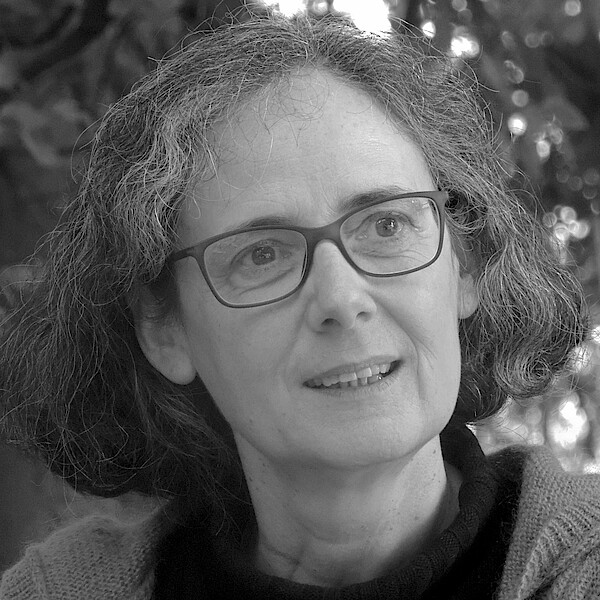
Astrid Meier was deputy director of the Orient-Institut Beirut between October 2013 and March 2018.
Astrid Meier joined the OIB in October 2013 as deputy director. A historian by training, she holds a PhD from the University of Zurich, Switzerland (1994). She worked as a research assistant at the History Department of the same university (2006 – 2011) and lectured at the universities of Zurich, Basel, Bern and St. Gallen. From 2011 to 2013, she was Visiting Professor of Islamic Studies at the Institute of Oriental Studies at Martin-Luther Universität Halle-Wittenberg, to where she returned as Professor of Islamic Studies in April 2018.
Her research interests include the social and cultural history of the Middle East in the early-modern period; theory and practice of Islamic law; famines, hunger and food systems; and environmental history. Astrid Meier is a member of the scientific boards of the journals Comparativ (Leipzig) and Annales islamologiques (Cairo). In early 2018, she acted as a reviewer for Annales islamologiques.
The aim of the project is to explore the dynamics of rural-urban relations in the Arab provinces of the Ottoman empire between 1550 and 1850 from the perspective of the “rural”. The period usually counts as a time of profound transformation, in the form of both momentous change and long-term developments, in an increasingly globalized world.
Book
Hunger und Herrschaft. Vorkoloniale und frühe koloniale Hungerkrisen im Nordtschad. Stuttgart: Steiner-Verlag, 1995 (Beiträge zur Kolonial- und Überseegeschichte 62, also Diss. University of Zurich 1994).
Edited Books
with Amir Shaykhzadegan (eds.): Beyond the Islamic Revolution. Perceptions of Modernity and Tradition in Iran before and after 1979. Berlin: De Gruyter Mouton, 2017 (Welten des Islams - Worlds of Islam - Mondes de l’Islam, vol. 8)
with Johannes Pahlitzsch and Lucian Reinfandt (eds.): Islamische Stiftungen zwischen juristischer Norm und sozialer Praxis. Berlin: Akademie-Verlag, 2009 (Stiftungs-Geschichten, Vol. 5).
with Hans-Lukas Kieser and Walter Stoffel (eds.): Revolution islamischen Rechts. Das Schweizerische ZGB in der Türkei. Zürich: Chronos-Verlag, 2008.
Journal Article
“Looking for Credit in 18th-Century Damascus: A Case from the Court Records”, DYNTRAN Working Papers, n° 22, online edition, March 2017, available at: http://dyntran.hypotheses.org/1794
The materiality of Ottoman water administration in 18th-century rural Damascus. A historian’s perspective, in: McPhillips, Stephen/Wordsworth, Paul (eds.): Landscapes of the Islamic World: Archaeology, History, and Ethnography. Philadelphia: University of Pennsylvania Press, 2016, 19-33.
Un istibdāl revoqué. Sur le raisonnement juridique dans le sijill et quelques enjeux de son interprétation, in: Guéno, Vanessa; Knost, Stefan (eds.): Lire et écrire l’histoire ottomane. Damas et Beyrouth: Ifpo/OIB, 2015, 87-106.
(with Tariq Tell) The World the Bedouin Lived in: Climate, Migration and Politics in the Early Modern Arab East, Journal of the Economic and Social History of the Orient 58, 2015, 21-55.
Stiftungen für die Blinden im osmanischen Damaskus. Eigeninteresse und Altruismus im islamischen Stiftungswesen, Historische Zeitschrift, Beiheft 66, 2015, 95-122.
Ego-documents in early-modern Ottoman „Syria“? Results of a difficult search, in: Ruggiu, François-Joseph (ed.): Les usages des écrits du for privé. Afrique, Amérique, Asie, Europe, Paris, 2013, 123-138.
Archives and chanceries: Arab world, in: Encyclopaedia of Islam, 3rd ed. (EI3), Leiden: Brill, 2012-4, 17-22.
with Johann Büssow: ʿAnaza, in: Encyclopaedia of Islam, 3rd ed. (EI3), Leiden: Brill, 2012-1, 63-67.
with Brigitte Marino: L’eau à Damas et dans son environnement rural au xviiie siècle, in: Bulletin d’études orientales 61, 2012, 363-428.
The charities of a grand vizier. Towards a comparative approach to Koca Sinân Pasha’s endowment deeds (989-1004/1581-1596), in: Turcica 43, 2011, 309-343.
Bedouins in the Ottoman juridical field. Select cases from Syrian court records, seventeenth to nineteenth centuries, in: Eurasian Studies 9/1-2, 2011, 187-211.
Bathing as a translocal phenomenon? Bathhouses in the Arab-speaking provinces, in: Ergin, Nina (ed.): Bathhouses in Anatolia and Beyond. Architecture, History and Imagination. Leuven: Peeters, 2011, 169-197. (Turkish translation: Yerelötsi Bir Olgu Olarak Yıkanma: Osmanlı İmaparatorluğu’nun Arap Eyaletlerindi Hamamlar, in: Nina Ergin (ed.): Anadolu Medeniyetlerindi Hamam Kültürü: Mimari, Tarih ve İmgelem, İstanbul: Koç Üniversitesi Yayınları, 2012, 211–241.)
Grüne Schuhe, blaugestreifte Badetücher und das "Weisse Minarett". Religiöse Koexistenz in den Städten des osmanischen Syrien, in: Andreas Schmauder und Jan Friedrich Missfelder (eds.): Kaftan, Kreuz und Kopftuch. Religiöse Koexistenz im urbanen Raum (15.-20. Jahrhundert). Ostfildern: Thorbecke, 2010, 281-303.
Ein Teppich als Denkmal. Historische Repräsentationen in Westasien und Nordafrika um 1900, in: Periplus. Jahrbuch für aussereuropäische Geschichte 18, 2008, 43-67.
Krisen des Selbst in der biographischen Literatur zu Damaskus, 17. und 18. Jahrhundert, in: Stefan Reichmuth und Florian Schwarz (eds.): Zwischen Alltag und Schriftkultur. Individuelle Horizonte in der arabischen Schriftkultur des 17. und 18. Jahrhunderts. Beirut: Orient-Institut, 2008, 1-21.
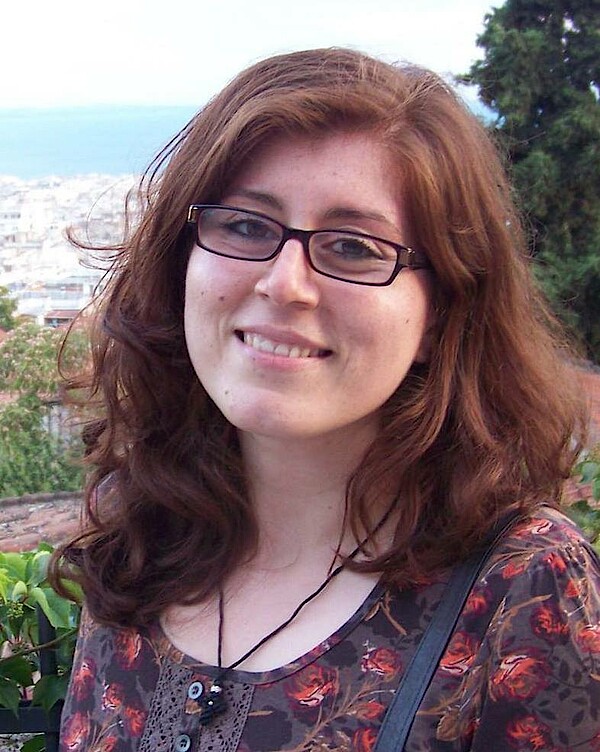
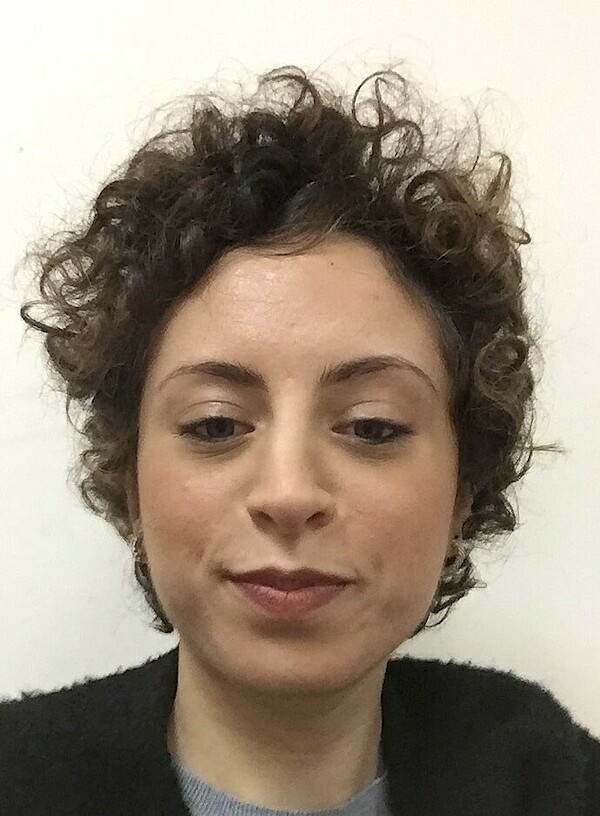
Elena Şahin joined the OIB in October 2013 as a research assistant to collaborate on the preparation of a critical edition of Maḥmūd al-Kāshgharī’s "Dīwān Lughāt al-Turk".
She holds a BA degree in Oriental Studies (Erlangen, Germany) and an MA in Islamic Studies (SOAS, UK). She is a PhD candidate in Islamwissenschaft at the Martin-Luther University Halle, Germany, and her research project builds on a comprehensive study of Ibn al-Azraq’s political treatise "Badāʾiʿ al-Silk fī Ṭabāʾiʿ al-Mulk".
Apart from the history of Islamic political thought, Elena’s research interests include Islamic theology, philosophy, and law. She also conducts research on the history of Christian-Muslim relations in the Levant.
Research Associate
Torsten Wollina joined the Orient-Institut Beirut in 2014 and manages the institute’s book series Beiruter Texte und Studien (BTS). Before, he worked for the project EurViews at the Georg Eckert Institute for International Textbook Research (Braunschweig, Germany), analyzing images of Europe in textbooks from different Arab countries.
In 2012, Torsten submitted his Ph.D. thesis titled "Zwanzig Jahre Alltag. Lebens-, Welt- und Selbstbild im Journal des Aḥmad Ibn Ṭawq" (Twenty Years of Everyday Life. Biography, Worldview and Self-Image in the Journal of Aḥmad Ibn Ṭawq) on a text from late Mamluk Damascus, which he wrote at the Berlin Graduate School Muslim Cultures and Societies (BGSMCS, Free University Berlin) and the Anne Marie Schimmel Kolleg "History and Society during the Mamluk Era (1250-1517)". He received his Master degree in Islamic Studies, history and intercultural communications from the University of Jena.
Book
———. 2014. Zwanzig Jahre Alltag Lebens-, Welt- und Selbstbild im Journal des Aḥmad Ibn Ṭawq. Göttingen: V&R unipress.
Journal Article
Wollina, Torsten. 2012. ‘A View From Within: Ibn Ṭawq’s Personal Topography of 15th century Damascus’. Bulletin d’études orientales, no. 61: 271–96.
———. 2013. ‘Ibn Ṭawq’s Talīq: An Ego-Document for Mamlūk Studies’. In Ubi Sumus? Quo Vademus? : Mamluk Studies - State of the Art, 337–62. Mamluk Studies 3. Göttingen: V & R Unipress, Bonn Univ. Press.
———. 2014a. ‘News and Rumor - Local Sources of Knowledge about the World’. In Everything Is on the Move : The Mamluk Empire as a Node in (trans-)regional Networks, 283–309. Mamluk Studies 7. Göttingen: V & R Unipress.
———. 2014b. ‘What Is a City? Perceptions of Architectural and Social Order’. In History and Society during the Mamluk Period (1250 - 1517), 221–29. Mamluk Studies ; 5 Studies of the Annemarie Schimmel Research College 1. Göttingen: V&R Unipress.
———. 2016. 'Sultan Selīm in Damascus: The Ottoman Appropriation of a Mamluk Metropolis (922-924/1516-1518)'. In The Mamluk-Ottoman Transition: Continuity and Change in Egypt and Bilād Al-Shām in the Sixteenth Century, 199–224. Ottoman Studies / Osmanistische Studien. Göttingen: Göttingen: V & R Unipress, Bonn Univ. Press.
———. 2016. 'The Banu Qadi ‘Ajlun: Family or Dynasty?’. DYNTRAN Working Papers. online edition, 19. Available at: http://dyntran.hypotheses.org/1623.
———. “Between Beirut, Cairo, and Damascus: Al-amr bi- al-maʿrūf and the Sufi/Scholar Dichotomy in the Late Mamluk Period (1480s–1510s)”, Mamlūk Studies Review 20 (2017), 57-92.
———. “Vom ‘Sinn’ und ‘Unsinn’ eines islamischen Mittelalters” (with Hans-Peter Pökel), Weltweit vor Ort 1/ July 2016, 10-11.
Research Blog
Postdoc Research Fellow, Jan. - Dec. 2015Hania Sobhy completed her PhD in Politics at the School of Oriental and African Studies (SOAS), University of London, and her BA and MA in Economics and Political Science at McGill University.
She has taught Middle East Politics, International Relations, International Politics of Economic Relations and Comparative Politics at SOAS, Exeter and McGill. Her research interests include nationalism, citizenship and the governance of social services in the Arab region, especially in relation to the education sector. She has also worked on aspects of Islamist and post-Islamist discourses. She has just completed an evaluation of a nation-wide education support program in Egypt and has worked in development policy, research and project evaluation since 2004. During her fellowship at OIB, Hania will be writing-up her updated research on pro-‘Revolution’ electoral mobilization in Egypt since 2012, initiated during her fellowship with the EUME program of the Forum Transregionale Studien in Berlin.
Publications
- Forthcoming 2015. Honorable Citizens, Selective Islamism and Neoliberal Dreams: Reading Textbook Nationalism from Mubarak to Sisi. Nations & Nationalism 21(4): tbd.
- 2015. A Collapse of Formal Schooling in Egypt: Interview with Hania Sobhy. Inequality, Education and Social Power: Transregional Perspectives FTS & MWS. 15 January. Available at: ies.hypotheses.org/815.
- 2014. Tell the teacher: I see you, I thank you. Mada Masr Online Newspaper. 1 July. Available at: www.madamasr.com/opinion/tell-teacher-i-see-you-i-thank-you.
- 2012. The De-Facto Privatization of Secondary Education in Egypt. Compare: A Journal of Comparative and International Education, 42 (1): 47-67.
- 2009 [2011]. Amr Khaled and Young Muslim Elites: Islamism and the Consolidation of Mainstream Muslim Piety in Egypt. In Cairo Contested: Governance, Urban Space and Global Modernity, edited by Diane Singerman. Pp. 415- 454. Cairo: American University Press.
- 2007. Reading Reform into the Past: Power and the Islamist Articulations of Muslim History. Quest Spring. Available at: www.qub.ac.uk/sites/QUEST/FileStore/Issue4PerspectiviesonPowerPapers/Filetoupload,71746,en.pdf.
Journal Article
Book
Head Librarian
Stefan Seeger was head librarian from 2014 to 2019.
Stefan Seeger graduated in library science from the HTWK Leipzig in 2005 with a thesis on public libraries of Egypt. He worked from 2005 till 2009 as Librarian at the Library of the Institute for the Study of Muslim Civilisations, a London branch of the Aga Khan University, and thereafter been employed from 2009 till 2014 at Georgetown University in Qatar as Librarian for Arabic Collections and Services.
Journal Article
Book
Vice Director & Head Librarian
Hans-Peter Pökel is since 2019 Head Librarian at the OIB. He joined the OIB already in 2014 as research associate. He studied Semitic philology, Religious Studies and Ancient Near Eastern Studies in Marburg/Germany. He received his PhD from Jena/Germany with a thesis on al-Jahiz and was research associate at the Seminar for Semitic and Arabic Studies in Berlin until 2014. He also studied Library and Information Science and received his M.A. LIS from Berlin/Germany with a thesis on National Libraries in the Arab World.
The project focuses on the early history of the inimitability of the Qurʼān (i῾jāz al-qur᾽ān) which is the later technical term for its theological and literary uniqueness within the framework of Arabic literature. It considers the tense relation between politics, language and ‘religion’ in the Abbasid period.
Book
Der unmännliche Mann. Zur Figuration des Eunuchen im Werk von al-Ǧāḥiẓ (gest. 869), (Mitteilungen zur Sozial- und Kulturgeschichte der islamischen Welt, 36), Würzburg: Ergon 2014.
Journal Article
Aufsätze:
„Nacktheit und Scham im islamischen Mittelalter. Der nackte Frauenkörper und der Blick im Werk von al-Ğāḥiẓ (gest. 869)“, in: „Und sie erkannten, dass sie nackt waren.“ Nacktheit im Mittelalter. Ergebnisse einer interdisziplinären Tagung des Zentrums für Mittelalterstudien der Otto-Friedrich-Universität Bamberg, 3. & 4. November 2006, hrsg. von Stefan Bießenecker, (Bamberger interdisziplinäre Mittelalterstudien, 1), Bamberg: Univ. of Bamberg Press 2008, S. 141-159.
„Das Bild des Christen in der arabisch-islamischen Literatur des 9. Jahrhunderts am Beispiel des Radd ʿalā n-Naṣārā von al-Ğāḥiẓ (gest. 869)“, in: Was ist Humanität? Interdisziplinäre und interreligiöse Perspektiven, hrsg. von Marianne Heimbach-Steins und Rotraud Wielandt, (Judentum, Christentum, Islam. Bamberger interreligiöse Studien, 6), Würzburg: Ergon 2008, S. 303-317.
„Ernst und Scherz in der klassischen arabischen Kultur. Überlegungen zu einem wirkmächtigen Konzept am Beispiel von al-Ǧāḥiẓ (gest. 869)“, in: Valenzen des Lachens in der Vormoderne (1250-1750), hrsg. von Christian Kuhn und Stefan Bießenecker, (Bamberger historische Studien, 8), Bamberg: Bamberg Univ. Press 2008, S. 269-283.
„Der sexualpathologische Diskurs über den penetrierten Mann in der arabisch-islamischen Medizin des 10. und 11. Jahrhunderts“, in: Liebe, Sexualität, Partnerschaft . Paradigmen im Wandel. Beiträge zur orientalistischen Gender-Forschung, hrsg. von Roswitha Badry, Maria Rohrer, Karin Steiner (Hrsg.):, Freiburg: fwpf 2009, S. 65-79.
„Der Eunuch als Rivale. Eine Überlegung zur hegemonialen Männlichkeit im Werk von al-Ǧāḥiẓ (gest. 869) im Kontext der Spätantike“, in: Zwischenbestimmungen. Identität und Geschlecht jenseits der Fixierbarkeit? hrsg. von Marita Günther-Saeed/Esther Hornung, Würzburg: Königshausen & Neumann 2012, S. 155-167.
2014
„ʽEarnest and Jest' (al-jidd wa-l-hazl) as an Educational Concept? Some Considerations on Selected Works of al-Jāḥiẓ (d. 255/868-69)”, in: The Place to Go to. Contexts of Learning in Baghdad from the Eighth to the Tenth Centuries, ed. by Damien Janos/Jens Scheiner, Princeton: The Darwin Press 2014, S. 103-145.
„Al-Ǧāḥiẓ und das Kitāb al-Ḥayawān“, in: Bulletin Schweizerische Gesellschaft Mittlerer Osten und Islamische Kulturen, 38: Tiere/L'animal, 2014, S. 11-15.
A new publication for 2016:
2016
„Lost in Translation. Der fremde Koran im neunzehnten Jahrhundert“, in: Koran in Franken. Überlegungen und Beispiele für Koran in fremden Kontexten, hrsg. von Christian Mauder, Thomas Würtz, Stefan Zinsmeister, (Judentum, Christentum, Islam. Interreligiöse Studien, 15), Würzburg: Ergon 2016, 78-113.
Book
Der unmännliche Mann. Zur Figuration des Eunuchen im Werk von al-Ǧāḥiẓ (gest. 869), (Mitteilungen zur Sozial- und Kulturgeschichte der islamischen Welt, 36), Würzburg: Ergon 2014.
Research Associate
Till Grallert joined the OIB in 2014. His research and teaching focuses on the social and spatial history of late Ottoman cities, the socio-linguistics of early Arabic newspapers and digital humanities (DH) outside the global north. He completed his PhD at the Berlin Graduate School Muslim Cultures and Societies in 2014 with a thesis entitled “To Whom Belong the Streets? Property, Propriety, and Appropriation: The Production of Public Space in Late Ottoman Damascus, 1875 – 1914.” Till’s current research project aims at establishing a genealogy of urban food riots as a “repertoire of contention” (Tilly) and as genuine political negotiations of the social contract between the rulers and the ruled in the Eastern Mediterranean between the eighteenth and the twentieth centuries. He is a co-organiser of the “Digital Humanities Institute – Beirut,” the developer and a core contributor to “Project Jarāʾid,” an online chronology of Arabic periodicals before 1900, and he contributed to a recent collection on “Digital Humanities and Islamic & Middle East Studies” (ed. Elias Muhanna, 2016). Within the framework of his research project “Open Arabic Periodical Editions” (OpenArabicPE), Till works on open, collaborative and scholarly digital editions of early Arabic periodicals such as Muḥammad Kurd ʿAlī's journal al-Muqtabas and ʿAbd al-Qādir Iskandarānī's al-Ḥaqāʾiq.
This project scrutinises the phenomenon of urban food riots in the Middle East between the mid-eighteenth and the mid-twentieth centuries as contentious performances that form and follow certain repertoires (C. Tilly).
Dege, Martin, Till Grallert, Carmen Dege, and Niklas Chimirri, eds. Können Marginalisierte (Wi(e)der)sprechen? Zum politischen Potenzial der Sozialwissenschaften. Gießen: PsychoSozial-Verlag, 2010.
Grallert, Till. To whom belong the streets? The production of public space in late Ottoman Damascus, 1875–1914
Grallert, Till. ‘Urban Food Riots in Late Ottoman Bilād Al-Shām as a “Repertoire of Contention”’. In Crime, Poverty and Survival in the Middle East and North Africa: The ‘Dangerous Classes’ since 1800, edited by Stephanie Cronin, 157–76. London: I.B. Tauris, 2019.
Grallert, Till. ‘The Journal al-Muqtabas between Shamela.Ws, HathiTrust, and GitHub: Producing Open, Collaborative, and Fully-Referencable Digital Editions of Early Arabic Periodicals—with Almost No Funds’. In Advances in Digital Scholarly Editing: Papers Presented at the DiXiT Conferences in The Hague, Cologne, and Antwerp, edited by Peter Boot, Anna Cappellotto, Wout Dillen, Franz Fischer, Aodhán Kelly, Andreas Mertgens, Anna-Maria Sichani, Elena Spadini, and Dirk van Hulle, 401–6. Leiden: Sidestone Press, 2017. https://www.sidestone.com/books/advances-in-digital-scholarly-editing.
Grallert, Till, Jochen Tiepmar, Thomas Eckart, Dirk Goldhan, and Christoph Kuras. 2017. Digital Muqtabas CTS integration in CLARIN. In CLARIN2017 Book of Abstracts. https://www.clarin.eu/sites/default/files/Grallert-etal-CLARIN2017_paper_21.pdf.
Grallert, Till. ‘Mapping Ottoman Damascus through News Reports: A Practical Approach’. In Digital Humanities and Islamic & Middle East Studies, edited by Elias Muhanna, 175–98. Boston, Berlin: De Gruyter, 2016. https://tillgrallert.github.io/MappingOttomanDamascus2014.
Grallert, Till. ‘To Whom Belong the Streets? Investment in Public Space and Popular Contentions in Late Ottoman Damascus’. Bulletin d’Études Orientales 61 (2012): 327–59. https://journals.openedition.org/beo/978.
Dege, Carmen, Martin Dege, Till Grallert, and Niklas Chimirri. ‘Widersprechen!’ In Können Marginalisierte (Wi(e)der)sprechen? Zum politischen Potenzial der Sozialwissenschaften, edited by Martin Dege, Till Grallert, Carmen Dege, and Niklas Chimirri, 471–95. Gießen: PsychoSozial-Verlag, 2010.
Grallert, Till. ‘Open Arabic Periodical Editions: A Framework for Bootstrapped Scholarly Editions Outside the Global North’. Edited by Alex Gil and Roopika Risam. Digital Humanities Quarterly, Special Issue ‘Minimal Computing’ (2021).
‘Catch Me If You Can! Computational Approaches to Track the Late Ottoman Ideosphere of Authors and Periodicals in the Wasteland of the “Digitised” Arabic Press’. Edited by Simone Lässig. Geschichte Und Gesellschaft, Special Issue ‘Digital History’ (2021).
Andrews, Molly. ‘Biografie und Geschichte: Dynamiken individueller und kollektiver politischer Erzählungen’. In Können Marginalisierte (Wi(e)der)sprechen? Zum politischen Potenzial der Sozialwissenschaften, edited by Martin Dege, Till Grallert, Carmen Dege, and Niklas Chimirri, translated by Till Grallert, 347–405. Gießen: PsychoSozial-Verlag, 2010.
Grallert, Till. “Weber, Stefan: Damascus. Ottoman Modernity and Urban Transformation 1808–1918” Orientalistische Literaturzeitung 108, no. 1 (2013): 39–51
Review of: Ayalon, Ami. The Arabic Print Revolution: Cultural Production and Mass Readership. Cambridge: Cambridge University Press, 2016. for H-NET.
Review of: Chalcraft, John. Popular Politics in the Making of the Modern Middle East. Cambridge: Cambridge University Press, 2016. for Contemporary Levant.
Open Arabic Periodical Editions (OpenArabicPE): A framework for bootstrapped scholarly editions outside the global north
An Open, Collaborative, and Scholarly Digital Edition of Muḥammad Kurd ʿAlī’s Monthly Journal ‘al-Muqtabas’ (Cairo and Damascus, 1906–1917/18). Edited by Till Grallert with contributions from Dimitar Dragnev, Hans Magne Jaatun, Daniel Lloyd, Klara Mayer, Tobias Sick, Manzi Tanna-Händel and Layla Youssef, 2015–. https://doi.org/10.5281/zenodo.597319.
An Open, Collaborative, and Scholarly Digital Edition of ʿAbd al-Qādir al-Iskandarānī’s Monthly Journal ‘al-Ḥaqāʾiq’ (Damascus, 1910–12). Edited by Till Grallert with contributions from Talha Güzel and Xaver Kretzschmar, 2015–. https://doi.org/10.5281/zenodo.1232016.
An Open, Collaborative, and Scholarly Digital Edition of Anṭūn al-Jumayyil’s Monthly Journal ‘al-Zuhūr’ (Cairo, 1910–1913). Edited by Till Grallert, 2019–. https://doi.org/10.5281/zenodo.3580606
An Open, Collaborative, and Scholarly Digital Edition of Jirjī Niqūlā Bāz’s Monthly Journal ‘al-Ḥasnāʾ’ (Beirut, 1909–11). Edited by Till Grallert, 2019–. https://doi.org/10.5281/zenodo.3556246.
An Open, Collaborative, and Scholarly Digital Edition of ʿAbd Allāh Nadīm al-Idrīsī’s Weekly Journal ‘al-Ustādh’ (Cairo, 1892–1893). Edited by Till Grallert, 2019–. https://doi.org/10.5281/zenodo.3581028.
An Open, Collaborative, and Scholarly Digital Edition of Anastās Mārī al-Karmalī’s Monthly Journal ‘Lughat al-ʿArab’ (Baghdad, 1911–14). Edited by Till Grallert with contributions from Patrick Funk, 2019–. https://doi.org/10.5281/zenodo.3514384.
Open, validated bibliographic metadata for:
Project Jarāʾid (2.0)
Sadgrove, Philip, Hala Auji, et al. “Jara’id: A Chronology of Nineteenth Century Periodicals in Arabic (1800–1900). A Research Tool.” Edited by Adam Mestyan and Till Grallert. 2012–. http://projectjaraid.github.io.
Co-organiser with Najla Jarkas, Elie Kahale, Maya Sfeir (all AUB), and Pierre France (OIB): “Digital Humanities Institute — Beirut (DHIB) 2021”, a series of online workshops on digital pedagogy, minimal computing, emergency tool-kits, and funding opportunities, spring 2021.
Co-organiser with Najla Jarkas, Elie Kahale and Maya Sfeir (all AUB): “DHIB 2019”, themed Consolidating Local, Regional, and Consortial Collaborations in Digital Humanities Communities , AUB and OIB, 3–5 May 2019.
Co-organiser with Maike Neufend (META Journal, Marburg): international workshop “On Troubles of Translation”, in conjunction with DHI-B, AUB, 3–5 May 2019.
Organiser: international workshop “Ritualised reactions to subsistence crises: Food riots in the Ottoman Empire and its successor states in the Middle East”, Orient-Institut Beirut (OIB), 18–19 January 2019.
Co-convenor with Kathryn Schwartz (Harvard): panel “Regulating Print in the late Ottoman Empire: a new look into the question of censorship”, Middle East Studies Association (MESA), Annual Meeting, Washington, DC, 18–21 November 2017.
Co-convenor with Elizabeth Saleh (AUB): weekly reading group “political economy”, OIB, 3 December 2015 – 10 May 2016.
Co-organiser with Astrid Meier and Torsten Wollina (OIB): international workshop “Establishing a framework for scholarly editing and publishing in the 21st century”, OIB, 9–10 March 2015.
Co-organiser with Martin Dege, Carmen Dege and Niklas Chimirri (FU Berlin): international conference “Kongress der Neuen Gesellschaft für Psychologie”, Freie Universität Berlin, 28–30 June 2008.
Talk: “Global DH and Minimal Computing” at the workshop (online) “Digitizing the Humanities, the Digital in the Humanities: An Introduction to Digital Humanities in the Indian Context”, Jamia Millia Islamia, New Delhi, India, 18 December 2020.
Discussant: “Panel 2: Feminist Archival Practices” at the workshop (online) “Archiving, Recording and Representing Feminism: The Global History of Women’s Emancipation in the 20th Century”, German Historical Institute, London, 10–12 December 2020.
Keynote on computational approaches to the Arabic press at the conference “Jewish, Christian and Muslim Historical Press: Digital Practices”, Open University of Israel, 13–14 July 2020 (declined due to living in Lebanon).
Paper: “Open Arabic Periodical Editions: a framework for bootstrapped scholarly editions outside the Global North” at the workshop (online) “L'interopérabilité des données de la recherche: textes, images, bases de données”, IFAO, Cairo, 2 June 2020.
Seminar session: “Streets: remodelling public places between Paris and Beirut”, American University of Beirut (AUB), course “Assembling the Middle East: Infrastructure and Materiality” (Dr. Elizabeth Saleh), 12 February 2020.
Workshop: “Forschungsdatenmanagement”; Arbeitskreis Digital Humanities der Max Weber Stiftung (MWS), MWS, Bonn, 3 December 2019.
Paper: “Tracking the Late Ottoman Ideosphere: Computational Approaches to the Wasteland of the ‘Digitised’ Arabic Press” at the workshop “Creating Spaces, Connecting Worlds: Dimensions of the Press in the Middle East and Eurasia”, Zurich, 31 October – 2 November 2019.
Workshop: “An Egyptian Sheikh’s Literary World: Digitally Reconstructing Islamic Print Culture Through Mustafa Salamah al-Najjari’s Book Collection”, Duke University, Durham NC, 12 October 2019.
Workshop: “The Early Modern Christian Cultural and Literary Heritage in the Eyes of Nahḍa Scholars”, University of Oxford, 26–27 October 2019 (declined due to parental leave-of-absence).
Paper: “Open Arabic Periodical Editions: a framework for bootstrapped scholarly editions outside the global north” at the Akademie Colloquium “Whither Islamicate Digital Humanities? Analytics, Tools, Corpora”, Amsterdam, 13–15 December 2018.
Guest lecture: “Food riots as part of a repertoire of contention in late Ottoman Greater Syria” as part of the workshop “Area knowledges and disciplinary / interdisciplinary knowledge”, Max-Weber-Kolleg, Erfurt, 18–20 June 2018.
Workshop: “Textual Analysis Using Stylometry”, American University of Beirut (AUB), Beirut, 24–25 April 2018.
Workshop: “Digitalität managen”; Arbeitskreis Digital Humanities der Max Weber Stiftung (MWS), MWS, Bonn; 14–15 December 2017.
Workshop: “Nachhaltiges OA[Open Access]-Publizieren in den Area Studies: Wie offen sind die Nahoststudien?”; Center for Near and Middle East Studies, Philipps Universität Marburg; 8–9 December 2017.
Talk: “Werkstattbericht: Arabische Buch- und Rezeptionsgeschichte in Open Arabic Periodical Editions (OpenArabicPE)”; SFB980, Freie Universität Berlin, 1 June 2017.
Digital Humanities Abu Dhabi; New York University Abu Dhabi, 10–12 April 2017 (teaching, presentation).
Talk: “OpenArabicPE: a use case for TEI XML”; Florida State University, Tallahassee, course “Digital Egyptian Gazette: a full-text paper from 1905” (Dr. Will Hanley), 22 March 2017.
Digital Humanities Institute — Beirut; American University of Beirut (AUB), 10–12 March 2017 (teaching).
Workshop: “Jara'id 2.0—Indexing the Early Arabic Public Sphere: A Workshop in Arabic Digital Humanities”; DUKE University, 11–12, 14 November 2016.
Workshop: Digital Ottoman Project, second workshop; Institute of Advanced Study, Princeton, 19–25 June 2016.
Talk: “The journal al-Muqtabas between Shamela.ws, HathiTrust, and GitHub: producing open, collaborative, and fully-referencable digital editions of early Arabic periodicals—with almost no funds”; American University in Cairo, 12 April 2016.
Seminar session: “Genealogy of food riots in Bilād al-Shām as a ‘repertoire of contention’”; AUB, course “Food and Culture: An Anthropological Perspective” (Dr. Elizabeth Saleh), 8 April 2016.
Talk: “Wessen Strasse ist die Strasse? Brotunruhen und die Produktion öffentlicher Orte in Städten der Bilād al-Shām in spätosmanischer Zeit (1875–1920)”; Institute of Geography, Johannes-Gutenberg-Universität Mainz; 26 January 2016.
“Analyzing Text Reuse at Scale / Working with Big Humanities Data”, Universität Leipzig, Institut für Informatik / Digital Humanities, 14–16 December 2015.
“Digital Humanities Summer Institute” (DHSI), University of Victoria, Victoria, BC, Canada, 1–19 June 2015.
“To whom belong the streets? The tramways of Damascus as an example for the production of public space in late Ottoman times.” Orient-Institut Beirut, 10 September 2013.
“Geschichte und Gesellschaft im Damaskus des 19. Jahrhunderts.” Museum für Völkerkunde, Dresden, 21 February 2013.
“To Whom Belong the Streets? Investment in Public Space and Popular Contentions in Late Ottoman Damascus.” Urban Studies Seminar of the Zentrum Moderner Orient and the EUME program of the Wissenschaftskolleg Berlin, 2 May 2011.
Affiliated Researcher - Gastwissenschaftlerin (Jul.-Dec. 2014)
Bio:
Zeina G. Halabi is Assistant Professor of Arabic literature and Culture, French and Francophone Studies at the University of North Carolina at Chapel Hill. Her research and teaching interests include Arabic music and film. In her current book project, Writing Melancholy: The Death of the Author in Modern Arabic Literature, Halabi engages the elegiac writings of modern and contemporary Arab novelists and poets since 1967. An article on the poetics of mourning the postwar Lebanese intellectual appeared in Journal of Arabic Literature. Other articles in progress address topics ranging from the contemporary literary depiction of 19th century Arab intellectuals to political satire and the revisiting of notions of displacement and exile in literature and film.
Publication:
“The Unbearable Heaviness of Being: The Suicide of the Intellectual in Rabih Jaber’s Ralph Rizkallah Through the Looking Glass.” Journal of Arabic Literature 44 (2013) 53-82.
Book Project:
During her affiliation with the Orient Institut-Beirut, Halabi will complete her current book project, Writing Melancholy: The Death of the Intellectual in Modern Levantine Literature. Lying at the intersection of literary criticism and intellectual history, Halabi’s project probes the (self-) representation of Levantine intellectuals in elegiac writings since the Arab-Israeli war of 1967. Halabi examines the ways in which contemporary poets and novelists who identify with different literary and historical generations have mourned and commemorated the death of their peers. She shows how the psychological and political imprints of loss and defeat that have emerged in elegiac texts in the wake of the 1967 war, contribute to an elegiac discourse that is inherently melancholic. Halabi engages the elegiac writings of canonical novelists including Jabra Ibrahim Jabra and Abdel Rahman Munif and poets including Mahmoud Darwish and Mohamed al-Maghout in the backdrop of a collective experience of loss and defeat. As she examines the poetics of mourning the contemporary Arab intellectual, Halabi engages the works of novelists Elias Khoury, Rabih Jaber, Rawi Hage among others.
Phone: +961 (0)1 359279
Junior Research Fellow (1.2.2014 - 31.12.2014)
Phone: +961 (0)1 359279
Junior Research Fellow (1.5.2014-31.10.2014)
Junior Research Fellow (1.8.2014-31.12.2014)Affiliated Researcher since January 2015
Veronica Ferreri is a PhD candidate in Politics at the School of Oriental and African Studies (SOAS), University of London. Her research investigates Syrians’ lived experiences and social imaginaries of forced displacement in Lebanon.
She holds a Master’s degree in Arabic and Middle Eastern Studies from the Venice’s University Ca’ Foscari and an MA in Migration and Diaspora Studies from SOAS. During her postgraduate studies, Veronica conducted research with the Somali refugee community in Damascus and amongst the Syrian diaspora in London.
Phone: +961 (0)1 359279
Junior Research Fellow (1.9. - 31.10.2014)
Visiting Postdoctoral Fellow
Postdoc Resarch Fellow, 2014
Alyn Hine is currently working on a project called 'Expressions of Cultural Identity among Antiochian Orthodox Christians in Lebanon,' which attempts to analyse a narrative of identity for the Antiochian Orthodox through their literature. Although the project concentrates on modern literature, it also attempts to locate ideas of origin through pre-modern literature. Having written his PhD thesis (SOAS) on the presence of Russian literature in the works of Mikhail Naimy, Alyn is also interested in the interaction of Russian and Arabic literature in the modern era and how this literary dialogue helped to construct intellectual and artistic ideas in both areas.
Junior Research Fellow (October 2014)
Lana Mzhavia is a doctoral student at the University of Freiburg (Germany) and works on a thesis titled "Alternative Worlds: A Study of the Contemporary Poetry of Arab Women". She holds a master’s degree in Semitic Studies from the Tbilisi State University (Georgia), where she also studied Arabic Language and Literature and Georgian Philology. Her research interests include, but are not limited to, the works of contemporary female Arab writers with a special focus on experimental poetry.
Junior Research Fellow (October 2014)
Junior Research Fellow (Jan. - Oct. 2014)
Samer Ghamroun is a PhD candidate in Political Science at the “Institut des Sciences Sociales du Politique” (ISP) at the École Normale Supérieure in Cachan, France. His research focuses on the politicization of sharia courts and law in Lebanon, between women’s mobilization and the civil courts’ competition, within the field of legal sociology. More generally, Ghamroun works on judicial policies and judges’ mobilizations in Egypt and Tunisia. He is also a member of an international research program in legal anthropology (PROMETEE), studying law and property issues in various Muslim contexts. Ghamroun has taught legal and political sociology at several universities in Paris, and is a founding member of the Legal Agenda Center in Beirut where he regularly publishes articles and contributes to discussions about Law and Society in Arab contexts. Among others, he recently published:
Samer Ghamroun, 2013, "Le droit de la communauté sunnite libanaise saisi par les femmes", in Florence Rochefort et Maria Eleonora Sanna (dir.), Normes religieuses et Genre: Mutations, Résistances et Reconfiguration XIXème-XXIème siècle, Paris: Armand Colin.
Samer Ghamroun, 2012, “Liban: mobiliser la norme islamique, préserver le système pluricommunautaire”, in Baudouin Dupret (dir.), La charia aujourd'hui: Usages de la référence au droit islamique, Paris: La Découverte.
Affiliated researcher, Sep 2014. - Sep. 2015Doctoral research fellow, Mar. - Aug. 2016
Zina Sawaf is a PhD candidate in anthropology at the Graduate Institute of International and Development Studies in Geneva. She is a recipient of the Shelby and Kathryn Davis scholarship. Based on long-term ethnographic work in Saudi Arabia, her doctoral project lies at the intersection of the anthropology of politics and kinship. Her dissertation aims to investigate the refashioning of kinship in Riyadh through the everyday affects and experiences of women that stem from divorce in addition to the documentary practices and technologies of the state. She holds an MSc in social anthropology from the London School of Economics and an MSc in foreign service from Georgetown University.
Visiting Postdoctoral Fellow
Postdoc Research Fellow, Jan. - Dec. 2015
Rita Sakr ( orient-institut.academia.edu/RitaSakr ) completed a PhD at the University of Nottingham in 2009 and then a post-doctoral British Academy/AHRC/ESRC research scholarship at the University of Kent before taking up a visiting lectureship at University College Dublin followed by a 2-year Research Associate position on the Research Councils UK "Partnership for Conflict, Crime, and Security Research" programme (Kent). Besides 3 volumes of co-edited essays, she is the author of "Monumental Space in the Post-Imperial Novel: An Interdisciplinary Study" (Continuum, 2012; re-issued in paperback, Bloomsbury, 2013) and "'Anticipating' the 2011 Arab Uprisings: Revolutionary Literatures and Political Geographies" (Palgrave, 2013). She is co-producer and co-director of the documentary film on memory and peace-building in contemporary Beirut "White Flags". Her current project at the OIB is titled "Nineteenth-Century Beirut as a 'City of the World'". Grounded in archival research, this interdisciplinary project will bring together urban studies, cultural geography, history, Middle Eastern and Mediterranean studies.
Visiting Doctoral Fellow
Visiting Doctoral Fellow, January – September 2015
Diana is a Ph.D. candidate in History and Civilization at the Sorbonne University (Paris 4). She has an M.A in History from the Sorbonne University and an M.A in Political Science from Saint Denis University (Paris 8).
Her dissertation focuses on the role of music in "Lebanese" society during the period of al-Nahda (Arab Renaissance) from the nineteenth century to the Second World War. The study considers Lebanese musical production from different angles. From a social perspective, it traces the musical life in the Ottoman and Mandatory Beirut based on an analysis of the press at the turn of the twentieth century. From a socio-political angle, it analyzes the role of music in the ideological construction of a "national narrative", asserting a certain Lebanese specificity within the Levant. Finally, it analyses the songs’ texts and their messages from a literary perspective, in order to understand and trace subjective, social and political desires, claims, taste and changes in this period.
Junior Research Fellow, Jan. - Oct. 2015
Lamia Moghnieh is a PhD candidate in Social Work and Anthropology at the University of Michigan, Ann Arbor. She also holds a Master’s in Social Science from the University of Chicago, and a Master’s in Psychology from the American University of Beirut. Her dissertation research follows the humanitarian therapies of violence in Lebanon, introduced during the July war in the form of war trauma interventions, and their proliferation in “postwar Lebanon” to psychologically treat violence against refugees, prisoners and women. Moghnieh studies the ways in which the psychologization of violence relocate it around new forms of injuries, bodies and sites of healing, and explores its implications on the politics of violence and suffering in Lebanon.
Junior Research Fellow, Jan. - Sep. 2015Affiliated Researcher since Oct. 2015
Francisco Mazzola is a doctoral candidate in the Department of War Studies at King's College London (KCL), University of London. He holds a Master's degree in Political Science and Contemporary Middle East Studies from the University of Erlangen-Nuremberg.
In his research Francisco investigates the effects that clientelism has on the ways that citizenship and statehood are conceptualized in post-war Lebanon. He is particularly interested in exploring the relations of state and non-state actors in the provision of public services, such as security and social welfare, and the consequences that these relations have on state-society bonds and statehood in Lebanon.
Phone: +961 (0)1 359282
Junior Research Fellow, Jan. - Sep. 2015
Mohamad Zaydan is a doctoral student in philosophy at the Lebanese University, Tripoli. He holds a master's degree in Christian-Muslim Studies from the University of Balamand. He works on a thesis titled "فلسفة الحكم والمواطنة والدولة المدنيّة في فكري الشيخ محمد الغزالي والإمام محمد مهدي شمس الدين" ("The concepts of governance, citizenship and civil state in the works of Shaykh Muḥammad al-Ghazālī and Imām Muḥammad Mahdī Shams al-Dīn: a critical analytical study").
Doctoral Research Fellow, Feb. - Nov. 2015Affiliated Researcher, since Nov. 2015
Julia is doctoral candidate in the Department of City & Regional Planning at the University of California Berkeley. Her dissertation takes an urban ethnographic perspective to the political economy of the Middle East, tracing circulations of investment and violence in Beirut and mapping the region's broader sectarian and social class tensions. She has a master's degree in city planning from the Massachusetts Institute of Technology, where she won the outstanding thesis award for her project "Peace Through the Metaphor of War" on the informal settlements (favelas) of Rio de Janeiro. She previously worked for the World Bank's urban development unit in Brazil and on Wall Street as an emerging market trader. She is also a regular contributor to Your Middle East (http://www.yourmiddleeast.com/).

Affiliated Researcher, April-June 2016
Sina Birkholz, Dipl.Pol., is a Research Associate at the Collaborative Research Center (SFB) 700 “Governance in Areas of Limited Statehood” at Freie Universität (FU) Berlin, and an affiliated PhD student at the Berlin Graduate School for Transnational Studies (BTS).
She studied Political Science and International Relations at Augsburg University, Germany and the University of St Andrews, Scotland. Her former research topics include the role of youth and women in the Egyptian Uprising, narrative identity and issues of class in Egypt, and societal legitimations of police violence. Sina has a strong interest in methodological questions of Social Sciences and in interdisciplinary research.
Her current research in Lebanon focuses on the reform and reconstruction of political and security institutions in comparative perspective and is part of the SFB 700 project "The Politics of State- and Security-Building in Areas of Limited Statehood". For her project page see www.sfb-governance.de/en/teilprojekte/projektbereich_c/c6/team/birkholz/index.html.

Postdoc Research Fellow, Oct. 2015 - Sep. 2016Affiliated Researcher, May-Aug. 2015
Elizabeth obtained her PhD in Social Anthropology at Goldsmiths, University of London. Her doctoral fieldwork was conducted in Lebanon; it examined the entrepreneurial strategies of members of the wine industry as they converged in the Kefraya region of the West Bekaa–where she resided for well over a year. Her thesis, entitled, “Trade-marking Tradition: An Ethnographic Account of The Lebanese Wine Industry” (2014), combined archival and ethnographic research and covered issues concerned with food and wine related practices, the land-labour nexus, and rural livelihoods.
Elizabeth’s project draws upon the conclusions from her PhD thesis to design the outline for a book about rural economies in Lebanon. She is also conducting further ethnographic research which explores potential transformations in labour relations following the start of the Syrian conflict.
Her publications which have focused on themes of wine and food, labour and entrepreneurial strategies, memory and the senses include: “Eating and Drinking Kefraya; The Karam in the Vineyards” in “How We Eat, Why We Eat” edited by Emma-Jayne Abbots PhD and Anna Lavis PhD. London: Ashgate Publishers (2013) and “Pursuits of Quality in the Vineyards: French oenologists at Work in Lebanon” in “Anthropology of Wine: Ethnography from the Vineyard to the Glass”. Rachel E. Black, Ph.D. and Robert C. Ulin Ph.D. eds. London: Berg Publishers (2013).
Daniel Brenn joined the Orient-Institut Beirut as a research assistant in April 2014. He completed his M.A. in Arabic and Christian Oriental Studies at Martin-Luther-Universität Halle-Wittenberg in 2013.
At the OIB, he is working for the Thyssen-funded project "Politische Paradigmenbildung in islamischer Tradition" for which he's building an e-reserve database for project materials as well as the online publication of the project's "Source Companion". Apart from an interest in Arabic gnomologia, he has a strong background in digital humanities.
Postdoc Research Fellow, Sep. 2015 - Aug. 2016
Dina Mansour-Ille holds a PhD in “Politics, Human Rights and Sustainability” with a specialization in political economy and human rights from the Sant’Anna School of Advanced Studies in Pisa, Italy. Before joining the OIB, she worked as a Post-doctoral Research Assistant at the European University Institute in Florence and was teaching in both Germany and Italy. She also holds an M.A. in International Human Rights Law from the American University in Cairo and regularly teaches courses on human rights, gender and identity politics, and migration and refugee studies. She is an editor for the Journal “Studies in Ethnicity and Nationalism” published by Wiley-Blackwell and based at the London School of Economics. She edited and co-authored a two-volume book entitled “Multiculturalism, Conflict and Belonging” (Interdisciplinary Press, Oxford, 2014). Her most recent article “Women’s Rights in Islamic Shari’a: Between Interpretation, Culture and Politics” appeared in the “Muslim World Journal for Human Rights”. Her upcoming publication “Rational Atrocities and the Formation of the State: A Game-Theoretic Approach to the Case of ISIS” will be published in “Economics of Peace and Security".
Her current research project at the OIB is titled "From Orientalism to Fundamentalism: Identity between Religion and Politics in the Post-Arab Spring" and aims at studying the post-“Arab Spring” perceptions and reflections of the concept of ‘identity’ by exploring the peripheries that defy the centric religious perception of the Arab identity. Her project will focus on Egypt and Lebanon as comparative cases of study and research.
Postdoc Research Fellow, Sep. 2015 - Aug. 2016
Karen Moukheiber received her PhD in Middle Eastern and Arab History from the American University of Beirut in 2015. Her main interests are Abbasid female slavery, gender, sexuality and cultural studies. Her PhD thesis titled “Slave Women and Free Men: Gender, Sexuality and Culture in Early Abbasid Times” investigated the masculine conceptual framework defining the sexual and cultural roles of slave women in a selection of Abbasid legal, literary and historical foundational texts. Her forthcoming publications are “The Abbasid Slave Courtesan: A Cultural Mediator for an Ethical Appreciation of Pleasure” in the Proceedings of the 2013 International Medieval Congress edited by Piroska Nagy and Naama Cohen-Hanegbi, published by Brepols; “Hisba: an Ordering Principle for an Islamic Way of Life” in Kamal Salibi’s Memorial Volume edited by Suleiman Mourad, published by the AUB Press.
Her current project at the OIB titled "Music and Gender in Kitab al-Aghani: Reflections on Women’s Cultural Roles in Classical Islam" analyzes biographical narratives of slave and free women (and men) musicians and singers from Ali b. al-Husyan al-Isfahani’s “Kitab al-Aghani”. It focuses on how slavery and gender transformed the engagement of slave and free women with music in the formative period of Islamic history and how these changes were reflected in the narrative strategies of al-Isfahani’s discourse on women and music.
Affiliated Researcher, Sep. 2015 - Mar. 2016
Wulf Frauen is a Ph.D. candidate at the Department of Social and Cultural Anthropology in Vienna (Austria). He is currently conducting research for a project entitled "Vergangenheit als ‘Eternal Present’ – Eine lebensgeschichtliche Studie zu palästinensischen Flüchtlingen im Libanon". He studied Arabic and Cultural Anthropology (both as a major subject) at the Georg-August-University Göttingen (Germany) where he gained his M.A. degree in 2012. During his studies he spent an extended period of time at the Ankara University in Turkey (2011) as well as in Damascus (Syria) where he attended language courses as well as an internship at the Goethe Institute (2010). In addition, he participated in a field trip to Egypt (2007) and worked for the German Foreign Ministry (Auswärtiges Amt) as a trainee in 2008.
His PhD-project focuses on the Palestinian minority in Lebanon. The rupture of 1948 (“Nakba”) and the memory of the lost land Palestine are central to both the Palestinian society of today and Palestinian social history and collective identity. This is especially the case for the Palestinians in Lebanon where they and their descendants have never been naturalized (with a few exceptions), thus keeping a distinct status of "Palestinian refugee"s. The project investigates and analyses narratives and discursive patterns of different generations of male Palestinians directly in Beirut and its surroundings which later will be compared with each other. The research will be based on an extensive literature research as well as on qualitative methods such as participant observation and life history interviews which is why the project is called “Vergangenheit als ‘Eternal Present’? – Eine lebensgeschichtliche Studie zu palästinensischen Flüchtlingen im Libanon”.
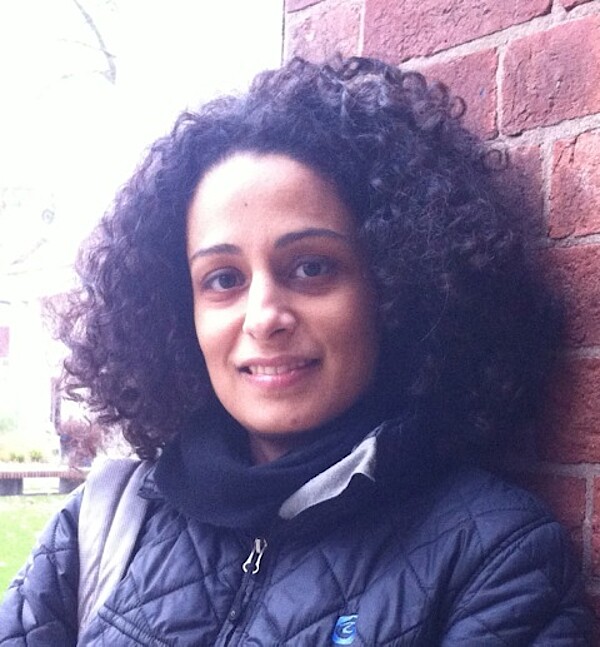
Samar Kanafani is a PhD candidate in Social Anthropology at the University of Manchester, UK. She holds an MA in Anthropology from the American University of Beirut, where she has also done research and taught part-time. Since the early 2000s, her social research has also extends into a visual arts practice, including video and installation. She is currently writing her PhD dissertation under the working title, “Once upon a place: An ethnography of urban regeneration and the aesthetics of decaying space in Beirut.” This research is about the conditions of possibility that produce decaying and decrepit houses in Beirut, as well as the terms and experiences of dwelling therein. On the one hand, it explores what relationship tenants and landowners of such houses have to the structures of the neoliberal urban regime, which has prevailed in Beirut since the mid-90s. On the other hand, it looks at what particular forms of knowledge, affective ties and sensibilities emerge from dwelling in these decayed spaces.
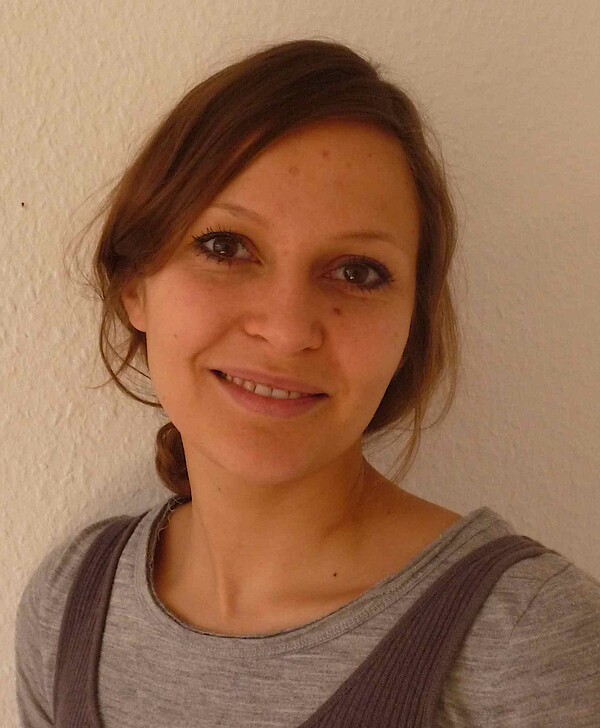
Nora Derbal has joined the Orient-Institut Beirut in October 2015 and works at the Cairo office.
She is a PhD candidate in Islamic Studies at the Berlin Graduate School Muslim Cultures and Societies (BGSMCS), Freie Universität Berlin. Her thesis focusses on charitable traditions in Saudi Arabia and asks how welfare associations approach the growing phenomenon of poverty and social inequality in the kingdom. Her field research includes several journeys to Jeddah and Riyadh in 2012 and 2013. From 2005-2011 she studied Islamic Studies and History at Freie Universität Berlin, the Oriental Institute at the University of Oxford, Pembroke College, and King Abd al-Aziz University in Jeddah. She graduated in 2011 with an M.A. (Magister Artium) in Islamic Studies and History.
Book
Derbal, Nora. 2012. Philanthropie in Saudi-Arabien: Bestandsaufnahme Und Untersuchung Der Organisierten Wohltätigen Praxis in Djidda, Saudi Arabien. Maecenata Schriftenreihe 9. Stuttgart: Lucius & Lucius.
Journal Article
Derbal, Nora. 2011. ‘Lifestyle and Liberty in the Name of Piety. Philanthropy in Jeddah, Saudi Arabia’. In Takaful 2011 – The First Annual Conference on Arab Philanthropy and Civic Engagement, 1:46–75. Cairo: American University in Cairo Press.
———. 2014a. ‘Domestic, Religious, Civic? Notes on Institutionalized Charity in Jeddah, Saudi Arabia’. In Gulf Charities Today. Arab Islamic Philanthropy in the ‘Age of Terror’ and Beyond, edited by Jonathan Benthall and Robert Lacey, 145–67. Berlin: Gerlach Press.
———. 2014b. ‘Zwischen Reformversprechen Und Status Quo: Frauen in Saudi-Arabien’. Aus Politik Und Zeitgeschehen 46: 19–24.
Research Associate
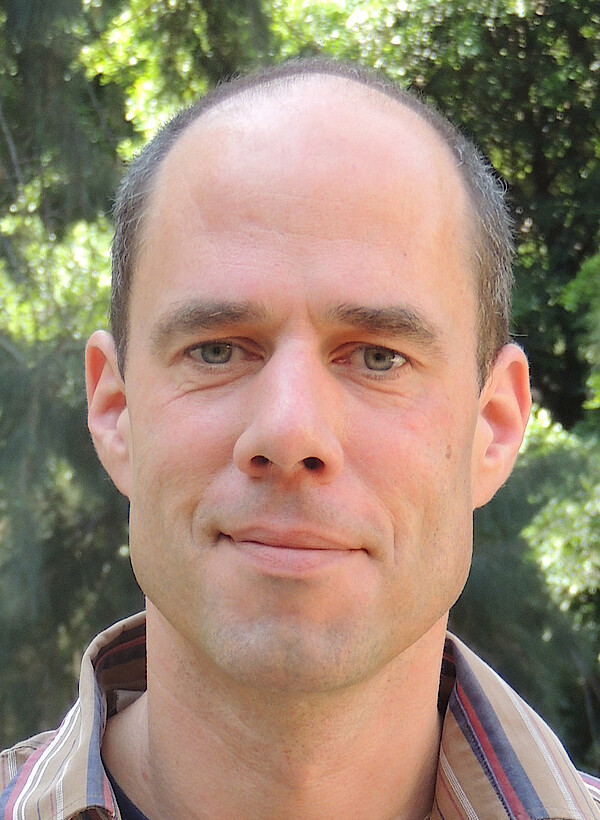
Before joining the OIB in October 2015, Jonathan Kriener was a PhD fellow at the Kulturwissenschaftliches Institut in Essen, a visiting fellow at Marburg’s Center for Near and Middle East Studies and a research fellow at the Georg Eckert Institute for International Textbook Research at the OIB and at Universität Bochum. Jonathan graduated with a PhD in Oriental Studies from Universität Bochum in 2010. He taught courses about the twentieth-century histories of Lebanon, Israel and the Palestinians as well as recent Arab educational thought and reform at Universität Bochum and Universität Tübingen. His publications compare history, civics and religious instruction at Lebanese, Palestinian and Israeli schools and in higher education in Egypt and Lebanon. His current project is about academic history writing in Lebanon and combines his interest in academically-produced expressions of collective memory with that for institutional practices in the social sciences and humanities.
Reports about the participation of countries in global knowledge production treat it as an indicator for how societies fare in benefitting from the effects of globalization. With regard to the social sciences and humanities, the discourse also revolves around about who partakes to what extent in the interpretation of world history, international politics, economic and cultural relations.
Funded by the Volkswagen Foundation and conducted at the Ruhr-Universität Bochum in cooperation with the OIB, this project studies the opportunities and constraints for quality education, creative research and international academic cooperation in the social sciences and humanities at Egyptian and Lebanese universities.
Book
Kriener, Jonathan. 2011. Lebanese – but How? Secular and Religious Conceptions of State and Society at Lebanese Schools. Würzburg: Ergon. (Interview in al-Mudun, content).
Kriener, Jonathan, and Wolfram Reiss. 2012. Die Darstellung Des Christentums in Schulbüchern Islamisch Geprägter Länder. Libanon and Jordanien 3. Hamburg: EBV.
Journal Article
———. 2018 ‘Al-ʿUlūm al-ijtimāʿīya fī Jāmiʿat al-Qāhira qabla Shubāṭ 2011 wa-baʿdahu: Tamaththulāt wa-idrākāt mutaghayyira li-l-ḥurrīya al-akādīmīya’. In: Iḍāfāt: Al-Majalla al-ʿArabīya li-ʿilm alijtimāʿ (41-42, special issue, Winter – Spring). Beirut: Center for Arab Unity Studies, pp. 114-133.
———. 2017 ‘Religious Pluralism or Multiplied Simple-Mindedness? School Textbooks for Religious Education in Lebanon’. In: Multiple Alterities - Views of the Others in Textbooks of the Middle East, edited by Samira Alayan and Elie Podeh, Palgrave McMillan, pp. 187-210.
Kriener, Jonathan. 2015. ‘ Like on Different Planets? Arab Social Scientists in Their Scientific Communities’. Middle East – Topics & Arguments 4. doi:10.17192/meta.2015.4.3043.
———. 2013. ‘Bildung in Den Arabischen Staaten’. In Bildungsentwicklung Und Schulsysteme in Afrika, Asien, Lateinamerika Und Der Karibik, edited by Christel Adick, 11:23–42. Historisch-Vergleichende Sozialisations- Und Bildungsforschung.
———. 2012a. ‘Arabische Länder’. Edited by Klaus-Peter Horn and Heidemarie Chemnitz. Lexikon der Erziehungswissenschaft. Tübingen: Klinkhardt.
———. 2012b. ‘Different Layers of Identity in Lebanese Textbooks’. In The Politics of Education Reform in the Middle East. Self and Other in Textbooks and Curricula, edited by Samira Alayan and Achim Rohde, 131–53. New York: Berghahn. ( Table of contents).
———. 2012c. ‘Israel’. Edited by Klaus-Peter Horn and Heidemarie Chemnitz. Lexikon der Erziehungswissenschaft. Tübingen: Klinkhardt.
———. 2011. ‘ The Social Sciences in the Research on Arab Higher Education. Lebanon and Egypt as Examples’. Tertium Comparationis 17 (2): 108–36.
———. 2007. ‘The George Eckhart Foundation for International Studies on Textbooks: The Foundation’s History, Objectives, and Domains of Operation’. In The Textbook: Its Role, Content, and Quality, edited by Fawzi Ayoub, 19–39. Beirut: Lebanese Association for Educational Studies.
———. 2006. ‘Control through Education? The Politicization of Israeli and Palestinian School Textbooks’. In What Shall We Tell the Children? International Perspectives on School History Textbooks, edited by Stuart Foster and Keith Crawford, 211–26. London: Information Age Publishing. ( Book description).
———. 2003. ‘Palestinian School Textbooks between International Polemics and National Apologia’. International Textbook Research 25 (4): 399–406.
Affiliated researcher, Oct. 2015 - Dec. 2016
Antonio De Martin is a PhD candidate in Politics and International Relations at the University of Kent, Canterbury. His research investigates the sources of political parties' resilience in Lebanon by looking at political parties' transnational relations,
access to state power, intra-sectarian political competition and the provision of social services to the population.
Antonio holds an MSc in Middle East Politics from the School of Oriental and African Studies (University of London) and a Master's degree in Diplomacy and International Relations from the University of Bologna. His research interests encompass the study of political parties and social movements in the Middle East, the international relations and the multi-level identities that characterize it. Prior to starting his PhD, Antonio worked as a political analyst with various research centres, where his articles focused on political, social and international developments in the Middle East, and for several Middle East-based political and human rights research organizations.
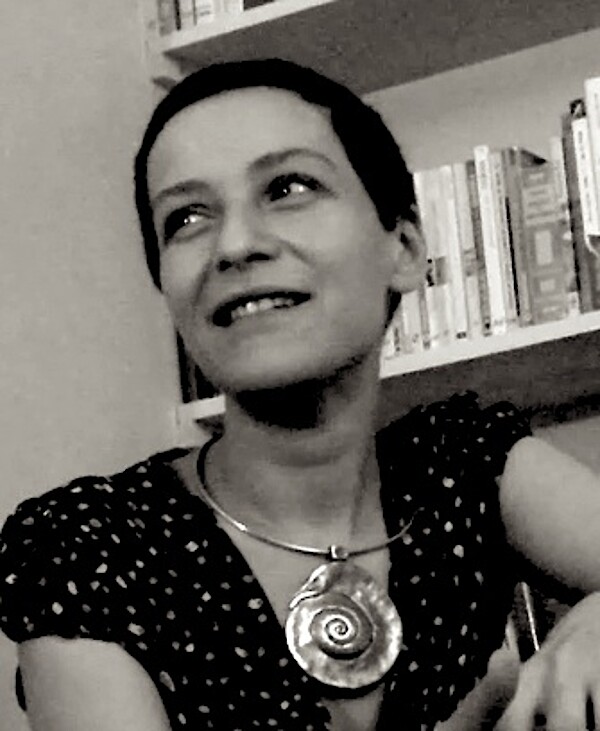
Postdoc Research Fellow, Jan-Dec 2016
A graduate in Philosophy (Paris-1 Sorbonne and Nanterre) and in Chinese language and civilization (INALCO, Paris), Laure Guirguis holds a PhD in Political Studies from the School for Advanced Studies in Social Sciences (EHESS, Paris).
In my first book, based on my PhD Dissertation and entitled "Les Coptes d'Égypte: Violences communautaires et transformations politiques 2005-2012", I combine political, anthropological and social historical approaches to analyze how social and individual practices reproduce a political order based on the multilayered subjugation of the Christian minority, drawing on the theories of (de)secularization to understand the contemporary politicization of religious leadership and to explain how the state became the main agent obstructing the process of secularization among the Coptic community. It includes a study on the attitudes of the Egyptian Muslim brotherhood towards Copts, as well as on the evolution of this organization.
Before joining the OIB, I have been pursuing my research for two years at the University of Montreal as a Banting postdoctoral Fellow. At that time, I wrote my second book, which was published by Laval University Presses in 2014 under the title "Égypte: révolution et contre-révolution".
I now engage in a long-term research on Arab leftist trends in the 1960-1970 in a cross-regional perspective. Indeed, the study of leftwing radicalism from 1960-1970 requires a transnational approach, which allows us to decipher the dialectical processes of social, discursive, and symbolical practices whose interconnections are constitutive of structuring continuities. Focusing on Lebanon, Yemen, and Egypt, I do not engage in a comparative study; rather, I consider them as circulation nodes bundling and easing the diffusion and the transformation of activists’ practices, be they political, discursive or symbolical. I pay particular attention to the impact of Chinese, Vietnamese, Cuban, and Algerian revolutionary models and strategies on Arab left-wing syntax, tactics, and revolutionary thought. This project also brings into conversation gray literature, literary publications, and cinema, which have proved to be an important forum for political struggle and expression---even in support of the regime, as it was the case in the Nasserian state---thereby combining methodological tools which stem from different disciplinary fields.
Doctoral Research Fellow, Jan. - Dec. 2016.
Michela De Giacometti is a PhD candidate in social anthropology at the École des Hautes Études en Sciences Sociales (EHESS) of Paris. After beginning her research in Lebanon on the emergent youth narratives of the Lebanese civil war and the shaping of social memories, she redirected her work to family-making in the region. For her thesis, which stands at the intersection of the anthropology of kinship and law, she explores the nexus between politics, religion and intimacy in light of the experiences of Lebanese couples who have contracted a civil marriage and the attempts of civil society organizations to reshape the personal status laws within the Lebanese multi-confessional system. She holds a Master’s degree in Cultural Anthropology and Ethnolinguistics from the University of Venice, as well as a Bachelor’s degree in Conservation of Cultural Heritage, for which she worked on the politics of reconstruction and the role of cemeteries as contested spaces of memory in a post-disaster northern-Italy context.
Doctoral Research Fellow, Jan. - Dec. 2016
Farah Cherif Zahar is a former student of the École Normale Supérieure (ENS) of Paris and graduated from the Institut d'Études Politiques (Sciences Po Paris). She holds an "agrégation" in Philosophy, a "licence" in Arabic and three master degrees: in Philosophy from the University of Paris-Sorbonne (Paris IV); in Political Science from Sciences Po Paris; and in Islamic Studies from the École Pratique des Hautes Études (EPHE- Paris). Since 2011 she works on her doctoral thesis entitled “The Eighth Book of Aristotle’s Physics and its commentaries: Simplicius and Ibn Bāǧǧa”. She taught at the University Paris-Sorbonne before being awarded a one year-fellowship from the Fondation Thiers (Centre de Pensée humaniste). In January 2016, she joined the OIB as a doctoral fellow where she will complete her dissertation on the Arabic reception of the eighth Book of Aristotle’s Physics.
Doctoral Research Fellow, Mar. - May 2016
Charlotte Bank is an art historian and independent curator, living and working between Berlin and Geneva. She is currently preparing her PhD thesis titled “The emerging contemporary art scene in Syria: Between the tradition of social critique and a contemporary artistic movement in the Arab World” at the University of Geneva. From February 2013 – February 2016 she was a member of the Swiss National Fund research project “Other Modernities: Patrimony and Practices of Visual Expression Outside the West”.
Her PhD project explores the contemporary art scene in Syria during the decade 2000–2010 in its social and political contexts. Based on material collected from interviews with artists, gallerists and other cultural producers during extended research periods in Syria in 2007 – 2010, the project seeks to analyse the working situations of young visual artists in Syria up to the year 2010, how they sought to negotiate a space for individual artistic projects and the articulation of social and political critique in the context of fluctuating rules of censorship, the difficult and largely lacking exhibition opportunities inside Syria and the fast developing art scene of the Middle East, and how they inscribe themselves into the tradition of critical and socially committed as practiced in Syria since the early generations of painters.
Office Manager
Hussein Hussein works at the OIB's secretariat since January 2016.

Doctoral fellow, Apr.-June 2016
Adrien Zakar is a Ph.D. candidate in history at Columbia University in the City of New York. His doctoral project examines the Great Syrian Revolt with a focus on science, technology, and visuality. It investigates how political and cultural imaginations of the late Ottoman era shaped discourses on science, data collection, and visual practice among both local and foreign actors in the post-Ottoman Levant. Last year, he published "The End of Ottoman Positivism: The Gökalp-al-Husari Debate of 1916" in IJMES 47(3). Adrien holds a License in International Relation from the Graduate Institute of International Studies and a M.A. in Arab Studies from Georgetown University.
Research Associate

Research Associate between September 2016 and August 2019.
He earned his PhD in Social and Cultural Anthropology at the University of Modena and Milan – Bicocca in 2006, with a thesis on the Jordanian university system and its students, studied ethnographically between 2003 and 2005. Later on he went to Cairo, Egypt, where for three years (2007-10) was associated researcher at the CEDEJ, working on different projects dealing with university education and its privatization, worries of citizenship, youth, religious minorities, and migration. In 2010, he was a researcher in the Social Science Research Council project on “Arab Universities: Autonomy and Governance”. Since 2011 he is senior research fellow at the Research Cluster “Society and Culture in Motion” at the MLU Halle-Wittenberg. Between 2013 and 2016 he was the principal investigator in a BMBF sponsored project, managed through the Orient-Institut Beirut, on doctoral studies at Egyptian universities.
He teaches at the University of Modena since 2008 and at the MLU Halle since 2012 different courses on the Anthropology of the Middle East, on Social and Political Anthropology, and on Ethnology of the Mediterranean. He is the author of Youth and Education in the Middle East: Shaping Identity and Politics in Jordan (London: I.B. Tauris, 2016). He co-edited a special issue on Subjectivity and Islam: Anthropological Perspectives (La Ricerca Folklorica, 2014), and is the editor of a volume on ethnographies of private universities (to be published by Brill in 2016). His articles appeared in Anthropology of the Middle East, REMMM, CRES, Confluences Méditerranée, other than in different edited volumes.
He is currently working at the publication of the results of his latest research project, on knowledge production at the doctoral level at Egyptian public universities.
According to both local and international sources the educational sector in Egypt has been in deep crisis for decades, and this is usually linked to an even deeper crisis of citizenship. There are different versions of what the crisis is about; official studies tend to highlight an increasing quantitative burden on educational institutions, with consequent decline in the quality of education and erosion of educational infrastructures, or they focus on the inadequacy of the curricula and of teaching methodologies.
Funded by Germany’s Federal Ministry of Education and Research (BMBF), this project aims at exploring the ways in which knowledge, especially at the post-graduate level, is produced and transmitted in Egyptian universities, with a particular focus on the social sciences and humanities.
Book
Youth and education in the Middle East: shaping identity and politics in Jordan. Library of modern Middle East studies. Vol. 177, London (I. B. Tauris, 2016).
Edited Volumes
Rethinking private higher education: ethnographic perspectives. Leiden (Brill, Studies in critical social sciences, Vol. 101, 2016).
“Religious belonging and life-worlds. Ethnographies on subjectivity and Islam”. La Ricerca Folklorica. co-editor (with Paola Abenante), N. 69 (Venice, 2014).
Journal Articles (peer-reviewed)
"We Take Care of Our Students: Private Universities and Politics of Care in Egypt". Ethics and Social Welfare 11(3): 261-276, 2017
"The university and the formation of subjectivity and of religious belonging: a case study from Amman, Jordan." La Ricerca Folklorica 69:105-116, 2014.
(with P Abenante) "Life-worlds and religious commitment: ethnographic perspectives on subjectivity and Islam." La Ricerca Folklorica 69:3-19, 2014.
"Une université privée égyptienne dans le nouveau marché international de l’enseignement supérieur." Cahiers de la Recherce sur l'Education et les Savoirs 13:167-179, 2014
"Discourses of reforms and questions of citizenship: the university in Jordan." REMMM (Revue des Mondes Musulmans et de la Méditerranée) 131:151-166, 2012.
"Being Baha’i in contemporary Egypt: an ethnographic analysis of everyday challenges." Anthropology of the Middle East 4, (2):34-51, 2009.
"Les relations entre coptes et musulmans dans la littérature égyptienne contemporaine: une perspective anthropologique." Confluences Méditerranée 66:143-154, 2008.
Book Chapters & other journals
"Introduction: rethinking private higher education, a collection of ethnographic perspectives." In Daniele Cantini (ed.) Rethinking Private Higher Education. Leiden: Brill, pp. 1-26, 2016.
"Private Universities and the State in Egypt at a time of social and political change." In Daniele Cantini (ed.) Rethinking Private Higher Education. Leiden: Brill, pp.131-157, 2016.
"Describing religious practices among university students in the Middle East: a case study from the University of Jordan, Amman." In Ethnographies of Islam: ritual perfomances and everyday practices. Baudouin Dupret, Thomas Pierret, Paulo Pinto and Kathrine Spellman (eds.). Edinburgh: Edinburgh University Press, pp. 115-123, 2012.
"I paradossi delle rappresentazioni dell’Europa tra i giovani giordani." LOGOS 5:39-59, 2012.
"Il rapporto tra Copti e Musulmani in Egitto." CAPYS (Journal of History and Religious Sciences) 3:27-52, 2012.
(with L Grunz)"Des nouveaux riches aux jeunes martyrs: les évolutions de la migration de travail égyptienne au prisme de ses représentations médiatiques." In Chroniques Egyptiennes 2008. Iman Farag (ed.) Cairo: Cedej, pp. 79-99, 2010.
"Livello di integrazione degli stranieri in 'zona Tempio'." I Quaderni del Ferrari 33:33-79, 2010.
"University of Jordan: situating globalisation policies regarding higher education in their context - an ethnographic perspective from Amman." DAVO (German Association of Middle Eastern Studies) Journal 30:81-84, 2009.
"Les relations entre coptes et musulmans dans la littérature égyptienne contemporaine: une perspective anthropologique." In Chrétiens d’Orient. Pierre Blanc (ed.) Paris: L’Harmattan, pp. 141-152, 2008.
"I giovani studenti giordani di fronte al lavoro. Un caso studio da Amman, Giordania." In Antropologia dei rapporti di dipendenza personale. Fabio Viti (ed.) Quaderni del Laboratorio di Etnologia. Modena: Il Fiorino, 2007.
IT-Assistant
Since September 2016, Patrick Mzaaber works at the Orient-Institut Beirut as a part-time Information Technology Assistant (IT-Assistent).
Mr. Mzaaber is a Computer Science graduate with a solid experience in software development, he's taking care of the OIB end-users related inquiries, website administration and the "Digital Humanities" subject at the institute.
OIB Cairo Office
Andrea Jud managed the Cairo Office of the OIB from October 2016 to June 2020. She is a PhD candidate in Media and Communication Studies at Freie Universität Berlin and holds an MA in Political Science and Islamic Studies from Friedrich-Alexander Universität Erlangen-Nürnberg. In her PhD project she asks about the public construction of collective identities at the intersection of old and new media.
https://www.polsoz.fu-berlin.de/en/kommwiss/arbeitsstellen/internationale_kommunikation/Doktoranden/Andrea-Jud/index.html

Postdoc Research Fellow, Nov. 2016 - Oct. 2017
Dr. Marieke Krijnen is a Postdoctoral Fellow at the Orient Institut. She holds a PhD from Ghent University, Belgium and an MA from the American University of Beirut. Her dissertation, titled “The Urban Transformation of Beirut: An Investigation into the Movement of Capital”, connected detailed studies of processes of urban change to Lebanon’s political economy of public debt, the circulation of capital through the country’s massive diaspora, and the 2008 financial crisis in Europe and the Gulf, linking gentrification theory to economic and financial geography.
Her project at the OIB will focus on the increasing connections between real estate and finance in Lebanon and develop a research agenda on the financialization of real estate in the Middle East more generally, with a special focus on the Levant-region and the Gulf. Her publications can be found on orient-institut.academia.edu/MariekeKrijnen
(with M van Meeteren and D Bassens) Manning circuits of value: Lebanese professionals and expatriate world-city formation in Beirut. Environment and Planning A. (2016) Advance online publication, doi: 10.1177/0308518X16660560.
(with C De Beukelaer) Capital, state and conflict: The various drivers of diverse gentrification processes in Beirut, Lebanon. In: Lees L, Shin HB, and López-Morales E (eds.), Global Gentrifications: Uneven Development and Displacement, Bristol and Chicago: Policy Press, pp. 285–309, 2015.
(with M Fawaz) Exception as the rule: High-end developments in neoliberal Beirut. Built Environment 36(2): 245–259, 2010.
Visiting Postdoctoral Fellow
Postdoc Research Fellow, Nov. 2016 - Oct. 2017
Fouad is a Research Associate at the Department of Theology and Religion, University of Birmingham, United Kingdom. His research interests include Islamic pieties, sectarianism, Shii politics, jihadism, insurgency and rebel governance. His research focuses on Lebanon, Syria and Iraq, with a particular interest in post/ conflict issues and translocal entanglements.
Fouad previously worked at the University of Erfurt and the Free University of Berlin in Germany and the Orient Institute in Beirut, Lebanon. He has consulted governments and think tanks on regional politics and authored numerous policy papers on the Syrian war, insurgency and the rebel governance, justice and police sectors, and violent extremism (P/CVE). He was also involved in developing and implementing conflict stabilisation and transformation programmes.
Fouad holds a PhD from Durham University, United Kingdom.
Marei, Fouad G. 2020. “From the Throes of Anguished Mourning: Shi‘i Ritual Lamentation and the Pious Publics of Lebanon”, Religion and Society, (forthcoming).
Marei, Fouad G. 2020. “Dahiya Doctrine”; “Islamic State (Daesh)”; “Hayat Tahrir al-Sham (HTS)”; “Sectarianism”; and “Syrian Local Coordination Committees”. In: Conflict in the Modern Middle East: An Encyclopaedia of Civil War, Revolutions and Regime Change, ed. by Jonathan K. Zartman. Santa Barbara, CA: ABC-CLIO.
Marei, Fouad G. 2019. Are Municipalities in Lebanon Delivering? Survey Results on Solid Waste Management, Public Safety and Government Transparency. Berlin: Democracy Reporting International. July 2019. [in EN and AR]
Marei, Fouad G., et al. 2018. “Interventions on the Politics of Governing the “Ungovernable””, Political Geography. Vol. 67: 176 – 186.
Dewachi, Omar and Fouad G. Marei. 2018. “Background Paper on Health and Conflict in Syria”, Lancet Commission Report: Syria—Global Health in Conflict.
Marei, Fouad G. 2016. “Preaching Development: Shi’i Piety and Neoliberalism in Beirut”. In: Religious Activism in the Global Economy: Promoting, Reforming or Resisting Neoliberal Globalization?, ed. by Sabine Dreher and Peter J. Smith. Washington, DC: Rowman and Littlefield. Pp. 167 – 187.
Marei, Fouad G. 2013. “Multiple Justices and Contending Legitimacies: Security and Justice in Northern Syria”. Special Reports. Istanbul/Ras Al Khaimah: ARK Group DMCC. April 2013.
Postdoc Research Fellow, Oct. 2016 - Sept. 2017Dr. Sarah Doebbert Epstein joins the Orient-Institut as a Postdoctoral Fellow after completing her doctorate at SOAS, University of London, through the Centre for Cultural, Literary and Postcolonial Studies (CCLPS). Her research is in what she has termed “Comparative Critical Thought,” which she has developed through a series of trans-schematic, transformative engagements between European philosophy and Arabic critical thought (both classical and contemporary).
Her doctoral thesis was entitled: “From a ‘Philosophy of the Limit’ to a ‘Poetics of the Horizon’: A Comparative Critical Approach to Language, Subjectivity and Alterity in Poststructuralist Thought and Arabic Critical Discourse.” She also holds a master’s degree from SOAS in Arabic Literature (with distinction) and a BA in Government (summa cum laude) from Smith College.
Prior to joining the Orient-Institut, Dr. Epstein was a Fulbright Research Fellow at the Center for Maghribi Studies in Tunis (CEMAT), and an Andrew W. Mellon Postdoctoral Fellow at the American University in Beirut’s Center for Arts and Humanities (CAH). During her Mellon fellowship, she designed and taught interdisciplinary courses in philosophy, Islamic studies, and literature at the American University in Beirut (AUB). She is currently affiliated with AUB’s Philosophy Department as a visiting faculty member.
Dr. Epstein’s current research at the Orient-Institut, which entails the transformation of her doctoral thesis into revised book form, is provisionally entitled: “Voyage Toward an Impossible Exteriority: Crossings of European Philosophy and Arabic Poetic Theory.” Engaging trends in continental philosophy and Arabic theory, as well as their intersections, this project considers the work of moving between the “inside” and “outside” of “philosophy,” while interrogating eurocentric conceptions of those limits. It thus opens a critical conversation in which a new ethical/political opening toward the other is at stake. The goal is to begin articulating a new type of critical intervention that could arise from between critical tropologies of thought, through their mutual (linguistic/historical) displacements.
Doctoral Fellow, October - December 2016Adélie Chevée is a PhD candidate in politics and international studies at the School of Oriental and African Studies (SOAS).
Her doctoral research focuses on the evolution of the Syrian intellectual field since 2011. She is now doing her field research at the Orient Institut Beirut.
A graduate in European Affairs from Sciences Po Paris, and in International Relations form Paris 1 (Panthéon-Sorbonne), Adélie was a Jenkins Memorial Scholar at Oxford University where she achieved an MPhil thesis on the political activism of Syrian refugees in Lebanon. Drawing on the work of French philosopher Jacques Rancière, she explored how a politically qualified subject is articulated in light of experiences of exile, throughout a study of the discourse of Syrian refugee communities in Lebanon between 2011 and 2014. Part of her research findings have been published in French (Berthelot, 2014). Her research also led her to discuss the principle of distinction between civilians and combatants in international humanitarian law (Saint Antony’s International Review, 2015). Her interests include international relations theories, politics of the Middle East, poststructuralism, sociology, and refugees and forced migrations studies.

Doctoral Fellow, Oct. - Dec. 2016Elizabeth Rauh is a PhD candidate of Islamic art history in the Department of the History of Art at the University of Michigan in Ann Arbor.
She specializes in modern art and visual culture of the Middle East, along with artistic practices in the history of the Islamic world. Her research project examines the modern dynamics of Islamic artistic heritage in the Arab world and Iran. In 2011 she co-curated an exhibition of posters from the 1979 Iranian Revolution and Iran-Iraq War at the University of Chicago. Following the 2009 presidential protests in Iran she completed her master’s thesis at Indiana University on the arts of the uprising, later published in an article, “Thirty Years Later: Iranian Visual Culture from the 1979 Revolution to the 2009 Green Movement.” Her forthcoming article on the 2011 Pearl Roundabout protests in Bahrain will explore the transformative effects of iconoclasm in spurring new creative forms of popular dissent.

Doctoral Fellow, Sept. - Dec. 2016Felix Wiedemann is a Ph.D. candidate in Arabic Studies at the University of Bamberg and an M.A. student in Library and Information Science at the Humboldt University of Berlin
He holds an M.A. in Arabic Studies from Bamberg University and a B.A. in Islamic Studies. Recently he published “L’alternance codique dans le rap algérien et tunisien” in L'Année du Maghreb 14|2016. His doctoral project investigates rap music and hip hop culture in Lebanon and Algeria. By focusing on language choice, processes of cultural “glocalization” and (supra-regional) networks, it discusses the existence of an "Arabic Hip Hop Nation".
Doctoral Fellow, Oct. 2016 - Mar. 2017Ines Fabiunke is a PhD candidate in Middle Eastern Studies at Leipzig University, Germany.
Her doctoral project examines how contemporary popular music in the MENA is produced today by focusing on the production of commercial pop music ("Arab Pop"). Ethnographic in approach, the project builds on fieldwork conducted in different production centers of the transnational Arab music industry, such as Beirut, Cairo, and Dubai. By considering questions of place, cultural identity, and cultural industries, the project examines the politics of music making in the region with an emphasis on the ways space, locality, and cultural production intersect. Ines has a background in the field of community media and holds a M.A. in Middle Eastern Studies from Leipzig University.

Doctoral Fellow, Aug. 2016 - Jul. 2017Pamela Klasova is a doctoral candidate at Georgetown University in the Department of Arabic and Islamic Studies at Georgetown University.
Her dissertation examines Islamic imperial ideology-formation through a case study of al-Hajjaj ibn Yusuf al-Thaqafi (d.714), the formidable Umayyad governor of Iraq. While in the study of the early Islamic empire the focus has been on Islamic conquests, she focuses on the ‘soft power’ at play and looks at the role of culture and language in the construction of imperial power. She coordinates a literary approach to later Muslim historical with the study of contemporary material culture and non-Muslim texts. Her research falls into the field of early Islamic history; yet she is approaching it from a broader perspective than usual, hoping to improve on the (to-date) tentative attempts at bringing early Islam out of isolation onto the world stage of late antiquity. Pamela holds a Master’s degree in Middle Eastern Studies from Leiden University in the Netherlands and a Magister degree in Arabic and Dutch philology from Charles University in Prague.
Visiting Doctoral Fellow
Visiting Doctoral Fellow, November – December 2018
Peter Blank is a PhD candidate at the Friedrich-Schiller-Universität Jena, Germany, where he works as a research assistant and lecturer at the Department of Oriental Studies. He holds an MA in Political Science and Islamic Studies from Friedrich-Schiller-Universität and he has also studied at the Institut d'Etudes Politiques de Rennes, France. Peter re-joined the OIB for the second part of his fellowship, after completing fieldwork while based at the OIB in 2016/2017. He was a visiting researcher at the Université Saint-Joseph in Beirut in 2018 and the Department of Peace and Conflict Research at Uppsala University, Sweden, in 2016. He has worked with several political and academic organisations in Germany, Egypt and Lebanon. His research interests include war-to-peace transitions, political parties and power-sharing in divided societies, rebel governance and social change in civil wars.
Affiliated research fellow, Oct. 16 - June 2017is a Postdoctoral Research Fellow in the ERC project "Private Pieties: Mundane Islam and New Forms of Muslim Religiosity: Impact on Contemporary Social and Political Dynamics" at the University of Göttingen.http://cordis.europa.eu/project/rcn/205198_de.html
She received her PhD in Arabic Studies in 2011 from the University of Leipzig. "At the doors of paradise: discourses of female self-sacrifice, martyrdom and resistance in Palestine" (Ergon Verlag).
She graduated from the University of Bayreuth and the School of Oriental and African Studies (London). She taught at the Universities of Leipzig, Cologne and Goettingen as assistant professor. She has also worked as Middle East Expert for the Alexander Von Humboldt Foundation in Bonn. She carried out extensive field research throughout the Middle East.
www.uni-goettingen.de/en/dr-phil-liza-maria-franke/550683.html
Visiting Doctoral Fellow
Doctoral Fellow, January - December 2017
Marie Karner is a doctoral candidate at the Institute of Geography at the Johannes Gutenberg University Mainz (Germany). Within her dissertation, she studies the cohesion and internal dynamics of diasporic communities. These communities distinguish themselves through communicative, emotional, economic and symbolic ties among their globally dispersed members. They have gained strength under the influence of new media, the rapid development of transportation technology and the pressure of neoliberal transition. Maronite Lebanese communities who identify with villages in the Wādī Qādīšā serve as case studies for the project. Within the concept of a multi-sited-methodological approach, descendants from Hadath el Jobbeh, Diman, Bcharre, Hadchit, Blouza, Kfarsghab, Ehden, Aitou and Miziara were qualitatively interviewed in Lebanon, Sydney (Australia), Halifax (Canada), Easton (USA) and Dubai (UAE). Based on praxeological concepts she examines the stabilizing elements of diasporic communities like daily routines, maintained traditions, organizations and their shared knowledge. Marie holds a diploma in Geography accomplished with a thesis on the “Transformation of the historic center of Byblos/Jbeil (Lebanon)”.
Visiting Doctoral Fellow
Visiting Doctoral Fellow, February - July 2017
Adey Almohsen is a PhD candidate in History at the University of Minnesota. Although specialising on the history of the modern Middle East and Mediterranean, his broad interests include Marxism - its history and thought, global and intellectual histories of the sixties, critical theory, poststructuralism and postcolonialism, theories of nation and culture, among others.
Focusing on Palestinians and the fraught development of their identity, Almohsen chronicles Palestinian history through its cultural, intellectual, and aesthetic expressions in Amman and Beirut over the years 1967-75. He registers the unremarkable manifestations of Palestinian identity in everyday life and observes the products of independent Palestinian thinkers and artists in order to furnish a "counterpoint" to hegemonic national discourses and reifying historical narrations. Conclusively, the research agenda will reveal the diversity and creativity of a people whose conflict and its historicisation – by supporters as well as detractors – have contributed to their provincialising.

Doctoral Fellow, Febr. - Jul. 2017Mohamed Maslouh is currently a PhD student in Ghent University (Department of languages and cultures: the Near East and the Islamic World), and a researcher in the project of “the Mamlukisation of the Mamluk Sultanate-II: Historiography, Political Order and State Formation in 15th-Century Egypt and Syria (2017 - 2021).”
His research interests cover the Middle East's intellectual and cultural histories, Modern Muslim discourses on bioethics, and digital humanities. His PhD dissertation examines Mamluk-Mongol diplomacy during their long warfare starting from the mid-thirteenth century. Previous works on the subject regarded the correspondence between the Mamluk and Mongols courts as vehicles for expressing kingship ideologies. Alternatively, with focusing on the Mamluk side, this dissertation will examine these letters beyond their direct functions as means of communication between two courts, and link them along with the “forged correspondences” (or the various versions of the correspondences which frequently appeared in the narrative sources) to more internal issues of Mamluk literary production, social organization, and performance of identities.
Affiliated researcherTim Sontheimer is a PhD student at the Faculty of Media and Communications at Bournemouth University (United Kingdom). He holds an M.Sc. Middle East Politics from SOAS (UK), and a B.A. Political Science from Freie Universit?t Berlin (Germany).
His dissertation aims to understand law enforcement responses to a variety of security challenges, particularly protests, in the context of international security cooperation, moves towards security sector reform and police modernization, and a globalized market of security technologies. The thesis takes into account historical continuities and discontinuities of crowd policing. Particularly, the project focuses on the role of security technologies and their impact on security strategies. Tim’s thesis features a multi-method, multi-site approach, that integrates historical, transnational and local perspectives. Based on insights from Science and Technology studies and other, ‚new materialist‘ literature in security and international relations, Tim’s work seeks to go beyond traditional state-centrist accounts of security.
2016. Bringing the British back in. Sephardim, Ashkenazi anti-Zionist Orthodox and the British Policy of Jewish Unity.“ Middle Eastern Studies 52, 2; 165-181.
2014. Review of Miriam Stock "The taste of gentrification: Arabic snack shops in Berlin" Orient 2 (German)
2013. "Under the Banner of Democracy: Authoritarianism and Protest in Jordan". DOI-Kurzanalysen (German)
2013. Review of Asef Bayat "Life as Politics: How ordinary people change the Middle East". Orient 3 (German)
Librarian
Fatima Shaheen joined the library team in June 2017. As librarian she is responsible for cataloguing and user services.
Fatima Shaheen joined the library team as assistant librarian for cataloguing and user services in June 2017. She studied Library and Information Science at Lebanese University and has an MA in Information Management from Lebanese University. She is a member of the Lebanese Library Association since 2009.

Affiliated Researcher Borja de Arístegui is a lecturer at the Lebanese International University teaching History of Political Thought and a practical course on Public Affairs and Campaigning.
He studied History and Political Science at McGill University, Montreal, Canada, and is currently preparing his master in Global Diplomacy at SOAS, University of London. He is a PhD student in History at the University of Aberdeen researching the role of the Spanish embassy in Beirut in the shaping of Spanish Foreign Policy during the Lebanese civil war.
Borja’s stay at the OIB is intended to pursue preliminary field work in preparation of the study to be started at the University of Aberdeen and on diplomatic relations between Spain and the Arab states after the Second World War.
Affiliated Researcher Johanna Kühn is a PhD candidate at the Institute of Social and Cultural Anthropology and a research fellow in the ERC project “Private Pieties, Mundane Islam and New Forms of Muslim Religiosity: Impact on Contemporary Social and Political Dynamics” at the University of Goettingen.
www.uni-goettingen.de/en/550653.html
She studied Social and Cultural Anthropology, Sociology and Economics at the University of Bayreuth and at the University of Goettingen. Her doctoral thesis examines the interrelationship between contemporary forms of Muslim religiosity and the construction of gender - especially the constructions of masculinities - among Sunni Lebanese in Beirut.
www.uni-goettingen.de/en/551130.html
Former Director
Birgit Schäbler is Professor of Middle East History at the University of Erfurt and and was from October 2017 until September 2022 director of OIB.
Birgit Schäbler was the director of the Orient-Institut Beirut between October 2017 and September 2022. She holds the (only) Chair of History of West Asia (Near and Middle East) in Germany, at the University of Erfurt, from which she is on leave. After studying History of the Middle East, Islamic Studies and Political Science at the universities Würzburg, Erlangen and Berkeley, USA, she held positions and fellowships at Erlangen University, Duke University, Harvard University and Georgia’s Public Liberal Arts University. She founded the first German transregional research platform in 2008 at the University of Erfurt.
Her research interests have been combining history of the Middle East, Islamic Studies, Anthropology and Politics, focusing on the modern history of the Levant (Bilād al-Shām) from the 19th and 20th centuries to the present. Her recent book analyzes and documents 19th century reform movements in Islam in their entanglement with Europe. She has also published on questions of the history of the Middle East as an Area History and its relations to Global History, as well as the history of Orientalism and Oriental Studies in Germany and beyond.
Her books and edited and co-edited volumes include: Moderne Muslime. Ernest Renan und die Geschichte der ersten “Islamdebatte” 1883 (English translation forthcoming); Globalization and the Muslim World: Culture, Religion, and Modernity; Area Studies und die Welt: Weltregionen und neue Globalgeschichte; The Syrian Land: Processes of Integration and Fragmentation in Bilad al-Sham from the 18th to the 20th century; Aufstände im Drusenbergland: Ethnizität und Integration einer ländlichen Gesellschaft Syriens vom Osmanischen Reich bis zur staatlichen Unabhängigkeit, 1850-1949 (also in Arabic).
Moderne Muslime. Ernest Renan und die Geschichte der ersten Islamdebatte 1883, Ferdinand Schöningh Verlag, 2016.
(Reviews: Deutschlandfunk: Radikale Religionskritik mit Tradition, 11.07.2016; Deutschlandradio Kultur: "Moderne Muslime" und "Streit um Jesus" - Islam ist ein Ergebnis der Moderne, .06.08.2016; Ö1-Live: Der Islam war schon einmal moderner, 29.1.2017, Historische Zeitschrift Vol. 304, No. 3, 2017, p. 821; H-Soz-Kult, 08.03.2018, <www.hsozkult.de/publicationreview/id/reb-26995>; Hadil Lababidi: Hikma, Vol.8, issue 1, 2017, pp. 162-164)
[engl: Modern Muslims. Ernest Renan and the History of the first Islamdebate 1883].
The Muslim World, Volume 103 (1), Theme section: "Heterodoxies", Hartford: Hartford Seminary, 2013.
Area Studies und die Welt: Weltregionen und neue Globalgeschichte (ed.), Mandelbaum Verlag, Vienna 2007. (Reviews: FAZ, 27.6.2008, p. 47.)
[engl: After the Nation: Between Area History and Global History]
Alf Lüdke, Birgit Schäbler (ed): Iran: ein Vierteljahrhundert Islamische Revolution. SOWI, das Journal für Geschichte, Politik, Wirtschaft und Kultur, 2/2005.
[engl: Iran: A Quarter Century of Islamic Revolution]
Birgit Schäbler, Leif Stenberg (ed.): Globalization and the Muslim World. Culture, Religion and Modernity, Preface by Roy Mottahedeh, Syracuse University Press, 2004.
(Reviews: IJMES, 38 (2), November 2006: 581-584, Sage Race Relations Abstracts, Volume 31 Number 2 May 2006, H-Gender-MidEast, h-net.org, April 2005; Periplus, 2005: 135-136; International Affairs, 82 (1): 214-215), H-Soz-Kult, 9.12.2006; Welt des Islams, Heft 46,2 (2006), pp. 233-236)
Intifadat Jabal al-Duruz - Hauran. Min al-ahd al-'uthmani ila daulat al-istiqlal, 1860-1949. Dirasa antrubulujiyya-tarikhiyya, Dar an-Nahar, Beirut, 2004, Beiruter Texte und Studien, Vol. 92.
(Review: an-Nahar, 29.7.2004)
Westasien und die Moderne. Periplus. Jahrbuch für außereuropäische Geschichte (Guest editor), Münster, Hamburg, London: Lit-Verlag 2003.
[engl: Westasia and Modernity]
Kai Hafez, Birgit Schäbler (ed.): Der Irak - Land zwischen Krieg und Friede, Heidelberg: Palmyra Verlag, 2003.
(Reviews: Süddeutsche Zeitung, Bayerisches Fernsehen/Das politische Buch, Rheinischer Merkur; Zeitschrift für Politikwissenschaft, 14 , 2004, 1:257; Orient. Deutsche Zeitschrift für Politik und Wirtschaft des Orients, 45, 2004, 2: 302-303; iz3w. Informationszentrum 3. Welt, 2004, No. 274: 45-46; Periplus, 2004, pp.314-318)
[engl. Iraq between War and Peace]
Thomas Philipp, Birgit Schäbler (ed.): The Syrian Land: Processes of Integration and Fragmentation in Bilad al-Sham from the 18th to the 20th century, Wiesbaden, 1998.
(Reviews: DAVO Nachrichten, Heft 10, September 1999: 111-12; Bulletin of the School of Oriental and African Studies 63(3), 2000: 432; Journal of Near Eastern Studies, Vol. LXI, (3), July 2002; Asien, Afrika, Lateinamerika, 28, 2000:212-215)
Rebels, Shaykhs and State(s): The Druzes in Syria in the 19th and 20th centuries. Zokak al-Blat(t), Veröffentlichungen des Deutschen Orient Instituts No. 12, Beirut, 1998.
Aufstände im Drusenbergland. Ethnizität und Integration einer ländlichen Gesellschaft Syriens vom Osmanischen Reich bis zur staatlichen Unabhängigkeit 1850-1949. Gotha, 1996
(Reviews: Die Welt des Islams, XXXIX, (2), 1999; Bibliotheca orientalis, Vol. 55 (1998), 3-4, S.565-567; DAVO Nachrichten, Heft 7, Februar 1998:165-166, Periplus, 1998:156-158, Orient. Deutsche Zeitschrift für Politik und Wirtschaft des Orients, 40, 1999, 2: 317-319)
[engl: Revolts in the Druze Mountain. Ethnicity and Integration of a Rural Community from the End of the Ottoman Empire to Syrian Independence 1850-1949]
“Geschichtswissenschaft in der arabischen Welt: der Libanon“, in: VHD-Journal, 10, Juli 2021, Der Nahe Osten als historischer Raum, S. 32-35. https://www.historikerverband.de/fileadmin/_vhd/VHD_Journal/vhd_journal_2021-07_screen_1.pdf
“The Importance of Being Earnest about Neighborhoods. An Introduction to the TRAFO series Reconstructing Neighborhoods of War”, TRAFO-Blog for Transregional Research, 28.08.19. https://trafo.hypotheses.org/19512
“2nd of June 1967 – a German-Iranian-German Event”, TRAFO-Blog for Transregional Research, 13.09.2017. https://trafo.hypotheses.org/7758
“Was kann (und sollte) die Nah-Ost-Wissenschaft zur Integration von Geflüchteten beitragen?“, DAVO-Nachrichten, Vol. 42/43, August 2017, pp. 113-115.
[engl: What Can (and Should) the Near East Science Contribute to the Integration of Refugees?]
“Unser Islam, euer Islam. Wie 1883 die erste Islamdebatte entbrannte“, die ZEIT 19/2016, 28.4.2016.
[engl: Your Islam, our Islam. How the first Islam debate broke out in 1883]
“All Things Transregional? in conversation with Birgit Schäbler”, TRAFO-Blog for Transregional Research, 24.11.2016. https://trafo.hypotheses.org/5515
“Zum Verhältnis von Regionalgeschichte (Area History) und Globalgeschichte (Global History) am Beispiel der Osteuropäischen Geschichte“, IN: Martin Aust, Julia Obertreis (ed.), Osteuropäische Geschichte und Globalgeschichte (= Quellen und Studien zur Geschichte des östlichen Europa, Vol. 83), Steiner, Stuttgart, 2014, pp. 307-316.
[engl: Relating Area History to Global History: The Example of the History of Eastern Europe]
“Der Islam und Europa: eine Geschichte von Verflechtung und Verstrickung“, IN: Thomas Ertl, Andrea Komlosy, Hans-Jürgen Puhle (ed.), Europa als Weltregion. Zentrum, Modell oder Provinz?, new academic press, Vienna, 2014, pp. 166-177.
[engl: Islam and Europe: A History of Involvement and Entanglement]
“Der Islam der Modernisten“, IN: Bärbel Kracke; René Roux; Jörg Rüpke (ed.): Die Religion des Individuums. Münster, Aschendorff, 2013, pp. 141-150.
[engl. The Islam of the Modernists]
“Constructing an Identity between Arabism and Islam: The Druzes in Syria”, IN: The Muslim World, Vol. 103 (1), 2013, pp. 62-79.
“Introductory Remarks”, IN: The Muslim World, Vol. 103 (1), 2013, pp. 1-2.
“Humanism, Orientalism, Modernity: A Critique”, IN: Jörn Rüsen, Stefan Reichmuth u.a. (ed.), Humanism and Muslim Culture - Historical Heritage and Contemporary Challenges, Vandenhoeck & Ruprecht, Göttingen, 2012, pp. 147-162.
“Orientalismus“, IN: Pim den Boer, Georg Kreis, Wolfgang Schmale, Heinz Duchhardt, Europäische Erinnerungsorte 3. Europa und die Welt, Oldenbourg Wissenschaftsverlag, Munich, 2012, pp. 39-44.
[engl: Orientalism]
“Vertreibung, Nostalgie und Nationalismus in Palästina - Das Land (al-ard) im politischen Gedächtnis der Generationen“, IN: Christian Sterzing, Palästina und die Palästinenser - 60 Jahre nach der Nakba, Heinrich-Böll-Stiftung, Berlin, 2011, pp. 62-85
[engl: Expulsion, Nostalgia and Nationalism in Palestine – The Land (al-Ard) in the Political Commemoration of the Generations]
“Weltgeschichte, Globalgeschichte, Area Histories: Eine Stellungnahme“, IN: EWE, Erwägen - Wissen - Ethik, Jg. 22 Heft 3, 2011, pp. 425-429.
[engl: World History, Global History, Area Histories: A Comment]
"Riding the Turns: Edward Saids Buch Orientalism als Erfolgsgeschichte" IN: Burkhard Schnepel, Gunnar Brands, Hanne Schönig (ed.), Orient-Orientalistik-Orientalismus. Geschichte und Aktualität einer Debatte, Bielefeld transcript 2011, pp. 297-302.
[engl: Riding the Turns: Edward Saids Book Orientalism as a Success Story]
"Exegetische Kultur, Alltagspraxis und das Prinzip der Beratung im (politischen) Islam: Der Koran als Text und Praxis", IN: Wolfgang Reinhard (ed.), Sakrale Texte. Hermeneutik und Lebenspraxis in den Schriftkulturen, München Beck 2009, pp. 120-152.
[engl: Exegetical Culture, Everyday Practice, and the Principle of Shura in Political Islam: The Quran as Text and Practice]
"Historismus versus Orientalismus? Oder: Zur Geschichte einer Wahlverwandtschaft", IN: Abbas Poya, Maurus Reinkowski (ed.), Das Unbehagen in der Islamwissenschaft. Ein klassisches Fach im Scheinwerferlicht der Politik und der Medien, Bielefeld 2008, pp. 51-70.
[engl: Historism versus Orientalism? Or: On the History of an Elective Affinity]
"Post-koloniale Konstruktionen des Selbst als Wissenschaft. Anmerkungen einer Nahost-Historikerin zu Leben und Werk Edward Saids", IN: Alf Lüdtke, Rainer Prass (ed.), Gelehrtenleben. Wissenschaftspraxis in der Neuzeit, Cologne [u.a.] 2007, pp. 87-100.
[engl: Constructions of Self: On the Autobiography of Edward Said]
"Religion, Rasse und Wissenschaft. Ernest Renan im Disput mit Jamal al-Din al-Afghani", IN: Themenportal Europäische Geschichte (2007).
[engl: Religion, Race and Science. Ernest Renan Disputing with Jamal al-Din al-Afghani]
"Das Studium der Weltregionen (Area Studies) zwischen Fachdisziplinen und der Öffnung zum Globalen: Eine wissenschaftsgeschichtliche Annäherung", IN: Birgit Schäbler (ed.), Area Studies und die Welt. Weltregionen und neue Globalgeschichte, Vienna, Mandelbaum Verlag 2007, pp. 11-44.
[engl: The study of world regions (area studies) between disciplines and the opening to the global: a scientific-historical approach]
"Vorwort", IN: Birgit Schäbler (ed.), Area Studies und die Welt. Weltregionen und neue Globalgeschichte, Vienna, Mandelbaum Verlag 2007, pp. 7-10.
[engl: Foreword]
"Das Wissen der Weltregionen. Birgit Schäbler im Gespräch mit Dipesh Chakrabarty. Statt eines Nachworts", IN: Birgit Schäbler (ed.), Area Studies und die Welt. Weltregionen und neue Globalgeschichte, Vienna, Mandelbaum Verlag 2007, pp. 252-258.
[engl: The knowledge of world regions: Birgit Schäbler in conversation with Dipesh Chakrabarty]
"Biotope, Reservate und Disneylands of Faith: Ein Kommentar zur Lage der Christen in Israel, den palästinensischen Gebieten und Syrien", IN: Historische Anthropologie, 14 (3), 2006, pp. 457-465. Reprinted in: Udo Steinbach (ed.), Autochthone Christen im Orient. Zwischen Verfolgungsdruck und Auswanderung. Deutsches Orient-Institut Hamburg Vol. 75, 2006, pp. 147-157.
[engl: Biotopes, Reserves and Disneylands of Faith: A Commentary on the Situation of Christians in Israel, the Palestinian Territories and Syria]
"Writing the Nation in the Arabic-Speaking World, nationally and transnationally", IN: Stefan Berger, (ed.), Writing the Nation in Global Perspective. London, Macmillan, 2007, pp. 179-196.
"Ein Vierteljahrhundert Islamische Verfassung und eine Republik voller Widersprüche. Der Iran im Jahre 27 der Revolution", IN: Birgit Schäbler, Alf Lüdtke (ed.), Iran: Ein Vierteljahrhundert Islamische Revolution. SOWI Journal für Geschichte, Politik, Wirtschaft und Kultur, 2/05, Erhard Friedrich Verlag, pp. 4-10.
[engl: A quarter century of Islamic Constitution and a Republic full of contradictions: Iran in the year 27 of the revolution]
"The 'Noble Arab': Shifting Discourses in Early Nationalism in the Arab East (1910-1916)", IN: Streck, Bernhard; Leder, Stefan (ed.): Shifts and Drifts in Nomad-Sedentary Relations. Wiesbaden, Reichert Verlag, 2005, pp. 443-467.
"From Urban Notables to Noble Arabs: Shifting Discourses in the Emergence of Nationalism in the Arab East (1910-1916)," IN: Thomas Philipp, Christoph Schumann (ed.), From the Syrian Land to the States of Syria and Lebanon. Beirut, Würzburg: Ergon, 2004, pp. 175-198.
"Civilizing Others: Global Modernity and the Local Boundaries (French, German, Ottoman, Arab) of Savagery", IN: Birgit Schäbler, Leif Stenberg, Globalization and the Muslim World. Culture, Religion and Modernity. Syracuse University Press, 2004, pp. 3-29.
"Vergangenheit und Zukunft des Irak", IN: Gewerkschaftliche Monatshefte, 4/2003, 54. Jahrgang, pp.243-253.
[engl: Past and Future of Iraq]
"Der Irakkrieg 2003 - Versuch einer Bilanz", IN: Kai Hafez, Birgit Schäbler (ed.) Der Irak - Land zwischen Krieg und Frieden. Heidelberg: Palmyra Verlag, 2003, pp.9-14.
[engl: The Iraq War 2003 - Attempting to Review]
"Der Irak zwischen Vergangenheit und Zukunft", in: Kai Hafez, Birgit Schäbler (ed.) Der Irak - Land zwischen Krieg und Frieden. Heidelberg: Palmyra Verlag, 2003, pp.95-120.
[engl: Iraq between Past and Future]
"Gewalt und Friedensprozess im Nahen Osten: die arabische Perspektive", IN: Wolfgang Bergsdorf, Dietmar Herz, Hans Hoffmeister (ed.), Gewalt und Terror. Weimar: Rhino Verlag 2003, pp.183-204.
[engl: Violence and peace process in the Middle East: the Arab perspective]
"Einleitung", IN: Periplus. Jahrbuch für außereuropäische Geschichte. Münster, Hamburg, London: Lit-Verlag 2003, pp. 1-8.
[engl: Introduction]
"Allmende auf Arabisch", IN: AKA- Newsletter (Arbeitskreis für Agrargeschichte). Bielefeld: 2003 (14), pp. 24-32.
[engl: Allmende in Arabic]
"Globale Moderne und die Geburt der Zivilisationsmission an der kulturellen Binnengrenze: die Mission civilisatrice ottomane", IN: Periplus. Jahrbuch für außereuropäische Geschichte. Münster, Hamburg, London: Lit-Verlag 2003, pp. 9-29.
[engl: Global Modernity and the birth of the civilization mission at the internal cultural border: the mission civilisatrice ottomane]
"Identity, Power and Piety: The Druzes in Syria", IN: ISIM International Institute for the Study of Islam in the Modern World Newsletter, Vol. 7, issue 1, 2001, pp. 25.
"Practicing 'Musha': Common Lands and the Common Good in Southern Syria under the Ottomans and the French (1812-1942)", IN: Roger Owen (ed.), New Approaches to Land in the Middle East, Harvard University Press, 2001, pp. 267-338.
"Von 'wilden Barbaren' zur 'Blüte der Zivilisation': Zur Transformation eines Konzeptes und zur Neubewertung des frühen arabischen Nationalismus", IN: Dietmar Rothermund (ed.), Aneignung und Selbstbehauptung. Antworten auf die europäische Expansion. München, 1999, pp. 85-110.
[engl: From 'Wild Barbarians' to the 'Blossom of Civilization': Transforming a Concept and Reassessing Early Arab Nationalism]
"State(s) Power and the Druzes: Integration and the Struggle for Social Control (1838-1949)", IN: Thomas Philipp, Birgit Schäbler (ed.), The Syrian Land: Processes of Integration and Fragmentation in Bilad al-Sham from the 18th to the 20th century. Wiesbaden, 1998, pp.331-365.
"Coming to Terms with Failed Revolutions: Historiography in Syria, France and Germany", IN: Middle Eastern Studies, London, Vol. 35, No.1, January 1999, pp. 17-44.
"Universale Zivilisationsmission in der europäischen Phase außereuropäischer Expansion: Anregungen aus der Globalisierungsdebatte", IN: Loccumer Protokolle, 1997, pp. 184-194.
[engl: Universal Civilization Mission in the European Phase of Non-European Expansion: Suggestions from the Globalization Debate]
"Ulrich Jasper Seetzen (1767-1811): Jeveraner Patriot, aufgeklärter Kosmopolit und Orientreisender", IN: Ulrich Jasper Seetzen: Leben und Werk. Die arabischen Länder und die Nahostforschung im napoleonischen Zeitalter. Vorträge des Kolloquiums vom 23. und 24. September 1994 in der Staats- und Forschungsbibliothek Gotha. Gotha, 1995, pp. 113-135.
[engl: Ulrich Jasper Seetzen (1767-1811): Jeveran patriot, enlightened cosmopolitan and oriental traveler]
"Das Prinzip der 'Vermeidung': der Große Syrische Aufstand 1925-27 gegen das französische Mandat in der französischen und syrischen Geschichtsschreibung", IN: Saeculum, 1, 1994, pp. 195-212.
[engl: The principle of 'avoidance': the Great Syrian Uprising 1925-27 against the French Mandate in French and Syrian historiography]
"Der 'Drusenaufstand' in Syrien: Zum Verhältnis von Ethnizität und sozialer Bewegung,", IN: Blätter des iz3w, 195, Februar 1994. Reprinted in: Jörg Später, ...alles ändert sich die ganze Zeit. Soziale Bewegungen im Nahen Osten, Freiburg 1994, pp. 181-190.
[engl: The Druze Uprising in Syria: On the relationship between ethnicity and social movement]
"Zivilisierung", IN: Enzyklopädie der Neuzeit, Vol. 15 (Wissen - Zyklizität, Nachträge), Stuttgart (u.a.),
Metzler Verlag, 2012, pp. 519-525.
[engl: Civilization]
"Seetzen, Ulrich Jasper", IN: NDB, Neue Deutsche Biographie, Historische Kommission bei der Bayerischen Akademie der Wissenschaften (ed.), Vol. 24, Berlin Duncker&Humblot 2010, pp. 155-156.
"Sultan al-Atrash", IN: Encyclopedia of Islam, Third Edition, Part 2008-1, pp. 172.
"Kampf gegen Sekte ist kein Krieg", Interview in: Thüringer Allgemeine, 18.11.2015.
[engl: Fighting sect is not a war]
"In memory of Thomas Philipp", Obituary in: Journal of Levantine Studies, Vol. 5, No. 1, summer 2015, pp. 155-156.
Gespräch mit Erfurter Expertin über Irak-Politik und Bürgerkrieg in Syrien, Interview in: Thüringer Allgemeine, 25.06.2014.
[engl: Conversation with Erfurt expert on Iraq policy and civil war in Syria]
"Nahost-Expertin: "Es geht nicht anders, als mit dem Assad-Regime zu verhandeln", Interview in: Thüringer Allgemeine, 22.01.2014.
[engl: Middle East Expert:" There is no other way than to negotiate with the Assad regime]
"Nachruf auf Shmuel Noah Eisenstadt", IN: Periplus. Jahrbuch für außereuropäische Geschichte, 2011, pp. 198-200.
[engl: Obituary for Shmuel Noah Eisenstadt]
"Strahl- und Anziehungskraft des Islamismus ist am Verlöschen", Guest contribution in Thüringer Landeszeitung, 19.02.2011.
[engl: Radiance and attraction of Islamism is dying out]
"Geschichte darf keine Selbstbespiegelung sein", Interview in: Süddeutsche Zeitung, 18.09.2006.
[engl: History must not be a self-reflection]
"Christen im 'Heiligen Land'", IN: Die politische Meinung, No. 438, May 2006, pp. 44-48.
[engl: Christians in the Holy Land]
"Die Rolle der NGOs (Non-Governmental Organizations) zwischen Politischem und Zivilem. Bericht über die Jahreskonferenz des Muwatin Instituts in Ramallah", IN: DAVO Nachrichten, Vol. 23, August 2006, pp. 37 - 39.
[engl: The role of NGOs (Non-Governmental Organizations) between the political and civilian" Report on the annual conference of the Muwatin Institute in Ramallah]
"Es geschah vor 35 Jahren: Hafis al-Asad wird Präsident Syriens", IN: Damals. Das Magazin für Geschichte und Kultur, Heft 3, 2006, pp. 8-11.
[engl: It happened 35 years ago: Hafiz al-Asad becomes President of Syria]
"Der Arbeitskreis für Außereuropäische Geschichte im VHD", IN: Periplus. Jahrbuch für außereuropäische Geschichte. Münster, 2005, pp.131-135.
[engl: The Working Group for Non-European History in the Association of Historians in Germany]
Konferenzbericht zum Workshop: "Provincializing Europe? Potential and Pitfalls of (Non-)Western Approaches to History", Erfurt, 10./11. Juni 2005, IN: Periplus. Jahrbuch für außereuropäische Geschichte. Münster, 2005, pp.136-140.
[engl: Conference Report: "Provincializing Europe? Potential and Pitfalls of (Non-) Western Approaches to History]
Ute Behr, Stephanie Dumke, Sven Knepper, Birgit Schäbler: "Tagungsbericht The Israeli-Palestinian Conflict as Result of Colonial Border-Making", 23.1.2004, Erfurt, IN: H-Soz-u-Kult, 18.06.2004.
[engl: Conference Report The Israeli-Palestinian Conflict as a Result of Colonial Border-Making]
"Erfahrungen mit dem Kolonialismus", Interview in: Thüringer Allgemeine Zeitung, 27.03.2003.
[engl: Experiences with Colonialism]
"Palästinas Fall in den blutigen Terror", IN: Thüringische Landeszeitung, 01.02.2003.
[engl: Palestine's case in the bloody terror]
"The Middle East at Harvard", IN: DAVO Newsletter, No.9, Februar 1999, pp 78-79.
"Beirut - wiedervereinigt", IN: Blätter für Deutsche und Internationale Politik, 4, 1992, pp.397-401.
[engl: Beirut – reunited]
"Gewinner und Verlierer: Ein Blick auf die Arabische Welt nach dem Krieg", IN: Blätter des iz3w, 174, July 1991, pp. 37-42.
[engl: Winners and losers: a look at the Arab world after the war]
"Die PLO hat schon verloren", IN: Blätter für Deutsche und Internationale Politik:, 3, 1991, pp. 335-338. Also published in Karl Bredthauer, Klaus Neumann, Krieg für Frieden? Berlin 1991.
[engl: The PLO has already lost]
"Der 'Feind des Menschengeschlechts': Eine Auseinandersetzung mit H.M. Enzensberger, Ralph Giordano u.a.", IN: Nürnberger Stadtmagazin, July 1991, pp. 35.
[engl: The 'enemy of the human race': A confrontation with H.M. Enzensberger, Ralph Giordano and others]
"Research on the Modern Arab World in the Federal Republic of Germany", IN: MESA-Bulletin, 24, 1990, pp. 157-168.
Reihe Globalgeschichte und Entwicklungspolitik, Mandelbaum Verlag, Vienna.
[engl: Series Global History and Development Policy]
Reihe Mittelmeerstudien. Beiträge zur Geschichte der größeren Méditerranée, Verlag Turia + Kant, Vienna, Berlin.
[engl: Series of Mediterranean Studies. Contributions to the history of the larger Méditerranée]
Reihe Studien zur Zeitgeschichte des Nahen Ostens und Nordafrikas, Lit-Verlag, Münster.
[engl: Series Studies on the contemporary history of the Near East and North Africa]
Periplus - Jahrbuch für außereuropäische Geschichte, Lit-Verlag, Münster.
[engl: Periplus - Yearbook for Non-European History]
Erfurter Beiträge zur Westasiatischen Geschichte / Erfurt contributions to West Asian History:
o 1. L. Carl Brown: Two Centuries of American Relations with the Middle East, Erfurt, Vol. 1/2002.
o 2. Jan Asmussen: Ungewisse Zukunft – Zypern nach den Referenda, Erfurt, Vol. 2/2004.
[engl: Uncertain Future – Cyprus after the Referenda]
o 3. Roger Owen: Some Thoughts on World History and the Arabian Gulf, Erfurt, Vol. 3/2008.
o 4. Anne-Marie Störger: Konvertitinnen in Thüringen. Neue Musliminnen am Beispiel des internationalen islamischen Kulturzentrums Erfurter Moschee e.V., Erfurt, Vol. 4/2012.
[engl: Anne-Marie Störger: Converts in Thuringia. New Muslim Women Using the Example of the International Islamic Cultural Centre Erfurter Moschee e.V.]
o 5. Azad O. Salih: Abgetrennte und umstrittene Gebiete. Eine Fallstudie zu einem Grundproblem zwischen der föderativen Region Kurdistan und der Zentralisierung des Iraks, Erfurt, Vol. 5/2012.
[engl: Azad O. Salih: Segregated and disputed Territories. A Case Study to a Basic Problem between the federal Region Kurdistan and the Centralisation of Iraq]
o 6. Jad Hatem: Chrétiens dʼOrient en quête dʼune nouvelle religion, Erfurt, Vol. 6/2014.
in: Welt des Islams, Politische Vierteljahresschriften, Middle East Studies Association Bulletin, International Journal of Middle East Studies, Periplus: Jahrbuch für außereuropäische Geschichte, Historische Anthropologie - Kultur, Gesellschaft, Alltag, Bibliotheca Orientalis, Jahrbuch für Europäische Überseegeschichte
in: Sachsenspiegel, Bayern3, MDR, Deutsche Welle, Deutschland Radio Kultur, Deutschlandfunk, WDR Funkhausgespräche
Show all publications and articles (Universität Erfurt website)
Visiting Postdoctoral Fellow

Visiting Postdoctoral Fellow, October 2017 -May 2018
Mathieu Eychenne holds a PhD in History from the Aix-Marseille University, France (2007). He previously worked as a research associate at the French Institute of the Near East (Ifpo) in Damascus (2008 – 2011) and Beirut (2011-13). He taught the history of the Medieval Middle East and North Africa at the École Normale Supérieure in Paris (2014/15) and was awarded a Junior Fellowship at the Annemarie Schimmel Kolleg at the University of Bonn in Germany in 2016/17. Since 2018 he is assistant professor (maître de conférences) at Paris Diderot University.
His research interests include the social and economic history of medieval and early modern Bilād al-Shām, with a focus on Damascus and its province. His current research project at the OIB encompasses the interactions of Damascus with its rural hinterland, focusing on land property and pious endowments (waqf), rural economy (agricultural production and prices) and environmental issues (climate).
Visiting Postdoctoral Fellow
Visiting Postdoctoral Fellow, February 2018 - July 2018
Muzna al-Masri is an independent consultant and researcher in the fields of conflict analysis and conflict sensitive aid. She holds a PhD in Anthropology from Goldsmiths, University of London and an MA in Conflict Transformation and Peacebuilding from the Eastern Mennonite University, Harrisonburg, Virginia. During her time as a postdoctoral fellow and based on her PhD thesis, she worked on a book manuscript that ethnographically explores the relationships between political elites and their constituencies, looking specifically at the emergence and production of the model of an “entrepreneurial elite” in post-war Lebanon. Before joining the OIB, she was a postdoctoral fellow with the Arab Council for the Social Sciences and affiliated with the Centre for Arab and Middle Eastern Studies at the American University of Beirut (AUB), and she has taught at AUB and Goldsmiths, University of London. Her research interests include political anthropology, elite politics and formation, everyday political practice, conflict and violence, the anthropology of aid and development, research methods and the anthropology of sports.
Journal Article
Al-Masri, Muzna. 2017. ‘Sensory Reverberations: Rethinking the Temporal and Experiential Boundaries of War Ethnography’. Contemporary Levant 2 (1). doi:10.1080/20581831.2017.1322206.
Book Chapters:
Al-Masri, Muzna and Salim Nasr. 2006. “Decentralization, Democratization and Local Governance in the Arab World” (in Arabic), in LCPS (Eds.) The Challenges of Decentralization and Local Governance in the Arab World. Beirut: Lebanese Center for Policy Studies, 2006
Recent Research reports
Al-Masri, Muzna and Zeina Abla. 2017. “An urban suburb with the capacities of a village: The Social Stability Context in the Chouf Coastal Area”. Beirut: UNDP.
Al-Masri, Muzna and Zeina Abla. 2017. “The Burden of Scarce Opportunities: The Social Stability Context in Central and West Bekaa”. Beirut: UNDP.
Al-Masri, Muzna. 2016. “Local and Regional Entanglements: The Social Stability Context in Sahel Akkar. Beirut: UNDP.
Al-Masri, Muzna. 2016. “Converging Interests of Conciliation: The Social Stability Context in the Marjaayoun and Hasbaya Qazas” Beirut: UNDP.
Al-Masri, Muzna. 2016. “The Social Stability Context in the Nabatieh & Bint Jbeil Qazas: Conflict Analysis Report” Beirut: UNDP.
Al-Masri, Muzna, and Zeina Abla. 2015. “The Impact of the Schooling System of Lebanese and Syrian Displaced Pupils on Social Stability.” Beirut: International Alert.
Al-Masri, Muzna. 2015. “Between Local Patronage Relationships and Securitization: The Conflict Context in the Bekaa Region.” Beirut: Lebanon Support & UNDP.
Other:
Al-Masri, Muzna. 2015. “At the Gates of Football Fields” (in Arabic). In Practicing the Public: Beirut's Shared Public Spaces, by Mona Fawaz, Ahmad Gharbieh, Nadine Bekdache and Abir Saksouk-Sasso (eds). Beirut: Published with Assafir newspaper in October 2015.
Visiting Postdoctoral Fellow
Visiting Postdoctoral Fellow, October 2017 - March 2018
Stefan Maneval holds a PhD in Islamic Studies from Freie Universität Berlin. His PhD thesis on public and private spaces in the Saudi city of Jeddah in the twentieth century won the 2016 dissertation prize of the German Association of Middle Eastern Studies (DAVO). It will be published in book form by UCL Press in 2019. From October 2017 to March 2018 Stefan was a postdoctoral fellow at the OIB. He is currently based in Halle (Saale), working on his research project entitled “Negotiating Differences,” for which he received a grant from the German Ministry of Education and Research (BMBF). His publications include articles on contemporary Saudi society and politics, cultural heritage and the art scene in Saudi Arabia, social theory and material culture as well as a co-edited book on the diversity of Muslim everyday life (Muslim Matter, Berlin 2016).
2017
(forthcoming, with Heike Delitz, peer reviewed) “The ‘Hidden Kings’, or Hegemonic Imaginaries: Analytical Perspective of Post-foundational Sociological Thought”. Im@go: Journal of the Social Imaginary.
"Wahhabismus: Was würde Muhammad tun?" In Sunniten und Schiiten, edited by Candid Foundation, pp. 28–29. Bonn: Bundeszentrale für Politische Bildung. Also published in Zenith: Zeitschrift für den Orient 1/2017.
2016
Muslim Matter: Photographs, Objects, Essays, edited by Stefan Maneval and Omar Kasmani. Berlin: Revolver Publishing.
“Lost and Found: A Matter of Orientation”. In Muslim Matter, edited by S. Maneval and O. Kasmani, pp. 111–19. Berlin: Revolver Publishing.
“Fundsachen: Eine Frage der Orientierung”. In Muslim Matter, edited by S. Maneval and O. Kasmani, pp. 125–32. Berlin: Revolver Publishing.
2014
(peer reviewed) "Niemand hat die Absicht, einen Aufsatz zu zensieren. Archäologie, Politik und Zensur im Zusammenhang mit der Ausstellung 'Roads of Arabia. Archäologische Schätze aus Saudi-Arabien’". Forum Kritische Archäologie 3: 1–10.
2012
"Abdullah, wir müssen reden: Die saudische Künstlergruppe 'Edge of Arabia’". Zenith: Zeitschrift für den Orient 6/2012: 82–91. Also published in Spiegel Online, 24.01.2013, http://www.spiegel.de/kultur/gesellschaft/moderne-kunst-in-saudi-arabien-edge-of-arabia-s-gesellschaftskritik-a-878604.html.
"Die Einstürzenden Altbauten: Ein Bericht über den Verfall der Altstadt von Dschidda". Zenith: Zeitschrift für den Orient 1/2012: 70–74.
2010
"Die liberale Reformbewegung in Saudi-Arabien: Analyse und Übersetzung der Reformpetition vom 2. Februar 2007". In: Saudi-Arabien: Ein Königreich im Wandel? Edited by Ulrike Freitag, pp. 61–87. Paderborn: Schöningh.
2008
"Der Militäreinsatz in Nahr al-Barid in arabischen Medien". INAMO 53: 28–32.
Visiting Doctoral Fellow
Visiting Doctoral Fellow, October 2017 - May 2018
Michele Scala is a PhD candidate at Aix-Marseille Université and an independent consultant specialising in “labour migration.” During his fellowship at the OIB, he organised the “At the margins of wage labour?” seminar series revolving around the labour conditions of Lebanese and migrant workers excluded from any form of legal and social protection. In his thesis, he analyses contemporary forms of labour relations, focusing on the role of patron-client ties in labour contexts in which there is little, or no, labour protection.
His latest publication is “De l’injustice à l’action? La mobilisation des travailleurs de Spinneys au Liban”, in A. Allal et al., Quand l’industrie proteste. Fondement moraux des insoumissions ouvrières, Presses Universitaires de Rennes, 2018. Together with Amin Allal (CNRS) and Élisabeth Longuenesse (CNRS), he currently coordinates a special issue on “Situations de travail et mobilisations ouvrières en Méditerranée” for the Confluences Méditerranée review to be published in 2019.
Visiting Doctoral Fellow
Visiting Doctoral Fellow, October 2017 - July 2018
Hana Sleiman is an archivist and a PhD student in History at the University of Cambridge. Her doctoral research is concerned with the intellectual history of the modern Middle East, focusing on two generations of scholars and educational reformers in Beirut and Damascus, and the contest over higher education curricular reform in the early twentieth century. After receiving her MA in Middle Eastern Studies from Columbia University in 2013, she worked as a Special Collections Librarian at the Archives of the American University of Beirut, where she co-led the Palestinian Oral History Archive.
Her archival work focuses on devising open tools and methodologies for ephemera and oral history archives. She is currently collaborating on building the open source MASRAD:platform for Oral History. In the past, she has consulted with the Archive of the Missing and Disappeared in Lebanon, the Syrian Oral History Archive and the Institute for Palestine Studies Library. In 2016 she co-curated Sea of Stories: Voyages of the Palestinian Archives, exhibited in Qalandiya International.
Hana Sleiman, “The Paper Trail of a Liberation Movement,” Arab Studies Journal 24, no. 1 (Spring 2016); 42 – 67.
Visiting Doctoral Fellow
Visiting Doctoral Fellow, January – November 2018
Mina Ibrahim is a third-year PhD student at Justus-Liebig Universität and The International Graduate Centre for the Study of Culture (GCSC) in Gießen, Germany. His doctoral dissertation, “Parables of Khidma: The Everydayness of Christians in Egypt,” ethnographically complicates the difficulties and the possibilities of living as a “good” Christian in Egypt. He researches academic and non-academic works about the lives of the Copts seeking “negated” and “rejected” spaces and contexts, attempting to question the absence of, and to find a place for, the “atheist” and “sinful” among the many other similar figures whose “weak/absent” faith excludes them from claiming a position within the largest Christian minority in the Middle East. In addition to working on his project, Mina contributes to the Eshhad online database that analyses the everydayness of sectarianism in Egypt and beyond (www.eshhad.org). Moreover, he has recently begun to contribute to the MENA Prison Forum project (www.menaprisonforum.org/) that is moderated by the non-profit organisation Umam Documentation and Research in Beirut, in cooperation with The Arab Fund for Arts & Culture (AFAC) and the Institut für Auslandsbeziehungen (ifa).
Affiliated Researcher, since January 2018
Harald Viersen is a doctoral candidate in Arabic at the Philipps University of Marburg. After a brief stint at the North-Netherlands Conservatory he went on to study philosophy and law at the University of Amsterdam, as well as receiving an Mphil in philosophy from the University of Cambridge. In 2014, he lived in Cairo where he continued his studies in Arabic, which he had dabbled in while studying in Amsterdam. During this period, he developed an interest in contemporary Arab thought, which led him to pursue his current doctoral project at the Center for Near and Middle Eastern Studies in Marburg. For this project he was awarded a 3-year scholarship from the Studienstiftung des deutschen Volkes in 2016.
The project in question assesses contemporary Arab thought, focusing on the central and ongoing discussion of authenticity, or aṣāla. Its central thesis is that a study of Arab discussions of authenticity should start from the recognition that authenticity as a political and moral ideal is inherent to the ideological, political, and social development of late modernity. By showing the main current in Arab thought to be an instantiation of this global discourse on authenticity and by describing its rich genealogy and the many ways in which conceptions of authenticity have been developed in the last 250-odd years, the aim is (1) to provide a new perspective on Arab thought that breaks with the dominant nativist understanding of authenticity discourse in the Arab world and opens up new ways of reading and differentiating between the works of Arab intellectuals; (2) to broaden the scope of the study of authenticity, which has remained focused on the European context; and (3) to provide common ground for philosophical discussions and exchange between cultures by showing their traditions of thought to be closely intertwined and faced with similar sets of problems.
Visiting Doctoral Fellow
Visiting Doctoral Fellow, January - November 2018
Joan Chaker is a PhD candidate in the History Department at Harvard University. She received a BA in Economics and an MA in History from the American University of Beirut as well as an MSc in Economics from the London School of Economics. Her previous research focused on the Ottoman tobacco market. She is currently working on a study of the social transformation of the countryside as it joined the global market over the long nineteenth century, told as a collective biography of the mule drivers of Ottoman Lebanon. More generally her research interests range over Ottoman history, global history, the history of capitalism and the constitutional law of money. In a previous incarnation, she worked as a money-markets trader in Amsterdam and London.
Visiting Doctoral Fellow
Visiting Doctoral Fellow, January – April 2018
Sarah C. Johnson is an art historian and a PhD candidate at Freie Universität Berlin, where she is completing a dissertation on the Iraqi modern artist Hafidh Druby (1914 – 1991). Previously she was a curator of Islamic Collections at the British Museum in London. She completed her MA in Islamic Art and Archaeology at the University of Oxford in 2014, and her undergraduate degree in Art and Archaeology at Princeton University in 2010.
Affiliated Researcher Liliana Gómez-Popescu is a SNSF-professor (Swiss National Science Foundation) at the University of Zurich where she directs the project Contested Amnesia and Dissonant Narratives in the Global South.
Post-conflict in Literature, Art, and Emergent Archives. She discusses the role of investigative aesthetics in situations of (post-)conflict and transition and examines the mnemonic/archival potential and counter-semantics of literature and art as dissonant narratives for addressing critical historiographies, accountability, responsibility, and truth. The research project “Literature and Art in Court: Investigative Aesthetics and Dissonant Narratives in the Global South” reassesses the relationship between investigative aesthetics, their forums and the court that has shaped the historical narratives about violent pasts, while it critically inquires into transitional justice, which rests on the premise that it is necessary to attend to the past in order to progress into a future, in which the past has been understood, documented and judged. It gives space to the collective dimension of truth telling and truth constructions, material witnessing and with them to the critical function of archives to guarantee the right to memory and the access to judicial records. At the OIB she follows these questions with regard to Lebanon.
www.rose.uzh.ch/de/seminar/personen/g%C3%B3mez-popescu.html
Affiliated Researcher
Affiliated Researcher Iris Fraueneder is a film scholar, based at the University of Zurich, where she is working as a research assistant with the SNSF-project Contested Amnesia and Dissonant Narratives in the Global South: Post-conflict in Literature, Art, and Emergent Archives.
Her PhD Project „Absent Images. Filmic, Curatorial and Institutional Engagement with the Unavailability of Audiovisual Heritage in the Middle East“ deals with the unavailability of audiovisual heritage in Palestine and Lebanon (lost, scattered, destroyed, unrealized films), and investigates filmic, curatorial and institutional strategies which intervene in this absence.
She studied Theatre, Film and Media Studies and Philosophy at the University of Vienna, and graduated in 2015 with a thesis on the transformations of Masao Adachi’s militant cinema-aesthetics being reflected by Eric Baudelaire’s essayistic documentary film THE ANABASIS... (F 2011). In 2013-2017 she was working at Ludwig Boltzmann Institute for History and Society, Vienna and at the Department of Theatre, Film and Media Studies, University of Vienna. Besides, she is active as a film curator and co-founder of the curating collective Diskollektiv.
dissonantnarratives.ch/iris-fraueneder/
www.khist.uzh.ch/de/kol/gomez/Team/fraueneder.html

Affiliated Researcher Simona Loi is a Ph.D. candidate at Ca’ Foscari University in Venice, where she has been granted a full scholarship.
Her experience as a researcher in Beirut started in 2010-2011, when she was conducting her MA thesis fieldwork on the demarcation lines during and after the Lebanese Civil War. She participated to a research fieldwork in Lebanon in 2012, focusing on the War of the Hotels in Beirut, and again in 2016, in the region of Aley.
She is currently working on the Shi‘i religious rituals in Lebanon and the related geopolitical implications. Her study focuses on the structure of the ʿĀshūrā’ rites in three central neighbourhoods of Beirut (Bashura, Musaytbe, and Zoqaq al-Blat), and investigates how the everyday ritual practices are connected with specific urban atmospheres and emotional geopolitics.
Simona Loi is a member of the Italian Geographical Society: societageografica.net/wp/en/
S. Loi, Beirut: Heterotopias and Geographical Paths along the Demarcation Lines (1840-1990), Bollettino della Società Geografica Italiana, Roma – Serie XIII, vol. VIII (2015), pp. 599-616.
Hans-Robert Roemer Fellow

Hans-Robert Roemer Fellow, January – March 2018
Olga Nefedova is an art historian and former director of the Orientalist Museum in Doha, Qatar. She has worked for many years with private and government collections and museums in the Far East, South Africa, the Middle East and the Gulf countries. Her projects include the following international exhibitions and publications: “The Art and Life of Jean-Baptiste Vanmour (1671 – 1737),” “A Journey into the World of the Ottomans” (2010), “Bartholomäus Schachman (1559 – 1614): The Art of Travel” (2012) and “Heritage of Art Diplomacy: Memoirs of an Ambassador” (2013). Olga is one of the organisers of the “Orientality” series of international biannual conferences (launched at Pembroke College, Cambridge University, 2013). Presently she is an Associate Professor at the National Research University HSE, Moscow.
Her current research project “Art and Artists Crossing Borders: The Early History of Art Education for Arab Students in the Soviet Union between 1959 and 1979” focuses on the early history of art education of students from Arab countries in the USSR. Parts of this research have been presented at international conferences and public seminars such as The Arts in Society (American University, Paris, 2017); World Congress of Middle Eastern Studies (University of Seville, 2018); and Cultural Diplomacy of Socialism in the 20th Century: Institutions, Actors, Discourses (Deutsches Historisches Institut, Moscow, 2019).
Visiting Postdoctoral Fellow
Visiting Postdoctoral Fellow, October 2017 - March 2018
Joseph Ben Prestel is a research associate and lecturer in Modern History at Freie Universität Berlin. During the 2018/19 academic year, he is a Fung Global Fellow at Princeton University. He received his PhD in Modern History from Freie Universität Berlin in 2015. Prestel is the author of Emotional Cities: Debates on Urban Change in Berlin and Cairo, 1860 – 1910 (OUP, 2017). From October 2017 to March 2018, he was a postdoctoral fellow at the OIB, where he worked on his current project Revolutionary Arabesque: Palestinian Groups and the West German Radical Left, 1956 – 1982.
Monograph
Emotional Cities: Debates on Urban Change in Berlin and Cairo, 1860-1910 (Oxford: Oxford University Press, 2017).
Articles
(together with Pascal Eitler) "Body Polis: Körpergeschichte und Stadtgeschichte." Body Politics: Zeitschrift für Körpergeschichte 7 (2016): 5-20.
"Gefühle in der Friedrichstraße: Eine emotionshistorische Perspektive auf die Produktion eines Stadtraums, ca. 1870-1910." sub\urban: Zeitschrift für kritische Stadtforschung 3 (2015): 23-42.
"Hierarchies of Happiness: Railway Infrastructure and Suburban Subject Formation in Berlin and Cairo around 1900." City: Analysis of Urban Trends, Culture, Theory, Policy, Action 19 (2015): 322-331.
"Die Reform der Stadtmänner: Urbaner Wandel und Körperpolitik in Kairo am Ende des 19. Jahrhunderts." Body Politics: Zeitschrift für Körpergeschichte 1 (2013): 323-346.
Visiting Doctoral Fellow
Visiting Doctoral Fellow, March – June 2018
Amin Alsaden is an independent scholar who focuses on the global exchanges of ideas and expertise across cultural boundaries. He is currently researching a pivotal juncture in post-World War II Baghdad, when the city became a locus of unprecedented encounters, contributing to the profound transformation of art and architecture globally while generating unique local movements. Alsaden holds a PhD and MA from Harvard University, a MArch from Princeton University, and a BArch from the American University of Sharjah. He defended his PhD while being a Visiting Doctoral Fellow at the OIB.
Affiliated Researcher
Affiliated Researcher Dr. Jan Daniel is a researcher at the Institute of International Relations, Prague and a Research Fellow at the Institute of Political Studies, Charles University in Prague. In 2017, he obtained his PhD in International Relations from Charles University with thesis on peacekeeping practices in South Lebanon and their role in formation of political order.
In his research, he studies global security and peace discourses and their manifestations in local practices of intervention and state-building, as well as politics of security in Europe and Eastern Mediterranean. He has studied at the Masaryk University (2006 – 2012), University of Bologna (2009) and Bourguiba Institute of Modern Languages (2012). During his PhD studies he conducted research visits to the Free University of Berlin (2014) and American University of Beirut (2014 – 2015). He has published on theory of contemporary critical security studies, political sociology of peacekeeping and security governance and Islamist political movements.
Research project:
Hybrid Revolutionary Actors in World Politics: ISIS and international order
The notion that ISIS should be conceptualized as a hybrid actor that defies clear-cut categories of terrorist/ insurgent group has been promoted by a number of different authors. This project builds on such understanding but pushes the scholarly investigations of the group and its impact on the international politics and security in several novel directions. First, it seeks to examine the imaginations underpinning the project of the self-proclaimed Islamic caliphate. It will thus offer a comprehensive investigation of the political and ontological vision of the world order and political sovereignty envisioned by the group. Second, the project relates these visions to other movements which share some features of the political and spatio-temporal registers with ISIS. The point is thus not to provide a historical overview of ISIS origins but rather to locate it within movements discontent with the current political and international order and its conceptualization and practice of sovereignty and international hierarchy. Third, while the project focuses on ISIS, it also attends to the responses of the international community. The project aims to account for how has been the political-ontological challenge of ISIS as a radical resistance to the present international order and its different political imagination received and fought on the international scene. It therefore seeks to map the effects, which the perceived challenges posed by such novel revisionist actor, have had on the international politics.

Affiliated ResearcherDr. Tülay Yürekli is a research assistant in the department of history (General Turkish History), Faculty of Arts and Sciences, Adnan Menderes University, Aydın/TURKEY.
In 2003 she obtained MA degree from history with the thesis entitled “ Samanids”. She addressed in her thesis political history of Samanids. In 2009, she got her PhD degree in history from Ankara University with the thesis on Mosul and its surrounding during Zangids. In her research, she identified the names of villages and towns of Mosul which are metioned in the geographic works, travelogues and political history books and studied the economic situation and social life in the Mosul region at that time. She has joined Arabic Language class in Mahad al-Ajanib in Damascus ( 2005-2006 ), Amman ( 3 months in 2012 ) and Cairo (3 months in 2018). Also she did a research about waqfs during Bahri Mamluks in al-Jamiyya al-Mısrıyya li’d-dirasât at-Tarihiyya in Cairo.
Research project:
The analysis of the waqfiya belonging to Mamluk Soltan Shahban's mother.
The waqfiyya documants consisted of 50 pages ( waraq ). Each pages comprises of fifteen lines on average. It was written with the nasih style. A few pages of it have been damaged. This project builds on its rewriting with Arabic printed letters, translation to Turkish language and its analysis. While it is being analyzed, the understanding of foundation in İslam will be addressed briefly. Secondly, the foundations of other female members of Mamluk state will be mentioned in general terms. Thirdly, the information about the other waqfs of the sultan’s mother will be given.
Visiting Doctoral Fellow
Visiting Doctoral Fellow, September 2018 - February 2019
Foroogh Farhang is a PhD candidate in Cultural Anthropology at Northwestern University. She received her MA in Gender Studies from Central European University Budapest in 2014. Her Master’s thesis focused on the visual representations of Shi’a saintly martyrs and the martyrs of the Iran-Iraq war in mural paintings in Tehran in post-revolutionary Iran. In her current dissertation project, she explores the political, economic and ethical dimensions of the quest of Syrians for a proper burial in Lebanon in the years following the 2011 mass migration of Syrians to that country. She looks at the ways in which the scarcity of burial spaces in Lebanon, in conjunction with increasing restrictions on crossing the Lebanon-Syria border, has mobilised legal and illegal networks of Syrians’ travelling dead within the borders of Lebanon and en route from Lebanon to Syria.
Visiting Doctoral Fellow
Visiting Doctoral Fellow, September 2018 - March 2019
Sean Lee is a PhD candidate in the Department of Political Science at Northwestern University. His dissertation focuses on sectarian and ethnic minority communities in the Levant during times of civil war. Through interviews, focus groups and archival sources, he traces the decision-making processes of Armenian and Druze communities during the Lebanese civil war (1975 – 1990) and Kurdish and Druze communities in the current conflict in Syria (2011 to the present). He received MA degrees from the Ecole des Hautes Etudes en Sciences Sociales and from the Université de la Sorbonne-Nouvelle. He has carried out field research in Lebanon, Turkey, Tunisia, Germany and the Democratic Republic of Congo.
Visiting Doctoral Fellow

Visiting Doctoral Fellow, September 2018 - April 2019
Sam Dinger is a PhD candidate in the Department of Sociology at New York University. He received his MA in Sociology from NYU in 2017 and spent the 2017/2018 academic year as a Center for Arabic Study Abroad (CASA) Fellow at the American University in Cairo (AUC). His MA research focused on international and local NGOs in Lebanon and their divergent ways of reasoning about the materialities and temporalities of crisis. He is currently working on an ethnographic study of the municipality of Taalabaya in the central Beqaa valley where he is examining the practices and ethics of brokerage and exchange between Syrian and Lebanese residents with a particular focus on young Syrian men.
Visiting Postdoctoral Fellow
Visiting Postdoctoral Fellow, September 2018 - August 2019
Chafika Ouail is a revisionist philosopher and a scholar in Islamic spirituality and theology; she is also a poet. She holds a PhD in Arabic Language and Literature from the American University in Beirut. Her work is concerned with revisiting the concepts and narrative of the Arabic and Islamic tradition by employing a multidisciplinary approach. During a postdoctoral fellowship at the Arab Council for the Social Sciences, she studied the crowd in the Islamic tradition. At the OIB she studies the concept of neighbourliness as a spiritual paradigm. To this end, she tracks from a philosophical perspective the shift of this concept from the pre-Islamic era to the Sufi vision.
Chafika served as assistant editor of Al-Abḥāth and has been chosen to lead the editorial board of the forthcoming issue of Maghārib. She has published on a wide range of topics, including the making of the historical Sufi dictionary; the dilemma of Sufism between translating the experience and translating the language; an onto-semantic reading as a new approach to interpret the Sufi texts; ethics in the Qur’an between philosophy and spirituality; and the making of the crowd (jumhūr) in the Islamic tradition.
Visiting Postdoctoral Fellow
Visiting Postdoctoral Fellow, September 2018 - March 2019
Ahmad Sukkar joined the OIB after a Mellon postdoctoral fellowship at the American University of Beirut. He is a former visiting lecturer at the Department of Architecture at the University of Cambridge and a former research fellow at the Oxford Centre for Islamic Studies. He completed his PhD with a thesis in architecture and a Master’s degree in Humanities and Cultural Studies at the London Consortium (University of London in collaboration with the Architectural Association). He received an MA in Architecture and Urbanism from the Architectural Association. Ahmad holds a Postgraduate Diploma in Architectural Design and a BA in Architecture from the University of Damascus. He has worked at leading architectural offices in the UK and the Middle East, including Zaha Hadid Architects. His work which has received several international awards and prizes examines the interaction between architecture and culture in connection with design, heritage and identity in the Middle East, with a focus on urban conflict, reconstruction and development in Syria.
Visiting Postdoctoral Fellow
Visiting Postdoctoral Fellow, October 2018 - March 2019
Fuad Musallam is a political anthropologist who specialises in the study of activism, labour and subjectivity, particularly as they relate to the making of community and the political imagination. For his PhD at the London School of Economics (completed in 2017), he conducted fieldwork in Lebanon between 2013 and 2014. In particular, he investigated what drove young people to struggle for change and how, in the face of failure to effect it, activists have come to reorient themselves, understanding the possibility of worthwhile action in the future.
His current project tracks community building among migrant workers in Lebanon, particularly through their voluntary associations. During his time at the OIB, he has begun new fieldwork with migrant workers in Beirut to explore possible forms of participatory research practice.
Visiting Postdoctoral Fellow

Visiting Postdoctoral Fellow, October 2018 - August 2019
Before joining the OIB, Mohammad Magout was a senior researcher at The Multiple Secularities—Beyond the West, Beyond Modernities Humanities Centre for Advanced Studies at Universität Leipzig, Germany. He completed his doctoral studies at the same university in 2016 with a dissertation entitled “Between Religion and Culture: Academic Discourse and Religious Subjectivity at Two Nizari Ismaili Institutions for Islamic Studies in London,” for which he was awarded the Katharina Windscheid Prize of the Research Academy Leipzig (2017). Mohammad holds an MA in Muslim Cultures (2010) from the Institute for the Study of Muslim Civilisations, Aga Khan University, London, where he wrote his thesis about heavy metal music in Syria, and a BSc in Mathematics from the University of Damascus (2006). His most recent publication entitled “Transnationalising Multiple Secularities: A Comparative Study of the Global Ismaili Community” will appear in Historical Social Research, Special Issue on “Muslim Secularities” (2019).
Magout, Mohammad. 2019. “Transnationalizing Multiple Secularities: A Comparative Study of the Global Ismaili Community” in Historical Social Research, Special Issue “Muslim Secularities” [forthcoming]
Heilen, Julia and Mohammad Magout .2018. “Conference Report: Workshop ‘Muslim Secularities: Explorations into Concepts of Distinction and Practice of Differentiation’, Leipzig University”, Zeitschrift für Recht und Islam [forthcoming]
Magout, Mohammad .2019. "Between Societal and Internal Secularization: An Overview of Cultures of Secularity in Contemporary Nizari Ismaili Communities." In I. Akhtar (Ed.) Rāhē Najāt (The Path of Salvation): Religious and Social Dynamics of Mercantile Communities in the Western Indian Ocean, Festschrift for Françoise Mallison. Leiden: Brill, p. 37-54 [forthcoming]
Magout, Mohammad .2015. “Ismaili Discourse on Religion in the Public Sphere: Culture as a Mediating Concept” in Y. Suleiman (Ed.) Muslims in the UK and Europe I, Centre of Islamic Studies, University of Cambridge, p. 140-149; available at <http://bit.ly/1PdzdY4>
Magout, Mohammad .2013. “Heavy Metal as Religion and Secularization as Ideology: A Sociological Approach”, The Religious Studies Project, 9 October; available at <http://bit.ly/1VH6izF>
Magout, Mohammad .2012. “Cultural Dynamics in the Syrian Uprising”, The annual conference of the Graduate Section of the British Society for Middle Eastern Studies, London, UK, 11 June; available at <http://bit.ly/1Qkh8Yj>
Research Associate
Fatih Ermiş joined the OIB in 2018. He received a doctorate from the University of Erfurt with a thesis entitled “Ottoman Economic Thinking before the 19th Century.” He holds an MA in economic history from Marmara University and a BA in economics from Boğaziçi University, both in Istanbul. Before joining the OIB, he worked as a research assistant for the Chair of History of West Asia at the University of Erfurt and, most recently, as a post-doctoral associate at the Centre for Islamic Theology, University of Tübingen. His main research interest is pre-modern Islamic intellectual history, with a particular focus on intellectual endeavours in Ottoman lands. His work is also concerned with economic, social, religious and literary writing as well as with Sufi thought. His research at the OIB focuses on a famous book of ethics, Aḫlāḳ-ı ‘Alāʾī, written in Damascus by the Ottoman scholar Ḳınālīzāde ʿAlī Çelebī (1510 – 1572).
This project deals with the Ottoman understanding of ethics at the intersection of philosophy, mysticism and sharia using the example of Qinālīzāde’s Akhlāq-i ‘Alā’ī. Qinālīzāde ꜤAlī Chelebī (1510-1572), perhaps the most influential moral philosopher in the history of the Ottoman Empire, wrote the Akhlāq-i ‘Alā’ī between 1563 and 1565 in Damascus, where he served as the chief judge.
A History of Ottoman Economic Thought: Developments before the 19th century, Oxford and New York: Routledge, 2014.
Osmanlı’da İktisadi Düşünce Tarihi, trans. by Mustafa Tek, Ayşen Edirneligil, Istanbul: Albaraka Yayınları, 2020.
Maḥmūd Šabistarī’s Rosenflor des Geheimnisses, trans. by Hammer-Purgstall, edited and annotated by Fatih Ermiş, Frankfurt am Main: Peter Lang Edition, 2017.
Mahmud Şebüsteri, Gülşen-i Râz, translated and annotated by Fatih Ermiş, Istanbul: Ketebe, 2021.
“Bin Altınlık Hazine: Gülşen-i Râz - Önemi, Hakkındaki Literatür, Ele Aldığı Belli Başlı Konular”, (Treasure of Thousand Gold Coins: Gulshan-i Rāz - Its Significance, Literature on Gulshan-i Rāz and its Main Subjects)Türkiye Araştırmaları LiteratürDergisi, vol. 15, issue 30, 2019, pp. 155-180.
Translation of Namık Kemal’s article “Renan Müdafaanamesi” into German as “Die Verteidigung (des Rufs des Islam) gegen Renan”, in: Birgit Schäbler, Moderne Muslime. Ernest Renan und die Geschichte der ersten Islamdebatte 1883, Schöningh Verlag, 2016, pp. 93-106.
Translation of Suat Mertoğlu’s article “Doğrudan Doğruya Kur’an’dan Alıp İlhamı: Kur’an’a Dönüş’ten Kur’an İslamı’na” into German as “‛Direkt vom Koran inspiriert’: Rückkehr zum Koran oder ein Koranischer Islam”, HIKMA – Zeitschrift für Islamische Theologie und Religionspädagogik, vol. 5, issue 8, 2014, pp. 9-37.
Onur İnal, Yavuz Köse (eds.), "Seeds of Power. Explorations in Ottoman Environmental History", Winwick, Cambridgeshire 2019: The White Horse Press, xvii, 292 pp., ISBN: 9781-874267-997 (Hardback). In: H/Soz/Kult, https://www.hsozkult.de/review/id/reb-29034?title=o-inal-u-a-hrsg-seeds-of-power (2021)
Book review of Meltem Toksöz’s The Çukurova: From Nomadic Life to Commercial Agriculture, 1800-1908, Türkiye Araştırmaları Literatür Dergisi, vol. 3, No: 6 (2005).
Book review of Charles Issawi’s The Economic History of Turkey, Türkiye Araştırmaları Literatür Dergisi, vol. 1, No: 1 (2003).
Warum erzählen die Sufis Geschichten? - Von der theoretischen zur praktischen Weisheit // 15 JUNI 2022.
“Typology of “Turk” in Islamicate Literature and Ethical Works”, paper presented in the workshop on Typologies in the Islamic Ethical Discourse // 10-12 MARCH 2022.
" Ḳınālīzāde: Political system in the Ottoman Empire", Alliance of Civilizations Institute, Ibn Haldun University, ISTANBUL // 23 NOVEMBER 2021.
"New Garments for Old Wisdoms: Ḳınālīzāde ʿAlī Çelebī's ethics", Ibn Haldun University, ISTANBUL // 24 NOVEMBER 2021.
"Drawing Inspiration from Ḳınālīzāde ʿAlī Çelebī, Ottoman Scholar of Sixteenth Century" in the radio show Shaping Tomorrow, Radio IKIM, MALAYSIA // 27 NOVEMBER 2021.
"The Soul, Virtues and Circle of Justice according to Ḳınālīzāde ʿAlī Çelebī", in the radio show Shaping Tomorrow, Radio IKIM, MALAYSIA // 11 DECEMBER 2021.
"Bin Altınlık Hazine: Gülşen-i Râz", Medeniyet University, ISTANBUL // 20 DECEMBER 2021.
“Storytelling for Transmission of Ethics: Theoretical versus Practical Wisdom”, at the conference: “Narrative and Ethics: The Morals of the Qurʾanic Stories and Beyond”, CILE, Hamad bin Khalifa University, 27-29 January 2020, Doha.
“Main Parameters of Ottoman Economic Thought”, Türkisch-Deutsche Universität, 2 December 2019, Istanbul.
“Maḥmūd Shabistarī’s Rose Garden of Secrets: Treasure of Thousand Gold Coins”, American University of Beirut (AUB), 20 February 2019, Beirut.
“Charā Charḫa-i ʿAdālat tā Bīnihāyat Idāma Nadārad?” (“Why does the Circle of Justice not Continue Perpetually?” in Persian), Firdawsi University, 7 February 2017, Mashhad, Iran.
“Main Parameters of Ottoman Economic Thought”, University of Ghent, 14 November 2016, Ghent, Belgium.
“Economic Perceptions of 16th and 17th Century Muslim Scholars: Kınalızade, Katib Çelebi, Naima”, Universita Degli Studi Firenze, Corso Di Storia Del Pensiero Economico, 7 May 2014, Florence, Italy.
Workshop on Typologies in the Islamic Ethical Discourse // 10-12 MARCH 2022.
Workshop “Environmental History of the Ottoman Empire”, Orient-Institut Beirut, 10–12 December 2020, OIB.
Workshop “Conversion from/to Islam”, Universität Tübingen, 11–14 May 2017, Tübingen.
Lecture Series “Wissenstransfer in der türkisch-iranischen Welt” (Transfer of knowledge in the Turco-Iranian World), Universität Tübingen, winter term 2015–16, Tübingen.
Workshop “Islamische Tradition: Vom Autor zum Leser” (Islamic Tradition: From Author to Reader), Universität Tübingen, 27–28 April 2015, Tübingen.
Visiting Doctoral Fellow

Molly Theodora Oringer is a PhD candidate in Anthropology at UCLA. Her dissertation addresses the legacy of Lebanon’s Jewish community and its spaces after the Lebanese Civil War (1975 – 90) and the mobilisation of concepts of Lebanese conviviality, everyday interactions with “otherness” and the development of a collective Lebanese national narrative as these concepts are embodied in the context of post-civil war spaces. In particular, she strives to understand better how so-called minority spaces—in this case, former Jewish spaces such as synagogues, neighbourhoods and cemeteries—are rehabilitated, ignored or repurposed and also how the relation between these arenas and concepts of belonging are understood by the Lebanese public. She draws on theoretical approaches from anthropology, history and spatial analyses address the relationship between minority communities, national narratives, place and citizenship. Most urgently, this involves considering how the ostensibly multifaceted, multi-sectarian nature of Lebanon, once considered the impetus for the so-called Balkanisation of the region, is utilised in its revival for the purposes of strategic marketing and, in turn, how such narratives are incorporated into the built environment, resulting in spaces in which the Lebanese public grapples with concepts of national belonging and intercommunal relations.
Research Associate

Christopher D. Bahl is an assistant professor at Durham University, UK. He was a research associate at the OIB from 2018 to 2020 after completing his PhD in History at SOAS University of London. His doctoral thesis Histories of Circulation—Sharing Arabic Manuscripts across the Western Indian Ocean, 1400 – 1700 studied the transregional circulation of Arabic manuscripts to argue that mobile scholars as well as shared cultural practices and corpora of Islamicate texts led to the cultural integration of the Western Indian Ocean in the early modern period. Christopher received an MA in Historical Research Methods from SOAS in 2014 after completing an MA in Islamic Studies and South Asian History at the University of Heidelberg in 2013. In 2010/11 he studied Arabic at the University of Damascus and Urdu at the Central University, Hyderabad, India. He is interested in the social and cultural histories of the wider Indian Ocean region in the early modern period, manuscript cultures and their circulation, and scholarly cultures and practices of history writing. His new postdoctoral project focuses on mobile protagonists in the Indian Ocean region in the early modern period and their practices of knowledge formation and community building in the context of shrine cities.
Bahl, Christopher. 2018. Creating a Cultural Repertoire Based on Texts: Arabic Manuscripts and the Historical Practices of a Sufi in 17th-Century Bijapur. Journal of Islamic Manuscripts, 9(2–3), pp.132–153.
Bahl, Christopher. 2017. Preservation through Elaboration: The Historicisation of the Abyssinians in al-Suyūṭī’s Rafʿ sha ʾn al-Ḥubshān. In: Ghersetti, Antonella (ed.). Al-Suyūṭī, a Polymath of the Mamlūk Period. Brill, pp. 118–142. Available at https://brill.com/view/book/edcoll/9789004334526/B9789004334526_009.xml.
Bahl, Christopher. 2017. Reading tarājim with Bourdieu: prosopographical traces of historical change in the South Asian migration to the late medieval Hijaz. Der Islam, 94(1), pp.234–275.
Bahl, Christopher. 2017. The Transfer of Books Across the Early Modern Western Indian Ocean online. Available at https://dyntran.hypotheses.org/1852.
Review of al-Musawi, M. J., The Medieval Islamic Republic of Letters: Arabic Knowledge Construction.Notre Dame, Indiana: University of Notre Dame Press, 2015, in: Der Islam. 95/1, 2018, pp. 240-245.
Review of Liebrenz, Boris: Die Rifāʿīya aus Damaskus. Eine Privatbibliothek im osmanischen Syrien und ihr kulturelles Umfeld. In: British Journal of Middle Eastern Studies, 44/3, 2017.
Review of Dharampal-Frick, Gita; Dwyer, Rachel; Kirloskar-Steinbach, Monika; Phalkey, Jahnavi (eds.), Key Concepts in Modern Indian Studies. New Delhi: Oxford University Press, 2015, in: H-Soz-Kult. 24.05.2016.
Visiting Doctoral Fellow
Visiting doctoral fellow, January - February 2019
Owain Lawson is a PhD candidate in history at Columbia University, focusing on the twentieth-century Middle East. He holds an MA and MPhil from Columbia, an MA from the American University in Cairo, and a BA from Concordia University (Montréal). He is senior editor of Arab Studies Journal and website editor for the Lebanese Studies Association. His dissertation examines the history of the development of the Litani river between 1931 and 1975. By putting the Litani project at the center of its historical narrative, the dissertation reexamines the history of modern Lebanon, postcolonial development, and interrelations among technology, society, and environment.
Jaana Davidjants is a PhD student in the department of cultural theory at Tallinn University in Estonia. She completed her MA degree in political science at Goldsmiths, University of London. Her MA research dealt with online political participation with the focus on prosumer petition websites such as Change.org and the problems growing out of it being a for-profit platform. Jaana’s current work concerns social media activism - she is studying the possibilities offered by and the limits of self-representation on social media by people who are trapped in conflict zones. In more detail, Jaana is studying how did the self-representation of people on Twitter during the last days of the siege of Aleppo translated into media discourses in the UK and US, and can these discourses be considered empowering for the people who provided the tweets. Videos and text-based messages which have been shared in real time by the victims of the conflict were unprecedented only a few years ago, but they are becoming increasingly common in today’s digitally connected world. They are part of what the media scholar Mette Mortensen calls the ‘mediatisation of conflict death’, leaving the safe spectator in the role of a digital witness of distant suffering. For the methodology, Jaana is deploying multimodal analysis that looks into the patterns of combinations of the visual and the textual. She further relies on critical discourse analysis to study how linguistic choices influence the mediation of agency in news reports.
Philip Widmann is a filmmaker based in Berlin. In Beirut, he researches on the production and disappearance of the first sound film made in Lebanon, and the biography of its producer, a woman who is said to have been of German origin. Documents and oral histories on this pioneer project of a national cinema delineate conflicting attempts of imagining the nation and national identity on the way to an independent Lebanon.
Widmann has been showing his film and video works in film festivals, art spaces, educational and cultural institutions internationally. He has selected film programmes for Arkipel International Experimental and Documentary Film Festival Jakarta, Image Forum Japan, the Kassel Documentary and Video Festival and several other festivals and exhibitions. Recently, he co-edited Film in the Present Tense - why can’t we stop talking about analogue film? (Archive Books 2018). Since 2016, Widmann is a PhD candidate at the Braunschweig University of Art, working on a dissertation on notions of landscape as a device of representational and political critique in the films of Masao Adachi, Gerhard Friedl and Straub/Huillet.
Deputy Director
Dr. Mara Albrecht was deputy director at the Orient-Institute Beirut (OIB) between April 2019 and March 2020. Before joining the OIB, she worked as research associate (Wissenschaftliche Mitarbeiterin) at the Chair of History of West Asia at the University of Erfurt, Germany. She received her doctorate from the University of Erfurt in 2014. Her thesis “War of symbols. Political parties and political culture in Lebanon (1975-2013)” (in German) is concerned with political narratives as well as symbolic forms and practices relevant for the creation of political culture in contemporary Lebanon. She holds a MA in history and political science from University of Hamburg, Germany.
Currently, she works on her habilitation project with the working title “Spatio-temporal practices of violence during the riots in Belfast and Jerusalem and their assessment by the British Empire”. This project is concerned with the interconnectedness of urban space, urban rhythms and practices of violence as well as practices of policing employed by the representatives of the British Empire in Belfast during the late 19th and early 20th century and in Jerusalem during the mandate era. It also argues that a transfer of knowledge about urban violence took place from Ireland to Palestine in the context of relocating officers, troops, and administrative personnel.
Her research interests include urban violence, spatial history, contested histories and memories, political cultures in the Middle East, the modern history of Lebanon, transregional/translocal/entangled history,the history of the Israeli-Palestinian conflict, symbolic representations and cultures of violence, nationalisms in the Middle East and the history of the Middle East mandates.
Since 2011, she is academic coordinator of “Middle Eastern Sociology and History” (MESH), a German-Lebanese MA program conducted by University of Erfurt/Germany, Université Saint-Joseph/Lebanon and Université Saint-Esprit des Kaslik/Lebanon.
Monograph
Krieg der Symbole - Politische Parteien und Parteikultur im Libanon (1975-2015), Münster u.a.: LIT Verlag, 2017, (Studien zur Zeitgeschichte des Nahen Ostens und Nordafrikas 19).
Journal Articles and Book Chapters (selection)
The spatio-temporality of urban violence: The riots in Belfast and Jerusalem in the late 19th and early 20th century (Manuscript in preparation for edited volume on “Histories and rhythms of urban violence: Global-local encounters in the nexus of space and time”).
Rituals and riot-spaces in divided cities: The riots in Belfast (1886) and Jerusalem (1929) and their assessment by the British Empire, 2018 (under revision for publication in Political Geography, special issue on “Urban badlands: The making of deviant city-places”).
Influences of nationalisms on citizenship education: Revealing a 'dark side' in Lebanon, in: Nations and Nationalism 23 (3), 2017, pp. 547-570 (with Bassel Akar).
The power of remembrance: Political parties, memory and learning about the past in Lebanon. forumZFD and the Center for Applied Research in Education at Notre Dame University - Louaize, Lebanon, 2016, pp. 1-47 (with Bassel Akar).
Einsatz im Nahen Osten: Die UNIFIL und die Maritime Task Force im Libanon, in: Gießmann, Hans-Joachim / Wagner, Armin (Hrsg.): Armee im Einsatz. Grundlagen, Strategien und Ergebnisse einer Beteiligung der Bundeswehr, Baden-Baden: Nomos, 2009, S. 361-371.
Libanon, in: Arbeitsgemeinschaft Kriegsursachenforschung (AKUF) / Schreiber, Wolfgang (Hrsg.): Das Kriegsgeschehen 2006. Daten und Tendenzen der Kriege und bewaffneten Konflikte, Wiesbaden: VS-Verlag, 2008, S. 161-169.
Visiting Doctoral Fellow
Visiting Doctoral Fellow, February – June 2019
Pelle Valentin Olsen joined the University of Chicago as a PhD student in 2014. He holds degrees in Modern Middle Eastern History from the University of Oxford (MPhil) and the University of Copenhagen (BA).
Pelle works on 20th century Iraqi history and literature. His dissertation examines the history of leisure, education, gender, and sexuality in Hashemite Iraq (1921-1958). His dissertation argues that leisure both defined and expressed key aspects of Iraqi modernity. By critically evaluating the social life of “leisure” the dissertation problematizes how Iraq, until recently, has been studied through limited lenses such as dictatorship, sectarianism, and foreign occupation, state governance, British colonial rule, nationalism, and authoritarianism. Offering a more inclusive analysis, his dissertation shows how leisure played a growing and important role in Iraqi society, shaping both collective and individual identities and the built environment of the urban spaces that Iraqi leisure subjects inhabited.
In addition to several book reviews, Pelle has published in the Journal of Middle East Women’s Studies and regularly presents at conferences in Europe and North America. His research has been supported by the Fulbright Commission, The Danish Institute in Damascus, The Danish Institute in Rome, and The German Orient Institut in Beirut, among others. In 2018, Pelle was awarded a two-year Hanna Holborn Gray Mellon Advanced Fellowship.
Visiting Doctoral Fellow

Visiting Doctoral Fellow, February – July 2019
Rana Hassan is an urban researcher currently pursuing her PhD in Sustainability and Urban Regeneration in the Universidad Politécnica de Madrid. Her thesis studies the current situation of urban grassroots initiatives in Lebanon and their potential to foster a transformation in the role played by civil society in the production of urban space. Her research interests include the informal development of urban suburbs and Palestinian Camps in Lebanon; the community participation in urban processes; and the grassroots urban activism. She holds an MSc in Urban Planning and Policy from the American University of Beirut, with a thesis entitled: Bypassing Exclusionary Laws: The Case of the Informal Development of Nahr El Bared Camp’s Extension.
Visiting Doctoral Fellow
Visiting Doctoral Fellow, March – June 2019
John Hanna graduated from the Faculty of Architecture at Graz University of Technology in 2014. During his study years, he volunteered and worked with housing and shelter organizations in Zambia, Egypt and Brazil. In the past few years, he worked closely with contemporary art institutions in Graz and in Cairo. Hanna is a third year PhD candidate at the Chair History of Architecture and Urban Planning at Delft University of Technology, with a research project on the spatiality of urban conflicts, laying a focus on conditions of armed violence.
Affiliated Researcher
Derya Özkul is a research officer at the Refugee Studies Centre at the University of Oxford. She is working for the project entitled Refugees are Migrants: Refugee Mobility, Recognition and Rights, led by Prof Cathryn Costello. This project examines refugee status determination and protection mechanisms in four different countries, including Lebanon, Kenya and South Africa. The project aims to explore the workings of various protection mechanisms, in particular, alternatives to individual refugee status determination, as well as status determination by UNHCR, and the questions surrounding its accountability in that context.
Derya Özkul completed her doctorate at the University of Sydney and previously worked for a number of Australian Research Council-funded projects including Syrian and Iraqi Resettlement Outcomes in Australia and Social Transformation and International Migration in the 21st Century which investigated the processes of migration in the context of the broader processes of social transformation. Before her PhD, Derya worked as a researcher at the Migration Research Centre at Koc University in Istanbul. She holds an MSc degree in Comparative Politics from the London School of Economics and a BA degree in Political Science from Bogazici University in Turkey. As a DAAD alumnus, she held fellowships at Berlin Social Science Center (WZB) and Bielefeld University in Germany. She has published on precarious work, refugee resettlement, immigration and diversity policies in Turkey, Germany and Australia. Her work includes Social Transformation and Migration (Palgrave, 2015) and a forthcoming book on Alevis in Turkey and abroad.
Research Coordinator
Dr Felicia Meynersen studied Archaeology, Byzantine Studies and Prehistory at the Universities of Mainz and Berlin. An archaeologist by training, she holds a PhD from the University of Mainz. Felicia was assistant professor at the University of Saarbrucken (2006-2012), worked as a research fellow in the “Syrian Heritage Archive Project” (SHAP) at the German Archaeological Institute (2013-2015, DAI Berlin) and in the Special Research Program in the Humanities “Cultural and Linguistic Contacts” (University of Mainz); she coordinated the multinational EU-project “Preservation of Cultural Heritage Training Program” at the Orient Department of the German Archaeological Institute (2003-2005) and was scientific coordinator of the first joint project of the Archaeological Heritage Network “Zero Hour – A Future for the Time after the Crisis” (German Archaeological Institute Berlin, 2016-2018).
Her research and teaching focuses are phenomena of contact and change in the MENA region, the history of emotions, animal images as well as critical heritage and museum studies.
Felicia’s current research project “Museums in Dialogue with the Future” focuses on the political-historical negotiation of archaeologies in Lebanon through time. The focus is on museums themselves as ‘key cultural loci of our times’ (Macdonald). The central thesis is that archaeological museums and collections do not only preserve but also actively produce history. Examining archaeology in Lebanon from the 19th century to the present day, the research project considers how such representations of history are constructed, by whom and why.
During her stay in Beirut, Felicia presented this project at the National Museum Beirut on 3 October 2019 in the form of an academic guided tour in response to a request by the German Embassy in Beirut. The results from October, especially with regard to museums in their function as archives, were delivered by Felicia on 16 December 2019 at the international Palmyra Conference of the Université de Lausanne („Politics of Archives“).
Selection
Capacity Development and New Technologies. Experience Report 2016-2018, in: H. Hayajneh (ed.), CULTURAL HERITAGE: At the Intersection of the Humanities and the Science, Alexander von Humboldt-Kolleg Conference, organized by the Yarmouk University in Cooperation with DAAD, UNESCO Office Amman and the Support of the German Jordanian University, Amman, 16-18 April 2019 (= Archäologie: Forschung und Wissenschaft, Bd. 7) (LIT-Verlag, Münster et al. 2020, in press)
The German Archaeological Heritage Network (ArcHerNet) and Its Joint Project „A Future for the Time After the Crisis“, in: K. Saito – T. Sugiyama (eds.), Proceedings & Report of the Conference „Saving the Syrian Cultural Heritage for the Next Generation: Palmyra. A Message from Nara“, organized by Nara Kasugano International Forum, The Executive Committee oft he Silk Road Friendship Project, Archaeological Institute of Kashihara, Nara Prefecture, supported by United Nations Development Programme (UNDP) and Ministry for Foreign Affairs Japan, July 11-14, 2017 (Nara/Japan 2018) 267-176.
Vom „Lachen“ in der griechischen Bildwelt. Dramaturgie und Wirkung, in: T. L. Kienlin – L. C. Koch (eds.), Emotionen – Perspektiven auf Innen und Außen, 2. Kölner Interdisziplinäre Vorlesung „Archäologie und Kulturwissenschaften“ an der Universität zu Köln im Wintersemester 2013/14 (= Universitätsforschungen zur Prähistorischen Archäologie 305) (Verlag Dr. Rudolf Habelt, Bonn 2017) 263-294.
Unity and Individuality. Reflections on Images of Animals from South Syria in the Roman Imperial Period, in: E. B. Aitken – J. Fossey (eds.), The Levant. Crossroads of Late Antiquity. History, Religion and Archaeology (= McGill University Monographs in Classical Archaeology and History, 22) (Brill; Leiden/Boston 2014) 305-331.
„Look at Me.“ Verständigung durch Schmuck und der Körper als Träger von Zeichen. Ein Armfragment der mittleren Kaiserzeit im Nationalmuseum Beirut, in: T. Kienlin (ed.), Die Dinge als Zeichen: Kulturelles Wissen und materielle Kultur, Internationale Fachtagung an der Johann Wolfgang Goethe-Universität, Frankfurt a.M., 3.-5. April 2003 (= Universitätsforschungen zur Prähistorischen Archäologie 127 (Verlag Dr. Rudolf Habelt, Bonn 2005) 395-407.
Research Assistant
Rima Ibrahim works at the Orient-Institut Beirut as a Research Assistant since July 2019.
She holds a dual-subject Bachelor`s degree in Arabic and Islamic Studies and Islamic Theology and a Master's degree in Arabic and Islamic Studies from the University of Münster in Germany.
Administration
Visiting Doctoral Fellow
Anna Reumert is a PhD candidate in the Department of Anthropology at Columbia University.
Informed by ongoing ethnographic work with Sudanese migrant workers in Lebanon, her dissertation explores discourses of anti-blackness between Lebanon and Sudan. Documenting the central role Sudanese migration has played in political and cultural formation in the Arab Mediterranean from the time of Ottoman slavery through colonialism till contemporary migrant labor economies, the dissertation project asks: How does blackness travel in the Levant? How does migration construct and disrupt categories of identification, difference and affiliation? The project explores how the movement of Sudanese workers tells a larger story about the shifting frontiers of affiliation, belonging and Othering in the Middle East.
Research Associate
Abdallah Soufan joined the OIB as a research associate in September 2019. He received his PhD in Arabic and Islamic Studies from Georgetown University with a dissertation entitled “Tradition and Its Boundaries: A Diachronic Study of the Concept of Bidʿah in Early Islam.” He holds a BS in Mathematics, and a BA and an MA in Arabic from the American University of Beirut, where he had worked for several years as an Instructor of Arabic and Islamic Thought. His research investigates dichotomies in classical Islamic thought, including the dichotomies of sunnah-bidʿah, veridicality-tropicality, reason-tradition, word-meaning, and exoteric-esoteric. His current project focuses on the dichotomy between the literal and the metaphorical (veridicality-tropicality = ḥaqīqah-mağāz), so essential to Islamic thought. His main argument is that this dichotomy is not self-evident. It was constructed as a theoretical framework that would facilitate an ongoing process of disenchantment in Islam. His publications include a critical edition and a translation of Epistle 48 of the Epistles of the Brethren of Purity (jointly with Abbas Hamdani; OUP, 2019).
Download CV as PDF
Hamdani, Abbas, and Abdallah Soufan (eds. & trans.). The Call to God: An Arabic Critical Edition and English Translation of Epistle 48. Oxford: Oxford University Press, 2019.
Hamdani, Abbas, and Abdallah Soufan. “The Imām Speaks about His Shiʿa in an Epistle of the Rasāʾil Ikhwān al-Ṣafāʾ.” In “Labor limae: Atti in onore di Carmela Bafioni,” edited by Antonella Straface, Carlo De Angelo, and Andrea Manzo. Special issue, Studi Maġrebini 12-13, no. 1 (2014-2015): 319-336.
“On the Interpretation of Quran 57:27” (submitted to Journal of Quranic Studies)
“On the Meaning of Ḥadaṯ and Iḥdāṯ” (submitted to Journal of the American Oriental Society)
Tradition and Its Boundaries: A Diachronic Study of the Concept of Bidʿah (Religious Innovation) in Early Islam (under review for Brill)
Sumi, Akikū Mūtūyūšī [Akiko Motoyoshi Sumi]. “Al-Mubārāh ṭaqsan iḥtifāliyyā.” Translated by ʿAbd Allāh Ṣūfan [Abdallah Soufan]. Al-Abḥāth 51 (2002-2003): 95-144.
“The (Un-)literal World: How the Construction of Metaphor Theory in Islam Created a New ‘Common Sense’ (ʿuqalāʾiyyah) and Perpetually Reshaped the Muslim Weltanschauung”, OIB Public Research Seminar, 5 November 2020, OIB.
“The Concept of Bid'ah in Early Islam”, Georgetown Graduates Association for Islamic Studies, 25 April 2018, Washington, DC.
“Revisiting Ğurğānī’s Concept of Bayān”, MESA Annual Meeting, 19 November 2016, Boston, MA.
“Ibn Taymiyyah’s Theory of Language and His Theological Project”, MESA Annual Meeting, 25 November 2015, Washington, DC.
Research Associate
Sarah El Bulbeisi joined the OIB in November 2019 after completing her PhD at the Institute for Near and Middle East Studies at the LMU Munich, Germany. Before joining the OIB, she coordinated the DAAD project “Violence, Forced Migration and Exile: Trauma in the Arab World and in Germany”, a Higher Education Dialogue between Palestinian and Lebanese universities as well as with the LMU Munich. Prior to that, she worked as a lecturer and research associate at the Institute for Near and Middle East Studies at the LMU Munich. Her PhD thesis “Taboo, Trauma and Identity: Subject Constructions of Palestinians in Germany and Switzerland, 1960 to 2015” draws on conversations, life stories and participant observation and explores the tension between the (family) histories of first and second generation Palestinians, which are characterized by the experience of expulsion and dispossession, and the reshaping of this experience in the Western European representation of the so called Middle East conflict. Sarah El Bulbeisi’s postdoc research at the OIB revolves around the interrelations between systemic violence and family & intimate relations in Lebanon.
Based on biographical-narrative interviews, conversations and participant observations, my project explores the life worlds and relationships of the Lebanese war and post-war generation.
Monographs
Tabu, Trauma und Identität: Subjektkonstruktionen von PalästinenserInnen in Deutschland und in der Schweiz, 1960-2015. Bielefeld (transcript), 2020
Articles in Journals
"Palestine in the Imagination of the Imperial German Self: Gustav Dalman and the Bavarian War Archive", Palestine from Above: Surveillance, Cartography, Control (Part 2), Jerusalem Quarterly Issue 82 (Summer 2020)
Book Chapters
"From Self-Denial to Politics of Visibility: Palestinians in Germany and Switzerland from the 1960s to 2015", in: Schiocchet, Leonardo and Nölle-Karimi, Christine (ed.), Forced Migration Studies: Current Interventions. ROR-n Plattform Series 1(3), 235–246. Vienna (Austrian Academy of Sciences), 2022.
“Das Tabu der Nakba in der europäischen Geschichtsschreibung Erinnerung und ihre Folgen für PalästinenserInnen in Deutschland und der Schweiz”, in: Michele Amacker, Ewa Charkiewcz, Alex Demirovic (ed.), Erinnern für Gegenwart und Zukunft. Widerspruch 79 (41/2), 51–58. Zürich, 2022.
"The Relation between Trauma and Identity: On Being Palestinian in Germany", in: Mitri Raheb (ed.), Diaspora and Identity: The Case of Palestine, Bethlehem 2017
Conference Reports
Conference Report to Neighbourliness in Global Perspective. (Cairo: 12–14 December 2019, Goethe Institut Cairo Dokki & American University in Cairo). H-Soz-Kult, 2021, <https://www.hsozkult.de/conferencereport/id/fdkn-127529>
Articles in Press Media
“Die Katastrophe wirkt fort.” Aufbruch–Unabhängige Zeitschrift für Religionen und Gesellschaft: Palästinensische Perspektiven, 255 (34), 6–9. 30. März 2022
“Von Generation zu Generation: Kollektives Trauma von PalästinenserInnen.” FAMA feministisch politisch theologisch: Versehrt, 38 (1), 12–13. Februar 2022
“Alle belügen sich – der Staat profitiert: Fünf libanesische Intellektuelle nehmen Stellung zur Lage in ihrem Land.” Neue Zürcher Zeitung (NZZ), 26. August 2020
Blog Texts
Tabu, Trauma und Identität: Subjektkonstruktionen von PalästinenserInnen in Deutschland und in der Schweiz, 1960-2015. Interview / readme.txt, 28.07.2021, https://gab.hypotheses.org/9409
Violence, Be It Visible or Invisible, Shapes All of Our Lives. 5in10 (Forum Transregionale Studien) with Sarah El Bulbeisi, 04.03.2021,https://trafo.hypotheses.org/26827
Taboo, Trauma and Identity: Subject Constructions of Palestinians in Germany and in Switzerland, 1960 to 2015, in: TRAFO – Blog for Transregional Research, 01.12.2020, https://trafo.hypotheses.org/25731.
Translations
Hlehel, Amr. "Der palästinensische Film: eine Frage von Leben und Tod", Sicherheit, CINEMA. Translated by Sarah El Bulbeisi. Marburg 2007
Lectures
Presentation “Trauma und Tabu: Palästinenser*Innen in Deutschland und der Schweiz” as part of the series Psychoanalytische Kulturwissenschaft Lecture Series 2022-23
Institute for Cultural Inquiry (ICI), Berlin, 15 November 2022
Presentation “Taboo, Trauma and Identity: Palestinians in Germany and Switzerland” at the panel “Mandate Palestine and the Contemporary Memory Debate in Germany”
IPS Annual Conference “Reassessing the British Mandate on Palestine”, Ramallah, 31 October – 2 November 2022
Presentation “The Taboo of the Nakba and its Consequences for Palestinians in Germany and Switzerland” and discussion round at the conference “Anti-Zionism as Taboo”
JudeobolscheWienerinnen, online, 16 October / 6 November 2022
Presentation “Zum Verhältnis von Trauma und Identität: PalästinenserInnen in Deutschland und der Schweiz” at the conference „Generations“ – Jüdischer Lerntag
Jom Ijun, Zürich, 15 May 2022
Presentation “Tabu, Trauma und Identität: Palästinenserinnen in Deutschland und in der Schweiz”
AK Nahost Bremen, online, 27 January 2022
Presentation on findings from the Bavarian war archive at the Symposium for launching the book "Palestine from Above"
IPS/Qattan Foundation Ramallah, 16 November 2021
Presentation „Tabu, Trauma, Identität: PalästinenserInnen in Deutschland und in der Schweiz“
Café Palestine, Zürich, 27 June 2021
Public Research Seminar “Taboo, Trauma, And Identity: Subject constructions of Palestinians in Germany and Switzerland, 1960–2015”
Orient-Institut Beirut, Beirut, 17 June 2021
Presentation of the book “Taboo, Trauma, and Identity: Subject Constructions of Palestinians in Germany and Switzerland, 1960s–2015”
Summer School Palästina Spricht, Berlin, 1–2 August 2020
Presentation “The Middle East Conflict and the Palestinians in Israel”
Münchner Kammerspiele, Munich, 30 January 2017
Presentation “Being Palestinian in Germany”
“Spiritual Care and Migration”, IASC (International Association for Spiritual Care) Inaugural Conference, Institute for Practical Theology, University of Berne, 19–21 June 2016
Presentation “On Trauma and Melancholia”
„Forms of Violence“, Konferenz am Institut für den Nahen und Mittleren Osten, LMU, 8 April 2016
Presentation “The Relationship Between Trauma and Identity”
Palestine Diaspora Conference, Dar al-Kalima University College, Bethlehem, 12–14 August 2015
Presentation “Narrating Trauma”
32. Deutscher Orientalistentag (DOT), Münster, 23–27 September 2013
Presentation “Palästina – Erinnerungen”
“Gespräche im Park“, Pasinger Fabrik, Kultur- und Bürgerzentrum der Landeshauptstadt München, München, 26 July 2013
Moderation of panels
Chair of the panel “Minorities and vulnerable in Sharia Courts: A new perspective” at the OIB-conference "Discussing the Interdependence between Humans, Religion and Environment"
Cairo, 11–12 December 2022
Chair of the panel "Gender Aspects of the Intifada" at the OIB-workshop "Women, Banks and Politics: Making Sense of the Intifada"
Orient-Institut Beirut, Beirut, 15 October 2020
Chair of the panel "Exhibiting and Performing Neighborliness" at the conference "Neighbourliness in Global Perspective"
Fifth Annual Conference of the Max Weber Foundation, Cairo, 12–14 December 2019
Press and Interviews
1972 Münchens Schwarzer September. Interview in documentary, 2022
BIP-Gespräch #29: Sarah El Bulbeisi. Interview in Podcast /BIP(Bündnis für Gerechtigkeit zwischen Israelis und Palästinensern e.v.), 18.05.2022,https://bip-jetzt.de/2022/05/18/bip-gespraech-29-sarah-el-bulbeisi/
In Berlin, a fight for Palestinian identity — and a place to call home. Interview in magazine / +972 Magazine, 14.02.2022,https://www.972mag.com/palestinians-berlin-refugees/
Der Palästinenser ist der Prototyp des arabischen Terroristen. Interview in magazine / Beobachter, 21.10.2021, https://www.beobachter.ch/gesellschaft/der-palastinenser-ist-der-prototyp-des-arabischen-terroristen-350403
Organization of scholarly meetings
Organisation of the workshop “Collective Action, Social Movements, and Civil Society in the Arab Region”, DAAD Higher Education Dialogue with the Muslim World, 13–15 February 2020, Berlin.
Organisation and moderation of the workshop “Identity in the Age of Migration and Globalisation”, DAAD Higher Education Dialogue with the Muslim World, 2019, Tunis.
Organisation and moderation of the workshop “Violence and Ideology”, DAAD Higher Education Dialogue with the Muslim World, LMU, 2019, Munich.
Organisation and moderation of the workshop “Academic Writing in English”, DAAD Higher Education Dialogue with the Muslim World, LMU, 2018, Munich.
Organisation and moderation of the workshop “Working with ATLAS.ti, the Software for Qualitative Data Analysis”, DAAD Higher Education Dialogue with the Muslim World, 2018, Amman.
Organisation and moderation of the workshop “Studying Trauma from an Interdisciplinary Perspective”, DAAD Higher Education Dialogue with the Muslim World, LMU, 2018, Munich.
Organisation and moderation of the workshop “Developing Research Designs”, Research Group Violence, Forced Migration and Exile, DAAD Higher Education Dialogue with the Muslim World, LMU, 2017, Munich.
Organisation and moderation of the workshop “Qualitative and Quantitative Data Collection Methods”, Research Group Violence, Forced Migration and Exile, DAAD Higher Education Dialogue with the Muslim World, LMU, 2017, Munich.
Organisation and moderation of the workshop “Data Analysis Methods”, Research Group Violence, Forced Migration and Exile, DAAD Higher Education Dialogue with the Muslim World, 2017, Amman.
Organisation and moderation of the panel “Violence, Forced Migration and Exile in the Arab World”, at the 33. Deutscher Orientalistentag (DOT) “Asia, Africa and Europe”, 2017, Jena.
Organisation and moderation of the panel “Studying Palestine in Germany - an Inventory”, at the international DAVO congress, 2016, Tübingen.
Organisation und moderation of the workshop “Palestine in Arab Media”, Research Group Arabic Mass Media and (Trans-)Regional Network Culture, Institute of Near and Middle Eastern Studies, LMU, 2016, Munich.
Visiting Doctoral Fellow
China Sajadian is a doctoral candidate in the Department of Anthropology at the City University of New York Graduate Center. With support from the Orient-Institut, the National Science Foundation, and the Wenner-Gren Foundation, her dissertation examines agricultural labor in the Bekaa Valley from an ethnographic and historical perspective. Based on eighteen months of fieldwork with Syrian farmworkers, her research analyzes how workers’ loss of cross-border mobility throughout the Syrian war has reconfigured agrarian social relations. She holds a BA in Government from Smith College and an MA in Anthropology from Columbia University.
Visiting Doctoral Fellow
Hazim Alabdullah is a PhD candidate in the Department of History at the University of Erfurt. He received a BA in English Language and Literature (University of Aleppo) and MA degree in Literary Studies (University of Erfurt). Between 2015-2018, he worked as research assistant at Kunsthistorisches Institut in Florenz (Max-Planck-Institut) within the DFG project “Typographia Medicea”. 2019, Hazim Alabdullah was a visiting doctoral fellow at the OIB.
Visiting Doctoral Fellow
Stefan Tarnowski is a PhD Candidate at Columbia University’s Anthropology Department, Institute of Comparative Literature and Society and Institute for Comparative Media. His research focuses on Syria since the 2011 revolution, and in particular on the relations between technology, political economy and social imaginaries. He has a degree in Middle East Studies from Oxford University. His ethnographic fieldwork with Syrian media activists and civil society organisations was also funded by a grant from the Wenner-Gren Foundation 2018-19, and his most recent publication is a translation of and introduction to Dork Zabunyan's The Insistence of Struggle (IF Publications, 2019
Visiting Postdoctoral Fellow
Monika Halkort is post-doctoral researcher whose work transcends the fields of media and cultural studies, political ecology, feminist STS and post-humanist thought. During her fellowship at the OIB she will explore the intersectional dynamics of racialization, de-humanisation and enclosure in environmental sensing and earth observation, focusing on the historically specific context of the Mediterranean sea. The main objective of this study is to unpack the new regimes of bio-legitimacy emerging from the ever denser convergence of social, biological and machine intelligences in environmental data and to assess how they recalibrate ‘zones of non-being’ that Franz Fanon identified as key locus of oppression, alienation and ontological displacement characteristic of modern coloniality.
Visiting Postdoctoral Fellow
Abdalhadi Alijla is a Palestinian-Swedish social and political scientist. He was a visiting postdoctoral fellow at the Orient Institute in Beirut (OIB) in 2020. He is the Co-Leader of Global Migration and Human Rights at Global Young Academy. He is a co-founder of Palestine Young Academy in 2020. He is an Associate Researcher, and the Regional Manager of Varieties of Democracy Institute (Gothenburg University) for Gulf countries. Since April 2018, he is an associate fellow at the Post-Conflict Research Center in Sarajevo, Bosnia and Herzegovina. Abdalhadi has a PhD in political studies from the State university of Milan and M.A. degree in Public Policy and Governance from Zeppelin University- Friedrichshafen, Germany. He has been granted several awards and scholarships, including DAAD (2009), RLC Junior Scientist (2010), UNIMI (2012), ICCROM (2010), Saud AL-Babtin(2002) among others.
In 2016, he was a fellow of Royal Society of Art and Science, UK. He worked for many NGOS and INGOS in the Middle East and Europe such as Transparency International, GiZ, EU Maddad Fund for Syria Crisis, and UNV among others. He is a member of the scientific and consultative committee of Center for Arab Unity Studies in Beirut. His writings appear on OpenDemocracy, Mondoweiss, Huffpost, Qantara, Your Middle East, Jaddaliya and other media outlets. His main research interests are divided societies, Rebel Governance, Democracy, Social Capital, Middle East Studies, and Comparative Politics. Abdalhadi is the author of the forthcoming book “ Trust in Divided Societies” by Bloomsburry Academics and I.B.Tauris UK.
Hans-Robert Roemer Fellow
Mohammad Reza Moridi is assistant professor at Tehran University of Art. He is a visiting Hans-Robert Roemer Fellow at OIB since Feb 2020.
His main discipline is sociology of art and he researches complex relationships between art and society in Middle East region. During his stay at OIB, he will explore Modern Islamic art and focus on the cultural discourses on modern and contemporary Islamic art. In this research, he pursues the following questions: How was modern Islamic art constructed by cultural and political discourses? How have Iranian and Arab artists tried to shape modern Islamic contemporary art?
He is the author of Cultural Discourses and Artistic Styles in Iranian Contemporary Art (2018; Published by Tehran University of Art & Aban publisher, Tehran, Iran), and he also has published articles on Iranian contemporary art and regional studies of Islamic art such as “A comparative study on Iranian and Turkish art in the modern social transformation context (2018)”, “Local -Global Discourse In The Islamic Art: Discourse Analyses Of Art In The Geopolitics Of The Islamic World (2013)” and “Discourse Analysis Of The Middle East Art (2010)”
Visiting Doctoral Fellow
Dr. Lotte Laube was a visiting doctoral fellow between March and December 2010.
Laub, Lotte. 2016. Gestalten durch Verbergen: Ghassan Salhabs melancholischer Blick auf Beirut in Film, Video und Dichtung. Wiesbaden: Reichert.
Visiting Doctoral Fellow
Lino studied Political Science, Islamic Studies and Medieval and Modern History at Göttingen University and Arabic at Damascus University 2004. He is a Research Associate at Göttingen University since 2017.
Lino's research interests include: Political Islam, Digital Salafism; History of Political and Religious Thought
Affiliated Researcher
Friederike Eggert was an affiliated researcher between 2012 and 2014
Research Associate
Pierre joined the Orient Institut in 2020 as a Research Associate. A Ph.D candidate (defense in waiting) in Political Science at Paris 1 Sorbonne University, his doctoral research focuses on the process of a the Lebanese state survival throughout the Lebanese war (1975-1990). It led him to study the Lebanese state in its material and human forms, with a specific attention to several public institutions' and their civil servants' histories. This research resulted also in a broad revisit of the Lebanese war based on comparative and historical sociology. Aside of his Ph.D, Pierre co-wrote a book with Prof. Antoine Vauchez in 2017, to be published in a revised english edition in 2021 (Cornell) on the phenomenon of top french civil servants becoming lawyers, a contribution to the study of the blurrying lines between public and private social spheres in contemporary France. He has been also a full time Junior Lecturer in Political Science at Sciences Po Aix (2016-2018).
Pierre's main research project at the OIB, "Fictio Statis. Unreliable numbers, Private Statistics and Economists’ careers in Lebanon (1950-1990)" aims at unfolding the question of numbers in Lebanon, from the mandate to the contemporary period. Along different periods, this project embraces the study of main figures' providers whether public or private, national or international, but also militant, tackling their interplay, cross-dependencies and conflicts, and questionning the effect of this specific market/field on the type of professional careers od Lebanese/Arab statisticians and economists.
He will also carry on working on other various projects about music in Lebanon and the Arab world, for which he has been recently invited at the Camargo Foundation (Cassis, France) as Core Program Fellow in 2020, for a joint project on audio cassettes and heritage. At the Orient Institut, Pierre will especially work on a new project grounded into digital humanities, dataviz and cartography entitled "Mapping Music in The Arab World".
(with Antoine Vauchez) Sphère publique, intérêts privés, le grand brouillage [public sphere, private interests, the great blunder], Paris, Presses de Science-Po, 2017. Translation to be published in a revised and expanded edition in January 2021 (Cornell, Corpus Juris)
Arkan ad dawlé, Directeurs généraux, bureaucratie et survie de l’État pendant la guerre civile. [Pillars of the State. Officers, top civil servants, and why they kept working during the Lebanese Civil War], Confluences Méditerranée, 2020
L’invention de la figure du gouverneur et d’une banque « publique » : la Banque du Liban pendant la guerre civile [How a public figure of Central Bank and its governor was invented during the civil war in Lebanon], Legal Agenda, 2020
Des Ors de la République et de la main invisible des milices. La banque centrale libanaise pendant la guerre civile [militias' invisible hands. The lebanese central bank during the civil war], in Grajales Jacobo (dir.), Ancrés dans le danger ? États, autorité et gestion de la violence [Grounded in danger ? States, authority and the management of violence], Karthala, 2019
Deux guerres lasses. Entre le Liban et la Syrie, quelques pistes sur l’écriture des « guerres civiles [War weary works: about an emergent “Weak field,” narrative approaches, and the long term in the writing on the civil wars in Syria and Lebanon], Revue Internationale de Politique Comparée, 2018
Stream Poker, Orient XXI. 2020. Why Streaming Hasn’t Overtu(r)ned Music in the Arab World. Not Yet (1) & Towards a new Arabic Pop ? (2) [french and english], June 2020.
Archives sauvages et bootlegers des musiques arabes. Les formes du patrimoine musical arabe sur le web, 2000-2018 [Bootleg archives of arabic music. The rise of a digital network around arabic music (2000-2018)], Annales d'Islamologie, 2019
Méfiance avec le soupçon ? Vers une étude du complot(isme) en sciences sociales [Distrust in suspicions? Towards a study of "conspiracism" through social sciences], Champ pénal/Penal field, 2019, n°17
[w/ Alessio Motta] En un combat douteux. Engagement en ligne, complotisme et disqualification médiatique, le cas de l’association ReOpen911 [In Dubious Battle. Online activism, « conspiracism » and disqualification in the media: the French ReOpen911 organization case], Quaderni, n°94, 2017, pp 13-29
“State at Work: a Sociology” (thesis presentation) at the IREMAM research seminar, 17 September 2020, Aix-en-Provence.
“How to re-think the Lebanese Civil War”, IFPO, 21 February 2020, Beirut.
“The Lebanese Central Bank during the Civil War”, Rendez-vous de l’IFPO, Beit Beirut, 19 February 2020, Beirut.
“Bootleg Heritage of Arab Music: amateurs' digitization websites and practices (2000-2019)”, at the conference “Recollecting a Shared Polyphony: Popular Culture, Media Technologies and Heritagization of Music across the Mediterranean”, Forum Transregionale Studien, 23–24 January 2020, Berlin.
Visiting Postdoctoral Fellow
Enrico Boccaccini is a visiting postdoctoral fellow at the Orient Institute Beirut (OIB). He received his PhD in Arabic and Islamic Studies from the University of Göttingen with a dissertation on transcultural comparisons of Mirrors for Princes from Europe and the Middle East. He holds an MA degree in Persian Studies from the University of Leiden and a BA degree in Arabic and Persian Studies at the University of Cambridge. His current research focuses on the representation of women in pre-modern advice literature for rulers. His publications include articles on recurring themes in Mirrors for Princes (in Knowledge and Education in Classical Islam, ed. S. Günther, Brill: Leiden, 2020) and on a commentary on Ibn al-Farid's Khamriyya (in Khamriyya as a World Poetic Genre: Comparative Perspectives on Wine Poetry in Near and Middle Eastern Literatures, ed. K. Dmitriev, Ergon Verlag: Würzburg, forthcoming).
Visiting Postdoctoral Fellow
Rima has over ten years’ of experience in the field of strategic communications across borders, ranging from advocacy, lobbying, and human rights; to corporate communications, public relations, marketing and advertising in the corporate sphere; to the public sector and UN working on political and humanitarian campaigns in times of crisis in the Middle East. Rima was the first Lebanese to win G. Tueini human rights research fellowship at the Kennedy School at Harvard, in the name of a martyr journalist assassinated for defending freedom of the press in the region.
Rima holds a PhD from the School of Interdisciplinary Studies at the University of London, and specializes in crisis communications, focusing on news framing in times of crisis in the Middle East. Her interdisciplinary research interests (history, media and politics) include:
- Islam, Terrorism, and News Framing in Times of Crisis
- Conflicts, Refugees, and Representations of the ‘Other’
- Religion, Human Rights, & Framing of Minorities
Rima holds postgraduate degrees in business, journalism, and political science (international affairs) from American University of Beirut, Lebanese American University, and Harvard. She is a freelance journalist with publications in leading English and Arabic newspapers.
Visiting Doctoral Fellow
Alfred el-Khoury is a PhD candidate in the Department of Arabic Studies at the University of Bamberg. He did his previous studies at the Lebanese University (BA, 2013) and the American University of Beirut (MA, 2015).
El-Khoury’s doctoral project is motivated by the following question: What can the investigation of metaphor in corpora of old Arabic poetry teach us about specific turning points in the development of this poetry? In tackling this question the project takes the war-metaphor as case study and focuses mainly on two moments in the history of Arabic poetry: the “muḥdath” moment that started to take shape at the turn of the third/ninth century, and the “pre-muḥdath” moment, used here to refer to the poetical tradition that the muḥdath poets drew upon, appropriated as theirs, and in a way contested. In this framework, metaphor is used for two purposes: first as a conceptual notion that helps us reexamine Arabic critical notions such as istiʿāra, majāz, maʿnā, and badīʿ; and second as a critical tool to study texts and shed light on the interpretation practices, editorial endeavours, and literary agendas of the Arabic poetry commentators between the third/ninth and fifth/eleventh centuries.
Visiting Doctoral Fellow
Chloe Kattar is a final year PhD student near completion at the University of Cambridge working on the revival of intellectual conservatism in Wartime Lebanon (1975-1982).
Visiting Postdoctoral Fellow (RRF)
Affiliated Researcher
Rosy Azar Beyhom is developing her second phase of her post-doctoral project. In the last year, she investigated the musical network that can be found in al-Wāfī bi-l-Wafayāt by Ibn Aybak aṣ-Ṣafadī. While considering migration as a powerful tool to move sciences in the old world, music that moves – when played and sang –, and that is moved (carried, copied, and translated), holds an important part in the transformation of sciences. Rosy earned her PhD from the University of Münster - Westfälische Wilhelms Universität (WWU) with a Magna Cum Laude in Musicology and Arabic studies. She is a co-founder and permanent co-editor of the Nemo-online peer-reviewed musicological journal (https://zenodo.org/communities/nemo-online/?page=1&size=20).
Contact : rosybeyhom@dont-want-spam.outlook.com ; https://orcid.org/0009-0000-0729-4732
The sciences of the Arabs started to travel and transfer through traders, merchants, diplomats to everywhere in the world, where some of these connections to music already existed (like Persia, India) or not.
Affiliated Researcher
Agnes Rameder has studied Art-History (BA/MA) in Vienna and Leipzig. Her MA thesis was entitled “Azadeh Akhlaghi’s Photographic Series By An Eye-witness in the Context of Staged Photography in Tehran/Iran” (2016, Univer-sity of Vienna). She is currently a PhD-candidate at the University of Zurich where she works on a thesis on “Lebanese and Iranian Martyrs in Contempo-rary Photo-Related Art-Practices.” She has undertaken a number of research trips to Iran and is currently based in Beirut, where she is an affiliated re-searcher at the Orient Institute and the Departement of Fine Arts and Art His-tory at the American University Beirut. She has also curated a number of ex-hibitions, among them “Capturing Iran’s Past” (2019-20) in Berlin’s Per-gamonmuseum.
“An Overview of the Subject of Death in Contempo-rary Iranian Photography,” in: Hajar Ghorba-ni/Nasser Fakuhi (eds), Death and Dying in Iran, Tehran, Nazer-Ensan-Shenasi, 2021 (forthcoming).
“Tārīḫčeh-yeh ʿakkāsī-yeh ṣaḥnehārāī-yeh šodeh yā “esteīğd” dar īrān (The History of Staged Photog-raphy in Iran),” ʿAkkāsī Magazin, 5, Winter 2020, pp. 62-71.
“Capturing the Past – Talking about Today: The No-tion of the Past in Contemporary Photographs by Shadi Ghadirian, Taraneh Hemami, Najaf Shokri and Arman Stepanian,” in: Agnes Rameder/Martina Mül-ler-Wiener/Margaret Shortle/Stefan Weber (eds), Capturing Iran’s Past: PhotoArt (Exhibition Cata-logue), Berlin, Staatliche Museen zu Berlin – Stiftung Preußischer Kulturbesitz, 2019, pp. 10-21.
“Azadeh Akhlaghi´s Attempt to Cure Historical Trau-ma by Re-Staging Forgotten Deaths of Iran´s Histo-ry,” all-over Magazin für Kunst und Ästhetik, 12, Spring 2017, pp. 29-39.
Editorials
Claudia Hanslmeier/Agnes Rameder (eds.), KAESHMAESH: Dokumentation 2016-2019 (Exhibition Catalog), Vienna, KAESHMAESH, 2020.
Agnes Rameder/Martina Müller-Wiener/Margaret Shortle/Stefan Weber (eds), Capturing Iran’s Past: PhotoArt (Exhibition Catalogue), Berlin, Staatliche Museen zu Berlin – Stiftung Preußischer Kulturbesitz, 2019.
Interim Director
Thomas Würtz ist dem Orient-Institut im Mai 2021 beigetreten und ab Oktober 2022 kommissarischer Direktor des Instituts.
Nach dem Studium der Islamwissenschaft, Politik und Philosophie in Bamberg und Kairo hat er seine Doktorarbeit zur islamischen Theologiegeschichte an der Universität Zürich verfasst. Sie ist unter dem Titel "Islamische Theologie im 14. Jahrhundert. Auferstehungslehre, Handlungstheorie und Schöpfungsvorstellungen im Werk von Sa´d ad-Din at-Taftâzânî" erschienen. Danach war er Wissenschaftlicher Assistent an den Universitäten Bern und Aarhus. Dabei hat er mehrere Forschungsreisen in Ägypten und Pakistan absolviert. Im Jahr 2015 lehrte er als Gastdozent an der Freien Universität Berlin. Einige Jahre hat er als Wissenschaftlicher Referent an der Katholischen Akademie in Berlin in den Bereichen Islam und Nahost sowie im christlich-muslimischen Dialog gearbeitet. Seine Forschungsinteressen liegen vor allem auf den Gebieten Koran und Koranexegese wie auch Koranübersetzungen und Theologiegeschichte sowie auf der muslimischen Sicht der Kreuzzüge.
Thomas Würtz joined the Orient-Institut in May 2021 and became the institute's interim director in October 2022.
After studying Islamic Studies, Politics and Philosophy in Bamberg and Cairo, he wrote his doctoral thesis on the history of Islamic theology at the University of Zurich. The thesis is published under the title "Islamic Theology in the 14th Century. Doctrine of Resurrection, Theory of Action and Conceptions of Creation in the Work of Sa'd ad-Din at-Taftâzânî". He was then a research assistant at the universities of Bern and Aarhus. In the process, he completed several research trips in Egypt and Pakistan. In 2015, he taught as a guest lecturer at the Free University of Berlin. For several years, he worked as an academic advisor at the Catholic Academy in Berlin in the fields of Islam and the Middle East as well as Christian-Muslim dialogue. His research interests lie primarily in the areas of the Koran and Koranic exegesis as well as Koranic translations and the history of theology, and in the Muslim view of the Crusades.
„Islamische Theologie im 14. Jahrhundert. Auferstehungslehre, Handlungstheorie und Schöpfungsvorstellungen im Werk von Saʿd ad-Dīn at-Taftāzānī“ Berlin 2016.
- „Was ereignet sich? Ein Überblick über die Ereignisgeschichte der Kreuzzüge aus muslimischer Perspektive.“ In: Dziri, Amir; Hilsebein, Angelica & Schmies, Bernd (Hg.): Der Sultan und der Heilige, Münster 2020, 95-134.
- „Muhammad Ikram Chaghatai (geb. 1941) – Biograph der Orientalisten und Begleiter des Dialoges“ In: Wegbereiter des interreligiösen Dialogs Band III. Bsteh, Petrus & Proksch, Brigitte (Hg.), Wien 2020, 279-286.
- „Der frühe Saʿd ad-Dīn at-Taftāzānī als māturīditischer Autor“ In: El-Kaisy-Friemuth, Maha; Hajatpour, Reza & Mohammed Abdel Rahem (Hg.): Rationalität in der Islamischen Theologie. Band I: Die klassische Phase. Berlin 2019, 351-372.
- „Koranexegese und gesellschaftlicher Wandel” In: Hidalgo, Oliver; Zapf, Holger & Hildmann, Philipp W. (Hg.): Christentum und Islam als politische Religionen. Ideenwandel im Spiegel gesellschaftlicher Entwicklungen. Wiesbaden 2017, 263-286.
- “The Orthodox Conception of the Hereafter: Saʿd al-Dīn al-Taftāzānī’s (d. 793/1390) Examination of some Muʿtazilite and Philosophical Objections” In: Lawson, Todd & Günther, Sebastian (Ed.): Roads to Paradise. Leiden 2016, 468-486.
- „Im Kontext der Barmherzigkeit: Ansätze zu einer Analyse der Übersetzungen von Sure 21 (Die Propheten), Vers 107“ In: Mauder, Christian; Würtz, Thomas & Zinsmeister, Stefan (Hg.): Koran in Franken. Würzburg 2016, 115-159.
- „Zwischen Kritik und Verteidigung: Verschiedene Zugänge zur Bibel im mittelalterlichen Islam“ In: Knaeble, Susanne & Wagner, Silvan (Hg.): Gott und die heiden. Mittelalterliche Funktionen und Semantiken der Heiden, Berlin 2015, 211-241.
- „Ibn Ḥazm - Göttliche Rechtleitung und menschliche Verfälschung“ In: Honegger, Thomas; Huber-Rebenich, Gerlinde & Leppin, Volker (Hg.): Gottes Werk und Adams Beitrag. Formen der Interaktion zwischen Menschen und Gott im Mittelalter, Berlin 2014, 91-110.
- “Reactions of Ibn Taymiyya and Taftāzānī upon the Mystic Conception of Ibn ʿArabī“ In: Stamer, Heike (Hg.): Mysticism in East and West. The Concept of the Unity of Being, Lahore 2013, 41-52.
- „Zwischen Achtung und Enttäuschung. Das Bild der Katholischen Kirche unter Johannes Paul II. und Benedikt XVI. in ausgewählten muslimischen Reaktionen und Reflexionen“ In: Fornet-Ponse, Thomas & Gilich, Benedikt (Hg.): Wofür haltet ihr uns? Katholische Kirche in interdisziplinären Perspektiven oder: Zur Wechselwirkung von Fremd- und Selbstbild, Berlin 2011, 105-122.
- „Kreuzzüge als >>Identitätskonflikt<< aus muslimischer Sicht. Spiegelungen historischen Geschehens und moderner Interpretation“ In: Schmid, Hansjörg et al. (Hg.): Identität durch Differenz? Wechselseitige Abgrenzungen in Christentum und Islam, Regensburg 2007, S. 159-176.
- Cobb, Paul M.: Der Kampf ums Paradies. Eine islamische Geschichte der Kreuzzüge, Darmstadt 2014. In: SZRKG - Schweizerische Zeitschrift für Religions- und Kulturgeschichte (110. Jahrgang/2016), S. 491-492.
- Fisch, Michael: umm al-kitâb. Ein kommentiertes Verzeichnis deutschsprachiger Koran-Ausgaben von 1543 bis 2013. 470 Jahre europäisch-abendländische Koran-Rezeption. Berlin / Tübingen 2013. In: Zeitschrift der Deutschen Morgenländischen Gesellschaft (Band 166 – Heft 2 2016), S. 481- 484.
- Gharaibeh, Mohammad: Zur Attributenlehre der Wahhābīya unter besonderer Berücksichtigung der Schriften Ibn ʿUṯaimīns (1929-2001), Schenefeld 2012. In: sehepunkte 1 (2015), URL: www.sehepunkte.de/2015/01/26710.html
« Islamische Philosophie und ihre Rezeption in Europa»
(11/ 2019 Europa-Universität Flensburg)
« Knowledgeable Coexistence as a Key for Christian-Muslim Relations in the Near East – Experiences from the Project Recalled Future »
(06/ 2017 Bayrische Landesvertretung Berlin)
« Grenzüberschreitungen zwischen Theologie und Philosophie an der Schwelle zum Jenseits. Saʿd ad-dīn at-Taftāzānīs (st. 1390) Argumente für eine körperliche Auferstehung »
(01/ 2016 Bayrisches Orientkolloquium Universität Erlangen)
« Māturīditische Positionen in den Schriften von Saʿd ad-dīn at-Taftāzānī»
(11/ 2015, Universität Erlangen)
« Koranübersetzungen und theologische Fragen »
(09/2014, 21. DAVO Kongress Universität Köln)
« Koranexegese und gesellschaftlicher Wandel »
(07 /2014 Tagung: „Bildungszentrum Wildbad Kreuth)
« La Philosophie de Naṣṣīf Naṣṣār »
(01/2011 Universität Zürich)
« Emphazising the Orthodox Conception: Taftāzānī´s Examinationof Some Muʿtazilite and Philosophical Objections »
(06/2010 European Research Council: “Theological Rationalism In Medieval Islam“ DOI Istanbul)
34. Deutscher Orientalistentag (DOT) vom 12. -16. 9.2022 in Berlin
Title: Die Bibelzitate im Korankommentar des Ibrahim al-Biqâ´î
Internationale Korankonferenz „Sura al-Hadid“ am 30.9. und 1.10.2022
Title: Biblisches als Korankommentar - Erzählungen und Erklärungen im Tafsîr des Ibrahîm al-Biqâ´î. (online)
Moderation of two panels on Islamic studies at DOT in Berlin (12.9. - 16.9.)
Introduction of OIB in the cooperation of ZMO (leibnis Zentrum Moderner Orient), Katholische Akademie in Berlin and Maecenata Stiftung to the seminar Frauen gegen Gewalt an Frauen; Berlin 22.11.
Opening of the 2nd Conference in the series of „Discussing the Interdependence between Humans, Religion and Environment”
Religion, Religiosity and Society Alexandria 11./12.12.
Coordinator “Relations in the Ideoscape”
Ala Al-Hamarneh holds a PhD degree in Social and Economic Geography from the Taras Shevchenko National University of Kiev (1994). He joined the project ‘Relations in the Ideoscape: Middle Eastern Students in the Eastern Bloc’ in 2019 as Research Coordinator and is responsible for the yearly report of the overall project “Knowledge without Borders” to the BMBF. His research focuses on the Soviet/Russian Alumni Associations in the Arab world and the Jordanian students in the former USSR.
During his 20 years of affiliation with the University of Mainz as assistant professor he taught courses in human geography with regional focus on the Arab World, Germany, Emilia Romagna/Italy and the USA-Northeastern metropoles. He was senior researcher at the Center for Research on the Arab World (CERAW). He was a visiting professor for sociology at the University of Sharjah/UAE teaching classes on “Modern Arab Society” and “Emirati Society”. Ala has published on migration, tourism, globalization of higher education, neoliberal urban development and Arab culture production. His last publications include the co-edited volumes “Neoliberale Urbanisierung” (2019, transcript) and “International Tourism Development and the Gulf Cooperation Council States” (2017, Routledge).
Visiting Postdoctoral Fellow
Sam Wilder received his PhD from Cambridge University in 2019, with a dissertation that studied Arabic love poetry from the Umayyad period in its historical and political context. From 2015-2018 he was a contributing researcher to the research project Aristotle's Poetics in the West (of India) at the Freie Universität, Berlin, followed by a post-doc position at the same university. His research concerns Arabic classical literature and the history of its social construction and reception, with a current focus on poetry, science and the occult in the 11th-13th centuries CE. He has also translated several books from German and Arabic; his most recent translation, Where the Bird Disappeared by Ghassan Zaqtan, received the 2019 Palestine Book Award.
Visiting Doctoral Fellow
Karim El Taki is a PhD candidate in Politics and International Studies at the University of Cambridge. His doctoral research studies the ideology of sovereignty—or sovereigntism—in contemporary Egypt and Qatar. Prior to joining the OIB, Karim was a Visiting Doctoral Student at Georgetown University Qatar and a Visiting Scholar at the George Washington University. Karim holds a bachelor’s degree in Social Sciences and Middle Eastern Studies and a research master’s degree in International Relations from Sciences Po Paris.
Affiliated Researcher
Markus Schmitz is Visiting Professor and DAAD-Consultant at the Doctoral School of Literature, Humanities, and Social Sciences at Lebanese University, Beirut.
Trained in Middle Eastern Studies, English Literary and Cultural Studies, and Comparative Literature his decisively interdisciplinary work is located at the intersections of Transnational Middle Eastern Studies and Relational Diasporic Arab Studies. Among his research interests are Anglophone Arab Representations, Forced Migration and Border Regimes, Relational Diasporic Formations, Theories and Practices of Cross-Cultural Comparison, Cultural Resistance, and Decolonial Arts.
His current project is a book-length study with the working title “Escape to Europe: Comparative Refugee Imaginaries.”
My current research undertaking traces selected post-1948 Middle Eastern and North African imaginaries of refugee migration in literature, the visual arts, film, popular music, and the blogosphere.
Publications include Kulturkritik ohne Zentrum: Edward W. Said und die Kontrapunkte kritischer Dekolonisation (2008), Postcolonial Translocations: Cultural Representation and Critical Spatial Thinking (ed., 2013) and Transgressive Truths and Flattering Lies: The Poetics and Ethics of Anglophone Arab Representations (2020).
Visiting Doctoral Fellow
Abdallah El Ayach is a researcher of Modern Philosophy and Critical Theory. He holds a Master’s degree from the department of Anthropology at the American University of Beirut. His Master’s thesis, entitled Structures of Trust, is about contemporary political normative relations in Beirut. He has also worked at developing Naqḍ, a database for Arab critical thought. His current research is on Arabic translations of German Idealism viewed within the wider context of the problematic of the “impossible Arab modern philosopher”. Within the scope of translation, Abdallah has also written an article on the problem of “Translating the Subject into Arabic”.
Visiting Doctoral Fellow
Zachary Davis Cuyler is a PhD candidate at New York University. His dissertation examines how transnational infrastructures of oil shaped the political economy, built environment, and national scale of Lebanon from the 1920s through the 1970s. His work has appeared in Historical Materialism, the Arab Studies Journal, Middle East Report, and Labor History.
Visiting Doctoral Fellow
Jakub Jajcay is a PhD. student in History at the American University of Beirut. He studies the Lebanese city of Saida in the period before the Lebanese Civil War, with a focus on the social conditions and organizations that later facilitated political violence. He also conducts historical research for a number of NGOs in Lebanon that work to prevent violence by raising awareness among young Lebanese on the history of the Civil War.
He got his BA in Arabic and Politics from SOAS and his Master's from the University of Hradec Králové in the Czech Republic.
Visiting Postdoctoral Fellow
Ennio Napolitano is a visiting postdoctoral fellow at the Orient Institute Beirut (OIB). He received his PhD in Islamic Art and Archaeology from the University of Bamberg with a dissertation on Arabic inscriptions and pseudo-inscriptions in Italian Art funded by the Gerda Henkel Foundation. He holds an MA degree in Islamic Studies and a BA degree in Transcultural studies, both from the University of Naples "L'Orientale".
His current research focuses on the cross-cultural dynamics of Arabic scripts in border areas, especially in their disguised form. His publications include articles on recurring themes concerning the interpretation of Arabic inscriptions and the transmission of debased Arabic and pseudo-Arabic inscriptions in the European medieval cultural contexts, in painting, sculpture, and ceramics.
Research Associate
Christian Thuselt joined the OIB in October 2021 as a research associate and is responsible for the in-house production of the “Beiruter Texte und Studien” (BTS). He holds a MA from Tübingen University and received his PhD in Social Sciences from Roskilde University with a study on Lebanese political parties as expressions of a global modernity. From 2009 till 2021 he worked at Erlangen University, most recently as an assistant professor. His research at the OIB focusses on Iraqi statehood as part of a discourse on legitimacy.
The project builds on an interpretative-constructivist approach and attempts to bring together two research paradigms that have hardly been connected so far: the study of spatially bound identity patterns in political geography and a political science perspective on the constitution of political orders.
Lebanese Political Parties: Dream of a Republic (Abingdon: Routledge, 2021).
• Lebanese Phalangism and fascism: history of a symbolic appropriation, Middle Eastern Studies, Vol. 59, No. 2, (2023), pp. 281-297 (https://www.tandfonline.com/doi/full/10.1080/00263206.2022.2065263 )
• Revolutionary Utopia in the Middle East as Steely Romanticism: the Case of the al-Baʿth Party, British Journal of Middle Eastern Studies, Vol. 50, No. 1 (2023), pp. 50-66 https://www.tandfonline.com/doi/full/10.1080/13530194.2021.1919992 ).
• Libanon: Politökonomische Kurzanalyse (PÖK) für das Bundesministerium für wirtschaftliche Entwicklung und Zusammenarbeit (BMZ). 2021.
• Sois belle et vote – Wahlwerbung einer libanesischen Partei, in: Christian Schicha (ed.), Wahlwerbespots zur Bundestagswahl 2017. Analysen und Anschlussdiskurse über parteipolitische Kurzfilme in Deutschland (Wiesbaden: VS, 2019), pp. 529-546.
• ‘We Wander in Your Footsteps’ – Reciprocity and Contractility in Lebanese Personality-centred Parties, British Journal of Middle Eastern Studies, Vol. 44, No. 2 (2017), pp. 194-210 (https://www.tandfonline.com/doi/full/10.1080/13530194.2017.1281573 ); reprinted in: Siavush Randjbar-Daemi et al. (eds.), Political Parties in the Middle East (Abingdon: Routledge, 2020), pp. 44-60.
• ‘Training in Morals’ – Zur Rolle und Verwendung religiöser Narrative im Diskurs der ‘Forces Libanaises’, in: Peter Lintl, Christian Thuselt und Christian Wolff (eds.), Religiöse Bewegungen als politische Akteure im Nahen Osten (Baden-Baden: Nomos, 2016), pp. 195-225.
• Milizen als Surrogat eines dysfunktionalen Staates, in Sicherheit und Frieden, Vol. 33, Special Issue ‘Militias’ (2015), pp. 193-199 (https://www.jstor.org/stable/26389255 ) .
• Demokratische Paradoxien in Ägypten zwischen Aufstand und Autokratie, in: Georges Tamer, Hanna Röbbelen and Peter Lintl (eds.), Arabischer Aufbruch. Interdisziplinäre Studien zur Einordnung eines zeitgeschichtlichen Phänomens (Baden-Baden: Nomos, 2014), pp. 293-329. (with Peter Lintl and Christian Wolff)
• ‘Und wenn sich die Krankheit der Behandlung widersetzt (…), vielleicht existiert dann die Verpflichtung zur Revolution.’ – Systemantagonistische Opposition im Konkordanzsystem am Beispiel des Libanon, in: Stefan Köppl et al. (eds.), Konkordanzdemokratie. Ein Demokratietyp der Vergangenheit? (Baden-Baden: Nomos, 2012), pp. 395-417.
• On: A. Kadir Yildirim, Muslim Democratic Parties in the Middle East. Economy and Politics of Islamic Moderation (Bloomington: Indiana University Press, 2016), Die Welt des Islams, Vol. 60 (2020), pp. 132-135.
• On: Are Knudsen et al (eds.): Lebanon after the Cedar Revolution (London: Hurst & Co., 2012): https://www.hsozkult.de/review/id/reb-19276.
• On: Franck Mermier et al. (eds.): Leaders et partisans au Liban (Paris: Éditions Karthala, 2012): https://www.hsozkult.de/publicationreview/id/reb-19275.
• On: Heidemarie Winkel: Geschlechtercodes und religiöse Praxis. Arabische Christinnen zwischen patriarchaler Leitkultur und Selbst-Autorisierung (Würzburg: Ergon, 2009): https://www.hsozkult.de/publicationreview/id/reb-13940.
• Nader El-Bizri: On Being and Time: The Section on Heidegger in Charles Malik's 1937 Harvard Thesis. Würzburg, Ergon, 2022 (scientific supervision, partial language editing [German])
• Anna A. Dolinina: Ignatij Kračkovskij (1883–1951). Ein Arabist in seiner Zeit. Übersetzt von Kirill Dmitriev. Würzburg, Ergon, 2023 (scientific supervision and German language editing)
• Wir sind uns selbst am nächsten, zenith 1/2023, 32-35.
• Die vielen Leben des Michel Aoun, zenith online, 07.11.2022, https://magazin.zenith.me/de/politik/michel-aoun-und-die-praesidentschaft-im-libanon
• Warum die Wende im Libanon ausbleibt, zenith online, 19.05.2022, https://magazin.zenith.me/de/politik/nach-den-parlamentswahlen-im-libanon.
• Wer ist hier eigentlich Elite? Zenith online, 05.10.2020, https://magazin.zenith.me/de/politik/volk-parteien-und-elite-im-libanon
• Libanon – ein geschundenes Land, BR alpha – demokratie, 17.02.2021, https://www.br.de/mediathek/video/alpha-demokratie-17022021-libanon-ein-geschundenes-land-av:5f18916767b8e20014940f56
11.-13.03.2023 OIB Conference “Living in a Digital Age”; “Digital Populism and Religious Authority”
20.-22.02.2023 MECAM Travelling Academy “Solidarities in/between the Middle East & North Africa”; “Solidarity and the Normativity of Modernity in some Lebanese and Iraqi political discourses”
14.-15.05.2022 Workshop Reading Islams and Modernities with ʿAziz al-ʿAzmeh, organized by the “Akademie für Islam in Wissenschaft und Gesellschaft” (AIWG) at Erlangen (as Discussant)
10.07.2021 26. World Congress of Political Science der International Political Science Association “New Nationalisms in an Open World”; Presentation: “Nationalism in the Middle East: Between a Nationalist Utopia and Methodological Post-Nationalism?”
29.04.2021 MA-Course “History, Politics and Society in Lebanon” at Erfurt University; Presentation: “Political Normativity and Self-Narration in Lebanon: A Critical Perspective”
22.-23.05.2020 Reading Course “Politische Anthropologie” Philosophical Seminary at Erlangen University; Presentation: “Elemente einer Anthropologie des autoritären Staates im Nahen Osten“
06.-08.09.2018 Workshop “Conceptualizing Sectarianization: Perspectives on the Dynamics of Ethno-Religious Difference in Studying the Middle East and North Africa” at Berne University; Presentation: “‘The Country as made out of Millets and Sects’ – Sectarianists as Modernists in Lebanon“
16.-20.07.2018 World Congress for Middle Eastern Studies (WOCMES) in Seville: “Lebanon: Decentralization as a break with Modernism?”
10.11.2017 Centre for Euro-Oriental Studies (CEOS) in Erlangen; Presentation: “Moderne und Neo-Patrimonialismus: Elemente personaler Herrschaft in libanesischen Parteien“
03.-04.11.2016 Workshop „Region(s), Religion(s), Regime(s): The Interplay of Politics and Religion in East Asia and the Middle East” at Erlangen University: “Politicized Religion among Lebanese Christians: A Religiously Inspired Self-Location between Radicalization and Consociationalism”
28.-29.01.2016 Conference “Political Parties in the Middle East: Past, Present and Future Perspectives” at Manchester University: “Personalized Party-Leadership in Lebanon as a Social Contract”
18.-22.08.2014 World Congress for Middle Eastern Studies (WOCMES) in Ankara; Panel: “Lebanon in Tension: Political Parties between Modernity and a ‘New’ Leadership”; Presentation: “Between Personal Leaderhip and ‘Training in Morals’ – Lebanese Political Parties as Products of a Hybridization Process”
10.-11.07.2014 Workshop „Milizen und die Herstellung von (Un-) Sicherheit an der Universität Osnabrück within the framework of the DFG-project “Security Governance durch Milizen”; Presentation: “Die Lebanese Forces als Staatssurrogat? Versuch und Grenzen eines Nation-buildings im Bürgerkrieg”
23.-23.09.2013 32. Deutscher Orientalistentag in Münster; Panel: “Libanon: neue politische und soziale Organisationsformen”; Presentation: “Erscheinungsformen, Funktionen und Bedingungen des Charismas in der libanesischen Politik am Beispiel christlicher Parteien”
04.-06.10.2012 Jahreskongress der Deutschen Arbeitsgemeinschaft Vorderer Orient (DAVO) in Erlangen; Panel: Religiöse Bewegungen als politische Akteure im Nahen Osten“; Presentation: Persistenz eines Milieus: Die christliche ‘Ideologie der Berge’ im Libanon”
Research Associate
Ahmed M. F. Abd-Elsalam joined the OIB in October 2021 as a research associate. He received his PhD in Islamic Studies from the Martin-Luther University Halle-Wittenberg with the dissertation „Das Verhältnis des beduinischen zum islamischen Recht in sozialem und historischem Kontext“ (The relationship between Bedouin and Islamic law in a social and historical context). At the OIB, he studies social and theological issues of Abrahamic interdependence concerning marriage and divorce as human production of theological and religious knowledge. His research focuses on social and legal transformations in Muslim societies, past and present.
Abd-Elsalam works at the OIB on social and theological issues of Abrahamic interdependence concerning marriage and divorce as human production of theological and religious knowledge. His project "Abrahamitic Interdependence: The Relations of Jewish to Islamic concerning Marriage and Divorce" deals with legal issues of marriage and divorce in Theory and Praxis in the Example of the Jewish communities in Egypt and Iraq in the first half of the last century and its relation to other trans-regional and trans-religious communities.
The project is well-networked with other research institutions in Egypt, Morocco, and Germany.
Previously, Abd-Elsalam worked as a docent and researcher of Islamic Theology at the Centre for Islamic Theology at the University of Münster (2012 – 2021) and as a visiting professor for Religious Comparative Studies at the Humboldt University Berlin (2019 – 2020). He also taught at Al-Azhar University (2011 – 2012) and the University of Innsbruck (2018 – 2022).
Legal realities and transformations in Muslim societies: legal and religious norms between theory, practice, and history.
Islamic Norms and Islamic History (Pre- and Early Islamic History, Middle Ages and Present)
Currently transformation processes in Islamic thought: secularization, Islamization and globalization of norms and values.
10/2005 – 06/2010 | PhD. Islamic Studies |
10/1998 – 11/2003 | M. A. Arab Studies / Islamic Studies |
10/1987 – 05/1991 | B. A. German Studies |
Since 10/2021
10/2019 – 03/2020
| Research Associate at the German Orient-Institut in Beirut (OIB) Redactor of Bibliotheca Islamica Visiting Professor of Comparative Theology in Islamic Perspective at the Berlin Institute for Islamic Theology at Humboldt University in Berlin |
10/2018 – 03/2022
| Guest lecturer at the Institute of Islamic Theology and Religious Education at the University of Innsbruck, Innsbruck - Austria |
05/2016 – 09/2017
| Coordinator and moderator of the event series "Theology -Humanities – Social Sciences" (THSS), a project of the Orient-Institute Beirut (OIB) of the Max-Weber Foundation and the Al-Azhar-Directorate in Cairo, funded by the Federal Foreign Office of the Federal Republic of Germany |
03/2013 – 10/2019
| Coordinator of the international colloquium series "Current Transformation Processes in Islamic Thinking: Religion, Politics and environment" (previously seven international colloquia, supported by third-party funding from DAAD and GIZ) |
11/2012 – 09/2021
| Researcher associate at the Center for Islamic Theology of the University of Münster |
10/2011 – 10/2012
| OIB Coordinator of the German Center in Al-Azhar, Cairo, OIB Coordinator of the teaching program "Islam Studies in the West and Germany" for post-graduate students of Islam-theological faculties of Al-Azhar, and OIB coordinator of the academic Exchange programs of the Islam-theological faculties of al-Azhar with the University of Tübingen - Islamic Studies |
10/2011 – 05/2012
| Guest lecturer at the Department of Islamic Studies in the German Language of the Faculty of Languages of Al-Azhar University |
05/2011 – 10/2012
| Project coordinator of the project "Episteme der Theologie interreligious" at the OIB of the Max-Weber Foundation |
09/2010 – 10/2012 | Research Associate at the OIB, Cairo Office |
02/2009 – 09/2010
| Educational assistant in the field of intercultural and political education at the German Academy DAA-Halle |
10/2008 – 02/2009
| Lecturer for Arabic Language and Literature at the Oriental Institute oftheUniversity of Halle |
2004 – 2005
| Lecturer for Arabic Language and Dialects at the Institute of Oriental Studies of the University of Halle |
2004 – 2005
| A Staff of the SFB 586 Difference and Integration Subproject "Contested Autochthony: Land and water rights and the relation of nomadic and sedentary people in South Kordofan, Sudan" (Project of Prof. Dr. R. Rottenburg, Institute of Ethnology of the University Halle) |
2001 – 2004
| Employees of the project "MENALIB" at the special collection area "Vorderer Orient / North Africa" of the University and State Library of Saxony-Anhalt (DFG project) |
1998 – 2001
| Employees of the project "Pfarrerbuch der KPS" at the Interdisciplinary Center for Pietism Research of the University Halle |
Since 2022 Since 2022 Since 2022
Since 2021 Since 2020 Since 2017 | Consultant at the Global Institute for Arabic Renewal Consultant at the Association of Heritage Experts in the Arab World Advisor Board of the Nile Valley Journal for Human, Social and Educational Studies and Research - Faculty of Arts - Cairo University, Khartoum Branch Evaluator at the German Academic Exchange Service (DAAD) Advisor Board of Journal of Architecture, Arts and Humanistic Science German Society of Islamic Theology |
2010 – 2014 | Board member of Ver.di Sachsen-Anhalt Süd |
2006 – 2017 | The International Society for Islamic Legal Studies (ISILS) |
Since 2006 | German Association for Law and Society (VfR) |
Since 2005
| The German Working Group Vorderer Orient for Contemporary Research and Documentation (DAVO) |
10/2001 | DAAD-Prize for international students at the German universities 2001 Martin Luther University Halle |
10/2021 -
05/2022 – 10/2023
11/2019 – 09/2021 07/2016 – 10/2019 03/2013 – 10/2019 | Abrahamitic Interdependence: The Relations of Jewish to Islamic concerning Marriage and Divorce Discussing the Interdependence between Humans, Religion and Environment (DIHRE) Abrahamitic Interdependence – Religious and Theological Knowledge as Trans-Cultural Product of Multi-Confessional Relations Islamic Environment Theology Current Transformation Processes in Islamic Thinking – Colloquium Series |
01/2013 – 10/2017
| Al-Azhar and the Upheaval in Egypt (2011–2013): Documents and Controversy (Al-Azhar Documents) |
11/2012 – 10/2013
| Maqasid as a norm between theory and application – hierarchy of legal norms
|
Das beduinische Rechtssystem und seine theoretische Grundlage, (BTS 136). Würzburg: Ergon-Verlag (2015).
Theologie und Normen im Wandel – Islamisierung altarabischer Rechtsnormen, Bielefeld: Transcript Verlag (2021).
Abrahamitische Interdependenzen? Eherecht im Judentum und Islam – verflechtende Verhältnisse, (OIS 8). Beirut: Orient-Institut Beirut (forthcoming Juli 2023).
und Abdallah, Mahmoud (Hrsg.), Religiöse Institutionen in Krisenzeiten: Anfragen und Erträge aus Ethik, Theologie und Religionsgemeinschaften, (Theologie des Zusammenlebens). Ostfildern: Grünwald Verlag (2023).
Umiyyat an-nabiy / أمية النبي (Herausgeber und Vorwort), Sebastian Günther und Khaled Muhammad Abduh, Erste Auflage, Kairo: Sijal Publications (2014).
Waṯāʾiq al-Azhar: al-marǧaʿiyya ad-dīniyya mā baʿd aṯ-ṯawra al-miṣriyya / وثائق الأزهر: المرجعية الدينية ما بعد الثورة المصرية (Herausgeber) Kairo: Sijal Publications, (2016).
"إکو-إسلام: مسار جديد للفکر الإسلامي في الغرب" / „Eco-Islam: A new path of Islamic thought in the West”, in MJAF, 7, 6, Cairo 2022. DOI: 10.21608/MJAF.2022.125193.2736
“الأعراف العشائرية القضائية – تراث لامادي مهمل للمنطقة العربية / Tribal judicial norms – A neglected intangible heritage of the Arab World“, in MJAF, 6, 3, Cairo 2021, 610 – 624. DOI: 10.21608/mjaf.2021.67637.2267
„Ehe als Ansatz früh-islamischer theologischer (Re)Formation: Ehe, Eheschließung, Ehe in Nahbeziehungen – besonders rechtliche Regelungen der Eheschließung in Nahverhältnissen in frühislamischen Rechtsquellen“, in Ronen Reichman and Britta Müller-Schauenburg (ed.): Ancilla Iuris. Constellations of Law, Spezial Issue Marriage Law [forthcoming 2023]
„Von der Tribalität in die Islamität – Wanderung der Rechtsnormen: Ein Beitrag zur Entstehungsgeschichte des Islamischen Normensystems“, in Mouhanad Khorchide und Milad Karimi (Hg.) Jahrbuch für Islamische Theologie und Religionspädagogik – Band 6/2017, Freiburg im Breisgau: Kalam Verlag (2020), 13 – 45.
„Umwelt-Dschihad & Öko-Islam - Eine aufstrebende muslimische Bewegung“, in Mouhanad Khorchide und Sara Binay (Hg.): Islamische Umwelttheologie: Ethik, Norm und Praxis, Freiburg im Breisgau: Herder Verlag (2019), 187 – 205.
„Al-Muʾassasa ad-dīnīya wa-idārat ad-dawla/al-muğtamaʿ - qirāʾa fī waṭāʾiq al-Azhar / المؤسسة الدينية وإدارة الدولة/المجتمع – قراءة في وثائق الأزهر“, in Ahmed Abd-Elsalam und Mohammed Helmy (Eds.) Waṯāʾiq al-Azhar: al-marǧaʿiyya ad-dīniyya mā baʿd aṯ-ṯawra al-miṣriyya, Kairo: Sijal Publications (2016) 85 – 111.
„Solidarität und kulturelle Sensibilität als eine prophetische Lehre“, in Una Sancta – Zeitschrift für ökumenische Begegnung, Heft 2 2016, 71. Jahrgang (2016), 113 – 117.
„Erwiderung auf Christoph Wulf „Bildung – Eine transkulturelle Aufgabe“, in Sarhan Dhouib (Ed.) Demokratie, Pluralismus und Menschenrechte – Transkulturelle Perspektiven, Weilerswist: Velbrück Wissenschaft (2014), 260 – 262.
„Forum Westen und Islam: Klare Grenzen ziehen“, in Kulturaustausch, Heft 4, Institut für Auslandsbeziehungen (2014), 72.
„Stammesrecht in traditionellen intratribalen Beziehungs- und Machtverhältnissen am Beispiel arabischer Stämme in Nordkurdufan, Sudan – Beobachtungen aus dem Feld“, in Josef Estermann (Hg.) Interdisziplinäre Rechtsforschung zwischen Rechtswirklichkeit, Rechtsanalyse und Rechtsgestaltung. Beiträge zum Kongress „Wie wirkt Recht?“, Beckenriel: Orlux-Verlag (2009), 20 – 34.
„Die Bibel des Ibn Kathir: Textkritik zu Gen 22 als Argument des Verfälschungsvorwurfs“, in Johannes Thon (Hg.) The Claim of Truth in Religious Contexts, in Orientwissenschaftliche Hefte, Heft 27, Halle: MLU Halle (2009), 29 – 36.
„Al-Ḥisba fī al-ʿaṣr al-mamlūkī baina at-tawẓīf ad-dīnī as-sīyāsī wa-l-idāra al-madanīya / الحسبة في العصر المملوكي بين التوظيف الديني السياسي والإدارة المدنية“, in Mahmoud Haddad and Arnim Heinemann (Eds.) Towards a Cultural History of the Mamluk Era, Würzburg: Ergon-Verlag (2009), 127 – 143.
“The Practice of Violence in the ḥisba-Theories”, in Iranian Studies, vol. 8 nr. 4. (2005), 547 – 554.
Visiting Doctoral Fellow
Hussein Ibrahim is a Doctoral Candidate in Philosophy at Ludwig Maximilian University of Munich. His dissertation project concerns practical philosophy and epistemology in Islamic East with a special focus on Miskawayh (d. 421/1030), Ibn Sīnā (d. 427/1037), and Naṣīr al-Dīn al-Ṭūsī (d. 672/1274).
Hussein is an OIB Doctoral Fellow. He holds an M.A. in Islamic Studies from McGill University and an M.A. in Philosophy from the American University of Beirut (AUB).
Visiting Postdoctoral Fellow
My research intersects feminist theory, media and critical race theory, with an emphasis on human rights, colonial genealogies of justice and recognition, affect theory, memory studies and digital activism. Prior to joining the Orient institute, I held a postdoctoral fellowship at the University of Edinburgh. I have taught at the School of Oriental and African Studies (SOAS), London School of Economics, the University of Buckingham and the University of Manchester, where I also received my PhD in 2018. I was a visiting fellow in the Media and Communication Centre at the London School of Economics (2018-2020). I am a co-convenor of the British International Studies Association (BISA) working group on Emotions in Politics and International Relations (EPIR). My work has appeared in Jadaliyya, Open democracy, Feminist Media Studies and Signs: Journal of Women in Culture and Society. I have been awarded the 2021 Catharine Stimpson Prize for my forthcoming article in Signs, ‘Digital feminism beyond nativism and empire: affective territories of recognition and competing claims to suffering in Iranian women’s activism’. During my time at OIB, I am working on my manuscript which builds on my PhD and explores the affective politics of crisis through the lens of critical race and feminist theory. I hold an MA in Gender Studies from SOAS, London, and an MSc and BSc in Journalism, Media and Communications from the University of Tehran, Iran where I worked as a journalist and reporter for nine years. I can be found @TafakoriSara. Email address: S.Tafakori@LSE.ac.uk
Visiting Postdoctoral Fellow
Joud Alkorani is an anthropologist with a background in Middle Eastern and Islamic Studies. She completed her PhD at the University of Toronto, and is currently an Assistant Professor of Islam Studies at Radboud University in Nijmegen, The Netherlands. Between January and June 2022, Joud will be based in Beirut as a visiting postdoctoral fellow at the OIB.
Broadly speaking, Joud's research explores how changing political, economic, and sociohistorical conditions transform Muslims’ beliefs and practices. In particular, she is interested in the forms Muslim piety takes after the Islamic Revival and the Arab Spring.
Joud's first project was an ethnography of Muslim becoming, believing, and belonging in Dubai. Through fieldwork and interviews with middle-class, migrant Muslim women, Joud examined how Muslims grapple with Islamic ethical practices, theological commitments, and eschatological horizons in their everyday lives. She focused on how these women's endeavors are marked by the contingencies of their living and laboring in Dubai as noncitizens and shaped by state efforts to depoliticize Islam.
During her time at the OIB, Joud will extend the insights of her prior research beyond its ethnographic context to tell a larger story about God-human relations in an increasingly neoliberal, post-Islamic Revival, post-Arab Spring Middle East.
Affiliated Researcher
About me
Flavia Malusardi is a PhD candidate in History of Art as part of the LAWHA project, with an international position between Università Cà Foscari (Venice) and OIB Orient-Institut Beirut. Her project investigates the role of gallerist Janine Rubeiz and her informal space Dar el Fan (1967-1976) within the Lebanese cultural panorama. She holds a Master’s degree in History of Art and Architecture of the Islamic Middle East from SOAS School of Oriental and African Studies (London) and a MFA in Visual Cultures and Curatorial Practice from Brera Fine Arts Academy (Milan). Her work focuses on the contemporary arts and visual culture of the Middle East and North Africa, with an interest in archival and collecting practices within post-colonial contexts. She lived in Cairo and Dubai, where she worked with international galleries and curators. She is the editor of Vista Sud a bi-monthly column featured in Osservatorio Futura, a platform and Turin-based gallery devoted to contemporary arts.
Project description
Flavia Malusardi is conducting a PhD in History of the Arts at Cà Foscari University of Venice within the ERC-funded project LAWHA – Lebanon’s Art World at Home and Abroad, hosted by the Orient-Institut Beirut, part of the Max Weber Foundation. LAWHA examines the forces that have shaped the emergence of a professional field of art in Lebanon within its local, regional and global context. The project proposes a shift of perspective in approaching Lebanon’s art world by focusing on the multi-dimensionality of artists’ individual trajectories. The PhD is bound to a specific topic, that of Women Artists in Lebanon’s Art World.
Within this frame, Flavia’s research project focuses on the cultural centre Dar el Fan w-el Adab (House of Arts and Literature) active in Beirut from 1967 to 1975. Dar el Fan was founded by cultural advocate Janine Rubeiz (1926-1993), who was as well a political activist and a supporter of women empowerment. The research attempts at reading the cultural program of the space and its reception against the scenario of deep historical and political transformations happening in the region as well as globally. Particular attention is given to the artists who collaborated with the centre and exhibited at its premises, in order to understand its importance and impact on their trajectories and careers.
Despite being largely overlooked, Dar el Fan was extremely rich and diverse in its cultural offer and it came to constitute one of the main catalysts in the artistic and intellectual scene of Beirut, key in understanding the developments that have shaped the art scene and its audience in Lebanon. The study aims at producing a critical analysis of the centre, looking at its function and role not only as a cultural actor in Lebanon but also within a broader context. On the one side, this intends to contribute in the knowledge of the pre-Civil War art context, which remains largely unexplored in particular in terms of institutions and cultural spaces, their roles and politics. On the other, it plans to trace international linkages and connections that contextualise Lebanon’s cultural scene beyond the Arab world, highlighting a wider network on the global scale that resist the misleading idea of a monolithic and closed Arab world.
Visiting Doctoral Fellow
Mohaddeseh Ziyachi obtained her BA in social sciences at Allameh Tabataba'i University in Iran and completed her master's degree in sociology at the same university. Her master's dissertation was concerned with the problem of gender and the city, focusing on the concept of "the women-friendly city". Being interested in gender issues as well as interdisciplinary studies, she did her PhD in the Institute of Cognition and Culture at Queen's University of Belfast, UK. In her PhD thesis, she investigated "the problem of motherhood in Iran" from a cognitive, evolutionary, and anthropological perspective.
During her fellowship at OIB, Mohaddeseh focuses on the history of motherhood in Iran and demonstrates that cognitive anthropological and cultural model studies need to be reconsidered in terms of their little attention to historical analysis of the cultural models' continuities and discontinuities.
Visiting Doctoral Fellow
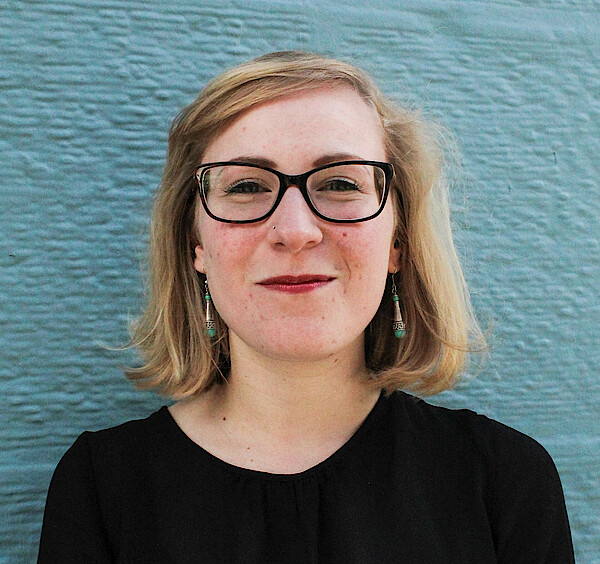
Rosie Maxton is a doctoral student at Oxford University. She holds an MA in Arabic and Medieval History from St. Andrews University, and an MPhil in Middle Eastern Studies from Cambridge University.
Her current research explores conversion to the Catholic faith among Eastern Christian communities in the Ottoman Empire, focusing on the town of Mardin (present-day southeast Turkey) in the seventeenth and eighteenth centuries. Through examining the corpus of Arabic and Syriac manuscripts produced and procured by Mardin’s Christian communities during this period, her research seeks to analyse the ways in which conversion to Catholicism was expressed, and thereby to further our understanding of the intricacies of Catholic expansion in the early modern world.
During her fellowship at the OIB, she will investigate the connection between Eastern Catholic communities in Lebanon and Mardin in the eighteenth century, primarily through the medium of scribal culture.
Archiving Faith: Record-Keeping and Catholic Community Formation in Eighteenth-Century Mesopotamia, Past and Present (forthcoming 2022).
Visiting Doctoral Fellow
Cynthia Kreichati is a PhD candidate in the Department of Anthropology at McGill University; Trained as a pharmacist in Lebanon, Cynthia also holds a Masters in Sociology from the American University in Beirut and has worked in various health related fields. Her work explores the relationships between politics, archives and the environment. She is now completing her doctoral dissertation project — an ethnography of the Litani river and its people — which investigates how the Litani, once central to national discourses of technological progress and abundance, has become a metonymy for state failure, societal ruin, and ecological devastation.
Research Associate (on leave)
Alya Karame specialises in Islamic art and material culture. She joined the OIB as Research Associate in 2022. In 2023 she was a fellow of the Aga Khan Program for Islamic Architecture at Harvard University. She is supported by the Paris Region award and will be pursuing her research at the Institut des civilisations at the Collège de France (2023-2024). Her book project (forthcoming 2024) on a forgotten corpus of medieval Qur’ans has been supported by numerous grants, including the Arab Funds for Arts and Culture. Karame was a Mellon Postdoctoral fellow at the American University of Beirut (2019-2020) where she also taught. She was at the Khalili Research Centre at the University of Oxford, the recipient of the Barakat Trust award (2018-2019) and prior to that she joined the Kunsthistorisches Institut research program in Florence Connecting Art Histories in the Museum and was based at the Museum of Islamic Art in Berlin (2017-2019). Karame obtained her PhD in 2018 in Islamic Art History from the University of Edinburgh and her MA in History of Art & Archaeology from the School of Oriental and African Studies.
The Qur’an has been copied and mechanically reproduced for fourteen centuries across three continents. Its history, as a book, has been narrated through the lens of the politically powerful cultural capitals that once ruled the Islamic world and through their hegemonic aesthetic trends presenting the Qur’an as invariable.
2024 : “Les manuscrirs coraniques à Nishapur au début du XIeme siècle” Proceedings of the College de France Colloqium “Recherches actuelles sur les manuscrits coraniques”.
Forthcoming (2024). The Forgotten Qur’ans of the Medieval Eastern Islamic World: The Ghaznavid and Ghurid Dynasties. Edinburgh Studies in Islamic Art, Edinburgh University Press.
“Ghaznavid Imperial Qur’an Manuscripts: The Shaping of a Local Style” The Word Illuminated: Form and Function of Qur’anic Manuscripts. Ed. Sana Mirza and Simon Rettig. Smithsonian Institution Scholarly Press, 2023. https://doi.org/10.5479/si.21948098
April 2018. “The Art of the Qur’an: Treasures from the Museum of Turkish and Islamic Arts” Book review, Massumeh Farhad and Simon Rettig, eds. Published by the College of Art Association, (CAA Reviews).
November 2015. “The Art of Translation: An Early Persian Commentary of the Qur’an”. Co-authored with Travis Zadeh. Journal of Abbasid Studies: Volume 2, Issue 2, 2015 (119–195).
“The Qur’an from Ink on paper to Dust and Ashes”
Invited by the Centre for Human Rights and the Arts in collaboration with the Middle Eastern Studies, Art History and Visual Culture, and Medieval Studies. Bard College. 10 April 2023.
“The Sulayhid Qur’an: Stories of Connections and Belonging of a Short Lived Dynasty”. History of Art and Architecture, Harvard University. 20 April 2023
“To Dust to Ashes: Transposing the Qur’an’s Sacrality”
Invited to the conference organised by the Arab Council for Social Sciences. 20 June 2022.
“Les manuscrits du Coran à Nishapur au début du XIe siècle”
Invited to Chaire Histoire du Coran, Texte et Transissmission, Collège de France. 2 June 2022.
“The Qarmathian Qur’an: From Mausoleum to Museum”
Invited to the Department of Near Eastern Sudies, Princeton University. 25 October 2021.
“Unpacking the Qur’an Manuscript Today”
Part of the Panel: Manufacturing the Sacred: Objects of Veneration in the Modern Islamic World, Silsila: Center for Material Histories. New York University. 15 October 2021.
“From Listener to Reader: The Qur’an’s Practice in the 11th Century”
Historians of Islamic Art Association Biennial Symposium. The University of Michigan: Regime Change. 15-18 April 2021.
“Secularising the Qur’an Manuscript: Gifts of the 20th Century”
Part of the Panel: Decolonising Islamicate Manuscript Studies. The British Society for Middle Eastern Studies Conference. July 2021.
“Connecting the Dots: Qur’an Manuscripts from the Ghurid to the Sultanate Period”
Connected Courts: Art of the South Asian Sultanate. The Khalili Research Centre and Wolfson College, University of Oxford. 20-21 September 2019
“From Unification to Fragmentation: What Happened to the Qur’an Manuscript in the Tenth Century?” Invited to the Forum Transregionale Studien, Berlin. 27 May 2019
“Change, Continuity and Rupture: Qur’an Manuscript Production in the Central and Eastern Islamic Lands of the 11th Century”. Research Seminar of The Khalili Research Centre, University of Oxford. 24 January 2019.
“Qur’an Production in Khurasan in the 11th and 12th Centuries”.Textes et Contextes: Recherches en cours sur le monde iranien oriental. Invited to the workshop organised by Universita degli Studi di Napoli “L’Orientale”. 14 September 2018.
“The Qur’an in the Realm of the Senses”. Sensate Art Histories, a workshop organised by the ‘Connecting Art Histories in the Museum’ at the Wissenschaftkolleg in Berlin. 11 June 2018.
“The Biography of an 11th Century Ghaznavid Qur’an: Form, Function & Circulation” Museum für Islamische Kunst, Berlin. 13 July 2017.
“Between Textual Ambiguity and Visual Accuracy: Arabic Calligraphy Before the 14th Century”Art Histories & Terminologies III Languages, Lexica, Aesthetics, Kunsthistorisches Institut, Florenz. 12-13 December 2016.
“Uncovering the Work of ‘al-Warrāq al-Ghaznawī’: Luxurious Qur’ans commissioned by the Ghaznavid Elite”. Invited to the Symposium organized around the exhibition “Qur’ans from the Museum of Turkish and Islamic Art, Istanbul”, Freer - Sackler Gallery, Washington DC: The Deluxe Mushaf: Forms, Functions, and the Afterlife of Qur’an Manuscripts. 1-3 December 2016.
“The Illumination of the Imperial Ghaznavid Qur’ans: A Distinct Local Style” Historians of Islamic Art Association Biennial Symposium. The Courtauld Institute of Art, London: Regionality: Looking for the Local in the Arts of Islam. 20-22 October 2016.
“The Travel of a Manuscript from an Imperial Commission in the 5th/11th Century to a Diplomatic Gift in the 15th/21st Century” Invited to Books in Motion: Exploring Concepts of Mobility in Cross-Cultural Studies of the Book, Department of Fine Arts and Art History at the American University of Beirut. 5-6 May 2016.
“Visual Manifestations in Qur’ans of the 10th and 11th Centuries: a New Role?” Part of the panel: The Book History & The Middle East. Middle East Studies Association - 48th meeting, Washington DC.
November 2014.
“Towards a Physical Reading of the Qur’an: Visual Elements in Qur’ans from the 4th/10th to the 6th/12th Century”. School of Abbasid Studies, XII conference, Istanbul Şehir University. August 2014.
Arabische Philologien im Blickwechsel. Part of the Seminar for Semitic and Arabic Studies, Department of History and Cultural Studies, Freie University, Berlin. March 2014.
Representative of OIB in Cairo
Since May 2022, Yasmin Amin works at the Orient-Institut Beirut as Representative of the Orient-Instituts Beirut (Max-Weber-Stiftung) in Cairo.
She is an Egyptian-German who holds a BA in Business Administration, a PGD and an MA in Islamic Studies, all three from the American University in Cairo. She received her PhD in Islamic Studies from Exeter University’s Institute of Arab and Islamic Studies researching ‘Humour and Laughter in the Ḥadīth’. Her research covers various aspects of gender issues, early Muslim society and culture as well as the original texts of Islamic history, law and Hadith.
REFEREED PUBLICATIONS
Peer-reviewed Books
Co-translation with Nesrin Amin of “The Sorrowful Muslim’s Guide”, originally titled “Dalīl al-Muslim al-Ḥazīn ila Muqtaḍa al-Sulūk fī-l-qarn al-ʿishrīn” by Hussein Amin. Edinburgh : Edinburgh University Press in collaboration with the Agha Khan University’s Institute for the Study of Muslim Civilisations, 2018. Part of the series: ‘In Translation: Modern Muslim Thinkers.‘
Co-edited with Nevin Reda, “Islamic Interpretive Tradition and Gender Justice: Processes of Canonization, Subversion and Change.” Toronto: McGill Queen’s University Press, 2020
“Comedy and Humour in the Muslim World: Contemporary Islamic Contexts“ edited Bernard Schweizer, Lina Molokotos-Liederman with Yasmin Amin. Bristol: Bristol University Press, 202
Peer-reviewed Chapters in Multi-author Books
“Early Muslim Women as Moral Paragons in Classical Islamic Literature: Al- Mubashsharāt bi-l-janna” in Oxford Handbook of Islam and Women, edited by Asma Afsaruddin. Oxford: Oxford University Press, 2022.
“Your Wife Enjoys Rights Over You’ or Does She? Marriage in the Hadith” in Justice and Beauty in Muslim Marriages: Between Ethics and Law, edityed by Ziba Mir-Hosseini, Mulki Al-Sharmani, Jana Rumminger and Sarah Marsso. London: Oneworld Publications, 2022
“Uses (or Abuses?) of the Qur’an in Arabic Jocular Literature” in Comedy and Humour in the Muslim World: Contemporary Islamic Contexts, edited by Bernard Schweizer, Lina Molokotos-Liederman with Yasmin Amin. Bristol: Bristol University Press, 2022.
“A Laughing God, between Sunni Approval and Shi’ite Rejection” in Humour in the Beginning edited by Roald Dijkstra and Paul van der Velde. Amsterdam: John Benjamins Publishing, 2022.
“Is the application of modern humour theories on historical cases a joke?” in Humour in the Beginning edited by Roald Dijkstra and Paul van der Velde. Amsterdam: John Benjamins Publishing, 2022.
“Umm Salamah: A Female Authority Legitimating the Authorities.” In Women's Religious Authority in Shiism, edited by Devin Stewart & Mirjam Künkler. Edinburgh: Edinburgh University Press, 20251.
“Revisiting the Issue of Minor Marriages: Multi-disciplinary Ijtihād on Contemporary Ethical Problems.” In “Islamic Interpretive Tradition and Gender Justice: Processes of Canonization, Subversion and Change,” edited by Nevin Reda & Yasmin Amin. Toronto: McGill Queen’s University Press, 2020.
“Umm Salama’s contributions: Qur’ān, Ḥadīth, and Early Muslim History as Sources for Gender Justice.” In Muslim Women and Gender Justice: Concepts, Sources, and Histories, edited by Juliane Hammer & Dina El Omari. London: Routledge, 2019.
“Peeling Onions, Layer by Layer - A Journey with Two Bulbs through the Islamic World and its Literature.” In Insatiable Appetite: Food as a Cultural Signifier, edited by Julia Hauser, Bilal Orfali & Kirill Dmitriev. Leiden: Brill, 2019.
Articles in Peer-reviewed Journals
"Frauen als Bildungsträgerinnen im Islam – Emanzipiertes Denken in patriarchalen Traditionen" in Religionen Unterwegs vol 26, Issue 4, 2020, pp. 18- 22
Encyclopaedia Entries
“Aḥād." In Islam: A Worldwide Encyclopedia, edited by Cenap Çakmak. Santa Barbara: ABC-CLIO/Greenwood Press, 2017.
"al-Bukhārī." In Islam: A Worldwide Encyclopedia, edited by Cenap Çakmak. Santa Barbara: ABC-CLIO/Greenwood Press, 2017.
"al-Jāḥiẓ." In Islam: A Worldwide Encyclopedia, edited by Cenap Çakmak. Santa Barbara: ABC-CLIO/Greenwood Press, 2017.
"Bidʿa." In Islam: A Worldwide Encyclopedia, edited by Cenap Çakmak. Santa Barbara: ABC-CLIO/Greenwood Press, 2017.
"Ikhwān al-Ṣafā." In Islam: A Worldwide Encyclopedia, edited by Cenap Çakmak. Santa Barbara: ABC-CLIO/Greenwood Press, 2017.
"Zamzam." In Islam: A Worldwide Encyclopedia, edited by Cenap Çakmak. Santa Barbara: ABC-CLIO/Greenwood Press, 2017.
"Sexuality." In The Oxford Encyclopedia of Philosophy, Science and Technology in Islam, edited by Ibrahim Kalin, 244-246. Oxford: Oxford University Press, 2014.
"Ṭabaqāt." In The Oxford Encyclopedia of Islam and Women, edited by Natana J. DeLong-Bas, 325-326. Oxford: Oxford University Press, 2013.
"The Prophet's Wives." In The Oxford Encyclopedia of Islam and Women, edited by Natana J. DeLong-Bas, 426-429. Oxford: Oxford University Press, 2013.
Visiting Postdoctoral Fellow
Chiara Fontana is scholar in Arabic Philology and Literature. She was awarded a Ph.D. in Arabic Literature and Linguistics at the Sapienza University of Rome with a thesis on the rhetorical and metrical analysis of contemporary experimental poetry. Currently, she is assistant professor of Arabic Philology and Literature at the Alma Mater Studiorum University of Bologna, Italy. Between May and November 2022, Chiara will be based in Beirut as a visiting postdoctoral fellow at the OIB.
Her studies focus principally on Islamic eloquence (balāgha), interliterary processes across Arabic, Persian, Turkish, cultural heritage, and urban development observed in the light of socio-political transformations emerging in the past and contemporary Middle Eastern societies. Since 2014 she has held a number of teaching positions and continued her scholarly work at institutions in Tunisia, Egypt, Morocco, Jordan, Qatar, and Italy. Since 2018 Chiara is member of the research boards for some projects at the Universities of Birmingham, Exeter (UK), and Columbia University in New York. The fil rouge tying Chiara’s research experiences is the focus on the evolution of Arabic literary theory and criticism across time, with a specific emphasis on al-balāgha as a cognitive framework to understand reality creatively.
During her stay at the OIB, Chiara will extend the insights of her prior research exploring how much material culture and crafts in 9th century Baghdad did not only affect literary investigations thematically but also how they inspired innovative frameworks of critical thinking and the re-organization of the humanities.
Visiting Doctoral Fellow
Sophia is a doctoral student at University College London. She holds an LLM as well as an MA in Conflict Resolution in Divided Societies from King’s College London, a Maîtrise en Droit in International Law from Panthéon-Assas University/Paris II, and the German First State Examination (Humboldt University of Berlin).
Her research focuses on the role of domestic courts in consociational systems of power-sharing and involves data collection through interviewing in Northern Ireland and Lebanon. She seeks to understand how courts react to consociations and the implications of their judgments for the broader political set-up.
Hans-Robert Roemer Fellow
Mahmood Makvand is an assistant professor in the department of Qur’anic studies at Khārazmi university, Tehran, Iran. His MA in linguistics allows him to research a range of subjects, including the etymology of Quranic words (with a focus on Semitic languages), semantic studies, the composition of the Qur’anic text, linguistic characteristics of the text, and the cultural and linguistic milieu of Arabia in the era of revelation. He is currently exploring the concept of the creation of woman in the Torah and in the Qur’an. More generally, Mahmood aims at showing the interaction and compatibility between the Qur’an and the Bible and the post-biblical writings. His academic publications can be seen at the following link: https://wwwkhu.academia.edu/MahmoodMakvand
Hans-Robert Roemer Fellow
Qodratullah Qorbani has been an associate professor of philosophy at Kharazmi University, in Tehran since 2011. He obtained his Ph.D. in Philosophy from Allamah Tabatabaei University in 2010 and his current research focuses on comparative theology and philosophy of religion. He has published ten books with subjects ranging from comparative philosophical studies to the epistemic virtues of the Quran and a large number of articles in philosophical and theological issues. He has participated and presented papers in about 30 international and national conferences in Iran, India, Turkey, Romania, Georgia, Azerbaijan, Lebanon, Switzerland, Germany, and Spain. He is also the editor in chief of the journal Metaphysical Investigations. He has taken his sabbaticals at Zurich University in 2017, and is currently a visiting fellow at the Orient Institute in Beirut (OIB).
Hierarchical rationality of religious beliefs system indicate their longitudinal relationships, so that each belief benefits from pertained rationality based on its ontological place within the web of religious knowledge.
Affiliated Researcher
About me:
Ashraf Osman is a PhD candidate in History of Art as part of the LAWHA project, with an international position between Università Cà Foscari (Venice) and OIB Orient-Institut Beirut (Beirut). His project investigates the representation of women and minority (sectarian, ethnic, and sexual) artists mainly at the Sursock Museum during the pre-War and War eras.
He holds a Master of Advanced Studies in Curating from the Zurich University of the Arts (Switzerland) and a Master of Architecture from Syracuse University (New York). His diverse background and practice encompasses olfactory art, socially-engaged art, and the architectural and urbanistic memory of the Lebanese War.
Project:
Life Otherwise: The History of Art in (Spite of) Lebanon - Artists from Lebanon that told an-Other tale
My research examines the representation of women and minorities (ethnic, sectarian, sexual, etc.) in the Sursock Museum mainly during the pre-War and War era (1950s - 1980s). It is guided by two main questions: What was the dominant identitarian narrative of the pre-War Lebanese state? And, viewed through the lens of canon-formation, was the Sursock Museum a significant institutional departure from that narrative? Answering these questions would inform the growing literature on consociational politics at a point in Lebanon's history where this very prism is getting challenged in the post-2019 Uprising context.
Osman, Ashraf and Peter De Cupere. “A Conversation With Peter.” Scent in Context: Olfactory Art, Stockmans Art Books, 2016, pp. 19–28.
Osman, Ashraf, Claus Noppeney, et al. “Culturalizing Scent: Current Steps Towards Integrating the Sense of Smell in Art and Design Education.” Designing With Smell: Practices, Techniques and Challenges, Routledge, 2017, pp. 169–77.
Osman, Ashraf. “Memory for Forgetfulness”: Registering/Effacing the Memory of the Lebanese War. Syracuse University, 2001. www.academia.edu/5134701/_MEMORY_FOR_FORGETFULNESS_Registering_Effacing_the_Memory_of_the_Lebanese_War_Thesis_Preparation_Book_
Osman, Ashraf Raafat Hamze, et al. “Scents of Exile.” The Outpost, no. 7: The Possibility of Finding Home, 2016, www.the-outpost.com/ScentsofExile.
Osman, Ashraf. “Space Agents: A Spatial Theory of Scent.” Cipher, 2016, medium.com/@ashrafo/space-agents-a-spatial-theory-of-scent-f5a9cdcd69a5#.3qhn0yfzg.
Osman, Ashraf and Daniela Fuentes. “Tania Bruguera: Interviewed by Ashraf Osman.” On Curating, no. 19, June 2013, pp. 81–88, www.on-curating.org/issue-19-reader/tania-bruguera-interviewed.html.
Osman, Ashraf and Claus Noppeney. “The Art of Scent and the Scent of Art.” Perfumer & Flavorist, Mar. 2015, www.perfumerflavorist.com/fragrance/trends/news/21878129/photos-the-art-of-scent-the-scent-of-art.
Affiliated Researcher
Çiğdem İvren joined OIB’s LAWHA team as research associate in October 2022. In parallel, she is a research assistant at the chair of Islamic Art and Archaeology at the University of Bamberg, from which she holds an MA in Islamic Art and Archaeology. Çiğdem is a PhD candidate at the Institute of Art History, Free University Berlin. Her dissertation investigates the art production and cultural infrastructure of the Civil War period in Lebanon. Within LAWHA, she will focus on the civil war period and the database and digital platform.
Visiting Doctoral Fellow
Fatima al-Bazzal is a PhD student from the Lebanese University, in Information and Communication Studies. She has been a professional librarian and researcher over the last decade, first in the Lebanese National Library Rehabilitation Project as a junior librarian, where she was introduced to the concepts and practices of librarianship and enrolled in different projects that aimed at describing the library’s collection, and managing its preservation and accessibility. She then worked for different Lebanese cultural; Shamaa Arab Educational Database, The Fire horse Archive, Knowledge Workshop-The Feminist Library, and March Lebanon-Virtual Museum of Censorship Project. Building over her librarianship background, and driven by the notions of accessibility and open access, her PhD. research project tackles an under-represented intellectual archive of Amil Mountains Region in Southern Lebanon (known as Jabal Amil). Following the circulation of a series of manuscripts in Lebanon and abroad, she is studying the various texts, agents and places contributing to the creation, management, distribution, and transmissions of this archive.
Research Project
Archiving Absence and Loss
Amili manuscripts in libraries worldwide
My project tackles an under-represented and highly dispersed literary manuscripts archive. It aims to counter the collective memory narrative that recalls Ahmad Pasha el-Jazzar, the Ottoman Governor of Acre, confiscation and burning of the rich Amili intellectual heritage. Though this incident cannot be confirmed, it refers to a rich cultural heritage that was documented within bio-bibliographical references. This project aims at virtually re-constructing this heritage by tracing it within different manuscript collections in the world. By these means, it wishes to structure a provisional identity for the Amili manuscript archive and identify what is available counterpointing the gaps and what has been lost.
Visiting Postdoctoral Fellow
Muhammad Fariduddin Attar is currently a PhD candidate at the Institute of Islamic Studies, McGill University. His dissertation deals with the reception of Avicenna’s cosmology by the 12th century theologian and polymath Fakhr al-Dīn al-Rāzī. He has lectured on history, philosophy, Islamic thought, and religion in several universities in Jakarta, Indonesia. He resides in Montreal, Canada.
Research Project
Hermetic Cosmology in Islamic Philosophical Thought
Astrology, Celestial Divinities, and Occult Powers of the Soul according to Abū al-Barakāt al-Baghdādī, Fakhr al-Dīn al-Rāzī, and Shihāb al-Dīn Yaḥyā al-Suhrawardī
This research project aims to develop a framework of inquiry that can shed light on the fascinating but complex interaction between philosophy (falsafa or ḥikma), theology (ʿilm al-kalām), and the so-called “occult sciences” (al-ʿulūm al-gharība) in the 6th/12th century Islamic East (mashriq). It will focus primarily on disciplines that closely connected to the Arabic Hermetica, such as astrology, astral-magic, and to some extent alchemy. The study will begin with Ibn Sīnā (Avicenna), who developed the theoretical framework for the systematic examination of the universe as a unified physical system. It is through this model of inquiry that later thinkers, such as Abū al-Barakāt al-Baghdādī, Fakhr al-Dīn al-Rāzī, and Shihāb al-Dīn Yaḥyā al-Suhrawardī would attempt to integrate the cosmological teachings of the Arabic Hermes (Idrīs). Each of these thinkers adopted aspects of the Hermetic tradition in distinct own ways and within the limits of their respective philosophical projects and methodologies. This research will outline their distinct approaches to Hermetic cosmology and argue that its inclusion is motivated by the need to offer an accurate, systematic, and rational account of the universe.
Co-author with Damien Janos (forthcoming) - A Comprehensive, Annotated, and Indexed Bibliography of the Modern Scholarship on Fakhr al-Dīn al-Rāzī (543–44/1149-50–1210). Brill: Leiden, 2022.
Assistant Editor - Blackwell History of Islam, ed. by Armando Salvatore et al. John Wiley & Sons Ltd: Hoboken, NJ, 2018.
Author - “The Metaphysics of Goodness According to Anselm of Canterbury and Faḫr al-Dīn al-Rāzī.” In Philosophy and the Abrahamic Religions: Scriptural Hermeneutics and Epistemology, edited by T. Kirby, R. Acar, and B. Bas. Cambridge Scholars: Newcastle upon Tyne, 2013. 157-174. 2013.
Visiting Doctoral Fellow
Jowel Choufani is a PhD candidate in the Department of Anthropology at the George Washington University. Jowel was formerly trained as a nutritionist and dietitian and worked for several years in food security research. She has an MS in Public Health Nutrition from the London School of Hygiene and Tropical Medicine and an MPhil in Anthropology from George Washington University. Jowel will be spending the 2022-2023 academic year conducting ethnographic research in Lebanon.
Research Project
Obligation and Relationality in the Wake of Critical Events in Lebanon
Description Jowel Choufani’s dissertation project investigates how people’s sense of obligation to others comes to be defined, experienced, and materialized across a historical timescape marked by the layering of critical events. This project traces two modes of response— assistance and documentation —that people connected to Lebanon have drawn on to respond to the 2020 August 4 Beirut explosion. This multi-sited ethnography will encompass residents of Lebanon and its diaspora and will deploy a combination of semi-structured interviews, participant observation, and oral life history interviews to explore the factors that guide people’s responses to events, how sociality and community boundaries become (re)configured as a result of these responses, and how meanings of critical events change as they accrue over time. In doing so, this project theorizes how critical events present opportunities and impediments for dynamism in people’s sense and enactments of obligation towards others.
Visiting Postdoctoral Fellow
Mariam Saeed El Ali, was the recipient of the Andrew W. Mellon Foundation Postdoctoral Fellowship, Center for the Arts and Humanities at the American University of Beirut (2020-2021). She holds a doctorate in Arabic language and literature from the same university (2017). She received the Abdul Hadi Al-Debs Award for academic excellence, for her PhD dissertation that was supervised by Professor Tarif Khalidi. She transformed it into a book published by OIB in Beiruter Texte Und Studien series (volume 139) entitled Akhbar Khadija Bt. Khuwaylid in the Islamic Sources: Frames of Narration, Memory, and History (December, 2020). Mariam has several other publications in Arabic and Islamic studies and has taught Arabic and History at American University of Beirut and Université St Joseph.
Research Project
Memory at Work in Medieval Islamic Scholarship
Shaping Knowledge, Tradition, and Identities
This project examines some of the explicit expressions on memory and of memory in Islamic tradition, and how those expressions shaped its Scriptural, historical, literal, and architectural legacies.
The project is concerned with outlining the concept of memory in the nascent Islamic milieu, by chasing its textual expressions primarily in the Qurʾān. It investigates to what extent the Qurʾānic recurrent references to memory and related notions triggered interest of medieval Muslim scholars in this key concept. A comparison between memory and inimitability (iʿjāz) is sought. On the socio-historical level, the project considers the role of memory in the intellectual and cultural lives of these scholars and what values they attached to it. It looks closely at different attitudes to memory across the Muslim geographies, and communities. The project progresses along broad epistemological lines of enquiries around who, exactly, was responsible for the preservation of knowledge about the Islamic past, and what individuals, events, books, and monument pop up in the Islamic collective memory(ies) and why.
Books
أخبار خديجة بنت خويلد في المصادر الإسلاميّة: أبنية السرد والذاكرة والتاريخ. نصوص ودراسات بيروتيّة 141. بيروت: المعهد الألمانيّ للدراسات الشرقيّة، كانون الأول 2020.
Edited and Translated Books
محمّد روحي الخالدي المقدسيّ (1864-1913):كُتُبه ومقالاته ومُنتخبات من مخطوطاته. طبعة أكاديميّة جديدة محقّقة. بيروت والقدس: مؤسّسة الدراسات الفلسطينيّة والمكتبة الخالديّة، تمّوز 2021.
السحر الحلال: الصاحب بن عبّاد (ت. 385/995) ورسائله. بيروت: دار المشرق، 2022. (قيد الطباعة) ترجمة لـ:
Maurice Pomerantz, Licit Magic: The Life and Letters of al-Ṣāḥib b. ʿAbbād (d. 385/995). Islamic History and Civilization Studies and Texts 146. Leiden, Boston: Brill, 2018. (Iran’s World Award for Book of the Year, 2019)
Book Reviews
Omid Ghaemmaghami, Encounters with the Hidden Imam in Early and Pre-Modern Twelver Shīʿī Islam, Leiden and Boston: Brill, 2020 in al-Abhath 70 (2022): 256-258.
brill.com/view/journals/alab/70/1-2/article-p256_11.xml
Allegra Iafrate. The Wandering Throne of Solomon: Objects and Tales of Kingship in the Medieval Mediterranean, Leiden and Boston: Brill, 2016 in al-Abhath 62-63 (2015-2016): 267-271.
Articles
“Revisiting al-Ṭabarī on Maqtal ʿAlī ibn Abī Ṭālib: An Early Report (Khabar) from Historical Learning to Practical Prescription,” Journal of Arabic Literature special issue in honor of Tarif Khalidi, 53 (2022): 265–289.
brill.com/view/journals/jal/53/3-4/article-p265_4.xml
’’أتدرون ما يقول هذا الطائر؟: المعرفة الغيبيّة عبر ترجمة لغة الحيوان،‘‘ ألف 38 (2018): 46- 67.
(https://www.jstor.org/stable/26496385)
Visiting Doctoral Fellow
Souad Etmimi is a PhD researcher in Arab and Islamic Studies, at Faculty of Arts and Humanities of Sousse, Tunisia, Specialized in Contemporary Cultural Studies. She is preparing a PhD thesis entitled "The Intellectual as a Subject of Criticism in Contemporary Arab Thought". She obtained a master's degree in Arabic language, literature and civilization in the field of modern civilization at the Faculty of Arts and Humanities in Sousse (Tunisia).
She obtained two student exchange scholarships at two universities. The first one is in Marburg in Germany, at the Center for Near and Middle Eastern Studies (CNMS) in 2018 and at the second one in 2019 at University of Ca’ Foscari in Venice, Italy.
In 2019, she published a book with the Arab House of Egypt entitled "The Pictures of the Imam in the Modern Islamic Discourse, Imam Ahmad bin Hanbal as a model". She has an article published in the same year as part of the proceedings of a symposium that took place at the Faculty of Arts and Humanities in Kairouan (Tunisia), entitled “The Dialectic of the Estrangement and Communication between the Right Sciences and the Human Sciences".
Research Project
Intellectual as subject of Criticism in Contemporary Arab Thought
My project aims at deconstructing the image of the intellectual in the intellectuals’ discourse as a subject of their criticism. It is based on the analysis of six texts – written between 1989 and 2013 – that reveal the opinion of the thinkers in the chosen corpus. By studying the historical, political, cultural and social context of criticism the aim of my research is to look closely at the elements that constitute it in order to define its various ‘trends’ such as liberal, socialist and Islamic ones. The six texts that the research is concerned with are the following: Towards a Theory of Culture, a Critique of Eurocentrism and Reverse Eurocentrism, by Samir Amin; Representations of the intellectual, by Edward Said; Illusions of the Elite or Criticism of the Intellectual, by Ali Harb; The Rupture between the Intellectual and the Jurist: Aspects of the Estrangement between the Two Mental Structures: the Religious Intellectual and the Jurist, by Muhammad Yahya; The Cultural Bet and the Illusion of Estrangement, the Experience of Distance in the Approach of Time and Change, by Abdullah Hammoudi; and The End of the Preacher, the Possible and the Impossible in the Roles of Intellectuals, by Abdelilah Belkeziz.
- Book entitled “The image of Imam in the modern Islamic discourse, Imam Ahmad Ibn Hanbal as a Model”, published in January 2019 in Arabic Language.
- An Article entiled “Dialectical Disconnection and Communication between Human Sciences and the Right Sciences”. It was published in the scientific journal issued by the laboratory renewing research methods and pedagogy in humanities in the Faculty of Arts, Humanities in Kairouan, Tunisia, published in April 2019 in Arabic Language.
Visiting Postdoctoral Fellow
Anaïs Farine is a cinema studies researcher and a film curator. She holds a Ph.D from the University of La Sorbonne Nouvelle – Paris III. Her Ph.D thesis focused on the so-called “Euro-Mediterranean dialogue” and its Filmic Imaginary (1995 – 2017). Her writings have been published in Kohl, Cinematheque Beirut, Trouble dans les collections, Ettijahat, Débordements, The Funambulist Magazine, Africultures, and Aniki, among others. She is a member of the organizing committee of the Festival Ciné-Palestine (Paris).Profile text Anaïs Farine is a cinema studies researcher and a film curator. She holds a Ph.D from the University of La Sorbonne Nouvelle – Paris III. Her Ph.D thesis focused on the so-called “Euro-Mediterranean dialogue” and its Filmic Imaginary (1995 – 2017). Her writings have been published in Kohl, Cinematheque Beirut, Trouble dans les collections, Ettijahat, Débordements, The Funambulist Magazine, Africultures, and Aniki, among others. She is a member of the organizing committee of the Festival Ciné-Palestine (Paris).
Research Project
The making of “Arab alternative cinema” and its audiences
Babelsberg, Beirut, Damascus, Leipzig
As was the case a decade or so ago, when Rasha Salti and Daikha Dridi put out a compelling issue of ArteEast dedicated to this topic in order to update a “dormant part of Arab memory”, the history of film-clubs remains under-documented. However, film-clubs, as “spaces for free expression and activism” are an integral part of the social and cultural history of the cities and protest movements. Some films participate in the struggle and desire for social and political transformations. They document this will while giving it its forms. The visibility of these films, as well as their possible actualization in gestures in public space and daily life is also intimately linked to the existence of places allowing to come together and bring out Dissensus. It is therefore interesting to focus on the history of the spaces in which the screenings are organized, on the films selected by the film-club organizers and the form of the debates put in place.
The launch of the Arab Ciné-Club in Beirut, one year after the discussion around the creation of an “Arab Alternative Cinema” in Damascus, illustrates the growing importance of such films in the early 1970s. The “Arab Alternative Cinema” was characterized by an innovative approach to film forms and narratives while participating in the political struggles of the global 68. By seeking to counter the lack of visibility of “Arab Alternative Cinema”, the co-founders of the Arab Ciné-Club (Borhane Alaouié, Ibrahim Ariss, Walid Chmait and Georges Rassi) pursued a number of political and cultural ambitions. This film-club plays a central role in my current research on the history of film-clubs in Beirut and was one of the only places that screened films affiliated with the movement at that time in Lebanon.
During my research on the programming in film clubs, conducted in various archives in Lebanon, I frequently encountered testimonies of filmmakers or articles dedicated to the “Arab Alternative Cinema” movement (Kais Al-Zubaidi, Kassem Hawal and Faisal Al-Yasiri) which highlight the importance of Babelsberg school as well as of the International Leipzig Festival for Documentary and Animated Film. Devoted to the history of Beirut ciné-clubs in the 1970s and the mobility of students and filmmakers from the Middle East to Germany, my research project aims to analyze the “Arab Alternative Cinema” using a transnational perspective by focusing on the production of filmic ideas established within these films and on the exhibition of Arab alternative films in Lebanon and GDR.
Based on a systematic analysis of private and institutional archives as well as interviews with the Arab Ciné-club committee members and with former members of the film-club audience, I will look for and meet with the moderators and the audience members to document their daily activism and the kind of relations they established between each other at the film-club, as well as the type of mediation the film established in this particular space of debate.
- “What comes after August: rebuilding collective strength through feminist filmmaking”, An interview with Sarah Kaskas and Liliane Rahal conducted by Danielle Davie and Anaïs Farine, in Kohl: a Journal for Body and Gender Research, August 2022.
- “Vers un troisieme cinéma / نحو سينما ثورية. Une introduction à la traduction par Dirâsât ‘arabiyya du manifeste de Fernando Solanas et Octavio Getino”, in Cinematheque Beirut, April 2022.
- “Archives Nitrates. Représentation, pollution, explosion : sur la piste d'effets sauterelles”, in Troubles dans les collection, N°2, « Toxic », September 2021.
- “In Dark Times: Epistolary Films for Absent Friends”, in Ettijahat – Independent Culture, November 2020.
- “Le centre est efface, mais la mer brille”, in Carnets de la Fondation Camargo, October 2020.
- “Al-khat al-moubachar, entretien avec Reine Mitri et Rami Sabbagh réalisé par Anais Farine”, in journal Debordements, April 2020.
- “Avec Kais Al-Zubaidi : Retour sur un cinéma alternatif”, in journal Ecrans. 2019 – 2. n° 12. Lisières esthétiques et culturelles au cinéma, pp.195-214. Arabic translation for Romman: Pierre Girard.
- “Recollection, Kamal Aljafari, 2015. Cinematographic experiments for a Reappropriation of the City of Jaffa”, in The Funambulist N°21 "Space & Activism", January 2019, pp.54-55.
- “La médiatisation des arts méditerranéens sur le site internet Med-Mem”, in Esthétisation des médias et médiatisation des arts, L'Harmattan, 2016, pp.185-192.
- “Révolution Zendj (Tariq Teguia, 2013), Polygone étoilé sur fond de Méditerranée”, in Jeux sérieux. Cinéma et arts contemporains transforment l'essai, Ed. Mamco, 2015, pp.289-299.
- “Alger, Bruxelles, Montpellier, Tétouan : Une analyse de la circulation de films de la région MENA dans quatre festivals de cinéma méditerranéen”, in Africultures, 2015/1, N°101-102, pp.54-69.
- “Tétouan – Marseille : notes festivalières”, Aniki : Portuguese Journal of the Moving Image, vol.1, No 2, 2014, pp.415-421.
- “Aux frontières poreuses des cartes palestiniennes et de l'art contemporain”, in Revue des mondes musulmans et de la Méditerranée, N°134, 2013, Presses Universitaires de Provence, pp. 71-83.
Visiting Doctoral Fellow
Elena Fellner is a PhD candidate at the Collaborative Research Center “Heroes, Heroizations, Heroisms” at Freiburg University in Germany where they previously worked as a research assistant. Affiliated with the CRC’s project on heroization processes as cause and effect of periods of societal upheaval, their PhD thesis investigates heroization and demonization discourses in oppositional online spaces in the MENA region. They studied Middle Eastern Studies, Political Science, and Iranian Studies in Freiburg, Esfahan, and Cairo. Their research interests include communication on social media, modern Iranian history, public diplomacy, and social movements.
Research Project
A Light in Troubled Times?
Heroization Discourses in Oppositional Online Spaces of the MENA Region
The dissertation project builds on the assertion that heroes do not exist per se, but are constructed out of the values, hopes, and fears of the community that proclaims them. Heroized and also demonized figures therefore provide a valuable lens to study the communities that form around them. The dissertation project uses this lens to take a fresh look at heroized and demonized figures that have appeared in the last five years. While the main focus lies on Iran, other countries of the region such as Lebanon and Iraq as well as transnational movements provide valuable opportunities for contrasting and comparing claims of heroism and villainy and the communities that make them. Based on data collected from social media, primarily Twitter and Instagram, the study observes how users perform identities, construct communities, and draw boundaries with reference to heroes and villains alike.
Der Giftgasangriff von Ghouta (Syrien) vom 21. August 2013 – as part of a student project on the Syrian War from a Turkish and Arab perspective (2016). www.orient.uni-freiburg.de/islamwissenschaft/studium/syrienprojekt/fellner/index.
Aktivistin, Politikerin, Intellektuelle. Zahrā Rahnavard und die iranische Frauenrechtsbewegung seit dem 20. Jahrhundert. In: JOSHA Journal 5.7 (2018), DOI: 10.17160/josha.5.7.470.
Redefining Terrorism. Iran, the U.S., and the War on Terror. In: Legacies of 9/11 and the Global War on Terror, ed. Ameem Lutfi and Kevin L. Schwartz (2022), Oriental Institute, Czech Academy of Sciences Prague.
Forthcoming: The Lion and the Lamb. Film Representations of Navid Afkari on Social Media. In: helden.heroes.héros 10.1 (2023).
Visiting Doctoral Fellow
Natasha Gasparian is an art historian and curator who works on modern and contemporary art in the Arabic-speaking world. She is the author of Commitment in the Artistic Practice of Aref El-Rayess: The Changing of Horses (Anthem Press, 2020). Recently, she was a curatorial assistant to Sam Bardaouil and Till Fellrath for the 16th edition of the Lyon Biennale, as well as the managing editor of the biennale publications. Her writing has appeared in Artforum, Camera Austria and Text Zur Kunst, as well as in the publications of the Iraqi pavilion at the 58th Venice Biennale and the 16th Lyon Biennale.
Research Project
The Avant-Garde in Beirut, 1967-1982
Her doctoral research at the University of Oxford seeks to theorize the notion of an avant-garde in relation to politically committed, and decidedly anti-colonial, artistic practices in Beirut, Lebanon, after the Arab defeat of the 1967 Six-Day War. Treating the avant-garde negatively in relation to a singular modernity – and not as a predefined term with a set of positive criteria – her dissertation proposes to take seriously the asynchronous or anachronistic character of the avant-garde. Attentive to the intersections of, and the gaps between, politics and aesthetics during a heightened period of struggle between the 1967 war and the onset of the Lebanese Civil War, she presents a social history of an art geared toward an emancipatory politics.
In the summer of 2023, Gasparian will be carrying out archival research in Beirut as a doctoral fellow at the OIB.
Books
- Commitment in the Artistic Practice of Aref El-Rayess: The Changing of Horses, Anthem Modern and Contemporary Art of the Arab World, Iran and Turkey series, Anthem Press, 2020
Book chapters
- “The Trouble with Sex: Surrealism as Style in 1970s Beirut” in Manifesto of Fragility: Beirut and the Golden Sixties, ed. Sam Bardaouil and Till Fellrath, Silvana Editoriale, 2022
- “Case Study 4: The First Sanayeh Plastic Arts Meeting, Beirut Lebanon 1995” in Contemporary Art and CapitalistModernization: A TransregionalPerspective, ed. Octavian Esanu, Taylor & Francis/Routledge, 2020
Articles
- Review of Walid Sadek’s “Paintings, 2020-2022” (Saleh Barakat Gallery) in Artforum 61:3
https://www.artforum.com/print/reviews/202209/walid-sadek-89531
- “Picasso in Ashrafieh,” Text Zur Kunst no. 128 (co-authored with Ziad Kiblawi)
- Online review of “Tripoliscope: In Search of Tripoli’s Cinema Culture and Practices” (UMAM D&R)
https://www.artforum.com/picks/in-search-of-tripoli-s-cinema-culture-and-practices-88087
- Review of Aref El-Rayess retrospective, “Paintings, drawings, collages, sculptures 1948–2005” (Sfeir-Semler Gallery) in Artforum 60:5
https://www.artforum.com/print/reviews/202201/aref-el-rayess-87501
- Review of Shuruq Harb’s “Ghost at the Feast” (Beirut Art Center) in Camera Austria, issue no. 155
https://camera-austria.at/zeitschrift/155-2021/
- “The ‘Lebanese’ Landscape and Its (Trans)Historical Ideal”, Saradar Collection (co-authored with Angela Harutyunyan), 2018 http://www.saradar.com/ContentFiles/1186PDFLink.pdf
Visiting Doctoral Fellow
Javier is a PhD candidate at Georgia State University and holds an MA in Contemporary Arab and Islamic Studies by the Autonomous University of Madrid. He is also a fellow at Project SEPAD (Lancaster University) and has previously been a guest researcher at the Nederlands-Vlaams Instituut in Cairo.
His research focuses on the historically changing relations between society, built environment and narratives of modernity in the Gulf. His dissertation deals specifically with the social, political, and urban dynamics taking place in Qatar during the Global Sixties. Javier has also written about Oman and the transformation of Greater Muscat during the reign of Sultan Qaboos.
Research Project
How Dukhan made Doha. Environmental history, transnational networks, and the political economy of Qatar
‘How Dukhan made Doha’ is a social history of the events that led to the independence of Qatar and its aftermath, as well as a spatial history of the country during the Long Sixties. It argues that the present state of affairs in Qatar is mainly the product of the social context in the 1950s and 1960s, during the twilight of the British protectorate, and was further cemented in the 1970s.
The relationship between Dukhan, a coastal town where oil was first discovered in Qatar, and Doha, the capital, serves as a metaphor for the many modalities in which the country, its social fabric and its political economy changed during these decades. Some of the urban features examined include the oil camps of the 1950s, the political feuds and protests taking place in the 1960s, or the master plan for Doha in 1970.
While most studies of the Gulf focus on the role of the ruler and the government in directing these transformations, this project examines the activism and political-social engagement of Qataris themselves. The rapid transformations in the built environment and the documents produced by Qatari society, media and government serve as a source and as an object of study.
(in press) “Khaleeji modernities. Private spaces, British imperialism and the centralization of the Qatari peninsula,” in Rahman, Mizanur (ed.). Social Change in the Gulf Societies. London: Springer Nature, 2022
“The Omanization of Muscat or the Muscatization of Oman. How Muscat after 1970 came to embody the state of Sultan Qaboos,” in Fromherz, Allen and Al Salimi, Abdulrahman (eds.). Sultan Qaboos and Modern Oman 1970-2020. Edinburgh: University of Edinburgh Press, 2022, pp. 352-368
(with Ignacio Gutiérrez de Terán Gómez-Benita). “The United Arab Emirates in the Middle East. Anti-Islamism, Militarism, and Multiple Pressure Strategy,” Revista Española de Ciencia Política, No. 56 (July 2021), pp. 71-96. DOI: doi.org/10.21308/recp.56.03
The Gulf and the smart city movement in the Middle East. Gulf Insights, no. 37 (November 2020), Qatar University. Available online: www.qu.edu.qa/static_file/qu/research/Gulf%20Studies/documents/Gulf%20Insights%2037.pdf
(with Allen Fromherz) “The Secret of the Sheikhs. Why Are the Gulf Monarchies So Stable?’, Foreign Affairs, October 28, 2019. Available online: www.foreignaffairs.com/articles/persian-gulf/2019-10-28/secret-sheikhs
Visiting Doctoral Fellow
May is a doctoral student of Anthropology at the University of Oxford. Her work focuses on political life in the Lebanese city of Tripoli in the period between the sectarian clashes of 2011-2014 and the aftermath of the 2019 Uprising, in which Tripoli gained the status of the ‘bride of the revolution’. Her research investigates the tension between resistance and complicity to clientelism, and the effects of this extended process on personal well-being and political subjectivity.
May obtained an MPhil in Modern Middle Eastern Studies from the University of Oxford in 2016. She then worked in policy research institutes including the Lebanese Centre for Policy Studies (2016-2019) and the Robert Schuman Centre for Advanced Studies at the European University Institute (2020-2021).
Research Project
Everyday Betrayal, Relentless Hope
Political Life in a Lebanese City
My work focuses on political life in the Lebanese city of Tripoli in the period between the sectarian clashes of 2011-2014 and the aftermath of the 2019 Uprising, in which Tripoli gained the status of the ‘bride of the revolution’. I investigate the tension between resistance and complicity to clientelism, and the effects of this extended process on personal well-being and political subjectivity.
2022. (co-authored with Zeina Helou). “Tripoli Amidst Lebanon’s Parliamentary Elections: New Faces, Elite Reshuffling, and Public Disinterest.” The Policy Initiative. Available at: www.thepolicyinitiative.org/article/details/142/tripoli-amidst-lebanon%E2%80%99s-2022-parliamentary-elections-new-faces-elite-reshuffling-and-public-disinterest
2022. “Concrete Memories: Revisiting the Lebanese Civil War through Beirut’s Material Remains.” Ethnography. Available at journals.sagepub.com/doi/10.1177/14661381211067451
2021. “Waiting in Darkness: The Lebanese Economic Crisis as one of the third worst globally since 1850.” Voxpot. Available at www.voxpot.cz/cekani-ve-tme-libanonske-elity-berou-lidem-elektrinu-leky-benzin-penize-ale-i-nadeji/
2020. “Snap Back to Reality: Saad Hariri Returns as Lebanese PM.” MEDirections Blog. Available at blogs.eui.eu/medirections/snap-back-to-reality-saad-hariri-returns-as-lebanons-pm/.
2020. “The Birth of a Revolutionary Symbol: A Brutalist Egg at the Center of the Lebanese Protests.” A2larm. Available at a2larm.cz/2019/12/jak-se-rodi-symbol-revoluce-brutalistni-vajicko-v-centru-libanonskych-protestu/.
2019. Book Review of Louise Steel and Luci Attala (eds.) “Body matters: exploring the materiality of the human body.” Journal of Anthropological Society of Oxford 11(1): 98-101.
2019. “Preventing Violent Extremism in Lebanon.” The Lebanese Center for Policy Studies. 41. Available at lcps-lebanon.org/publication.php.
2018. “The Black Saturday Massacre of 1975: The Discomfort of Assembling the Lebanese Civil War Narrative." Contemporary Levant 3(2): 123-136. doi.org/10.1080/20581831.2018.1531531.
Visiting Doctoral Fellow
Sarah Sabban is a doctoral candidate in the Arab and Middle Eastern History program at the American University of Beirut. Before that, she earned a Master of Studies in Islamic art and archaeology (University of Oxford) and a Master of Arts in anthropology (AUB). Her research interests include modern Middle Eastern history with a focus on intellectual history and material culture, anthropology of art and museums, and Islamic art and its historiography.
Research Project
A History of Arts and Crafts in Late Ottoman Beirut
My dissertation project explores the history of arts and crafts in late Ottoman Beirut in the context of the Empire’s integration into the world-economy and the dissemination of the modern Western episteme that distinguished “art” from “craft.” Positing the crafts as local artistic traditions embodying accumulated technical skills and shared cultural values, my work problematizes their easy dismissal from the canons of art history as well as Arab social and intellectual history of the late Ottoman period. The historical analysis I propose traces the discursive formation of the crafts within a particular constellation of concepts and examines practical initiatives to reform and redress artisanal production in Ottoman Beirut.
“Imagining Lebanon with Islamic Art: The 1974 Exhibition at the Nicolas Sursock Museum,” Regards (forthcoming, Autumn 2022).
“Notes from the Field: Chancing upon the Archives of a Beiruti Patron of the Arts,” Historians of Islamic Art Association Newsletter (Winter Issue, January 8, 2021): 9-11.
“Invitation au musée d'Art Islamique,” QANTARA. L’Orient Créé par l’Orient 80 (2011).
Visiting Postdoctoral Fellow
Kanwal is an inter-disciplinary historian with a background in Middle East Studies. She completed her Phd at the Institute of Arab and Islamic Affairs (IAIS) University of Exeter, UK, where she was a member of the Gulf Studies department and the European Centre for Palestine Studies (ECPS). Between March and September 2023, Kanwal will be based in Beirut as a visiting postdoctoral fellow at the OIB.
Her work is broadly about peoples’ histories of the modern Gulf (read through its entanglements with the region at large) and critical methods in historiography. It focusses on mid-20th century national, anti-colonial and leftist movements in the Gulf, working beyond the colonial archive to situate lived experience at the heart of knowledge production on and understandings of the region. She has worked as a researcher at the Middle East Centre, London School of Economics (LSE), on the social life of climate change in Kuwait, and as a post-graduate teaching assistant and course co-convener at IAIS, University of Exeter.
During her stay at the OIB Kanwal will be developing her PhD thesis into a book manuscript. She will also be conducting fieldwork for an article on Beirut as a ‘nodal city’ (Ma’asri: 2020) in the age of anti-colonialism and revolution.
Research Project
Spatialisation and Radical Entanglements: Beirut, the Gulf, and Palestine
Beirut as a ‘nodal city’ (Ma’asri: 2020) in the age of Anti-colonialism and Revolution, 1950s-1970s.
This project explores Beirut as a “nodal” location (Ma’asri: 2020), a crucial site “connected to regional processes of decolonization” over the long 1960s, and through its links with the Gulf.
It draws on cultural production (periodicals, movement materials) and focusses on the radical subjectivity being developed. These materials are analysed as an important ‘site’ in the development of contestational movements, which themselves identified a ‘cultural front’ as part of their struggle.
The project incorporates this cultural front into an exploration of Beirut itself as a site of entangled networks that are shaping and being shaped through contestational movements, their material and cultural connections and circulations.
“The Quiet Emergency: Experiences and Understandings of Climate Change in Kuwait.” Co-authored with Deen Shariff Sharp, Abrar Alshammari, Kuwait Programme Paper Series, LSE Middle East Centre (13) 2021.
Forthcoming: “Toward a liberation pedagogy” co-authored with Katie Natanel and Amal Khalaf, Kohl Anticolonial Feminisms, Winter 2022.
Forthcoming: “One Struggle, Many Fronts: The National Union of Kuwaiti Students and Palestine”, Eds. Sorcha Thompson & Pelle Olsen, International Solidarity with the Palestinian Revolution (1965-1982), London (IB Tauris: 2022).
Forthcoming: “Where are the Revolutionary Women?”, co-authored with Sara Salem (LSE) for Eds. Sorcha Thompson & Marral Shamshiri-Fard, Revolutionary Internationalist Women. London (Pluto Press, publication date TBC).
Visiting Doctoral Fellow
Laith Shakir is a Ph.D. candidate in the joint History and Middle Eastern and Islamic Studies program at New York University.
Research Project
Archaeology, Development, and Tourism in Modern Iraq, 1920-1945
Archaeology, Development, and Tourism in Modern Iraq, 1920-1945 offers an alternate, comprehensive view of the country’s interwar archaeology by moving from a focus on the state-centric politics of excavations towards a global cultural history of Iraqi antiquities. Specifically, it connects the history of archaeology to two crucial yet underdiscussed spheres in the interwar period: tourism promotion and development. It investigates the relationship between British colonial policies, archaeological discourse and practice, the creation of mechanized transportation infrastructure, regional and global tourism promotion campaigns, and ideas about Iraq’s economic development. While at the OIB, my research will focus on regional cultural production—from periodicals like ‘Isa Iskandar al-Ma’luf’s magazine al-Athar, to postcards, guidebooks, and other explicitly promotional tourist media—and reception among transregional Arab publics. This research shows how journalists, scholars, and tourism promoters framed Iraq’s ancient past, and how they in turn shaped both Iraqi and broader Arab discourses about archaeological heritage.
Shakir, Laith: Bell, Gertrude , in: 1914-1918-online. International Encyclopedia of the First World War, ed. by Ute Daniel, Peter Gatrell, Oliver Janz, Heather Jones, Jennifer Keene, Alan Kramer, and Bill Nasson, issued by Freie Universität Berlin, Berlin 2022-07-21. DOI: 10.15463/ie1418.11608.
Visiting Doctoral Fellow
Floriane is a PhD Candidate at University Paris 1 Panthéon-Sorbonne. She holds a bachelor in History and Political Science and an MA in Political science, from this same university. Her doctoral research focuses on women involved in Christian militias during the Lebanese war and their trajectory after the war. Through a qualitative approach, she seeks to understand the “militant careers” of those women and the consequences of militancy. Hence, this research is questioning the forms of social mobility during and after the war. Floriane is a PhD Candidate at University Paris 1 Panthéon-Sorbonne. She holds a bachelor in History and Political Science and an MA in Political science, from this same university. Her doctoral research focuses on women involved in Christian militias during the Lebanese war and their trajectory after the war. Through a qualitative approach, she seeks to understand the “militant careers” of those women and the consequences of militancy. Hence, this research is questioning the forms of social mobility during and after the war.
Research Project
Women at war, women in the war order.
Long-term trajectories of ordinary women engaged in the Phalanges and Lebanese Forces during the Lebanese war (1975-1990)
This research focuses on the life trajectories of women involved in the Kataeb and Lebanese Forces during the Lebanese war (1975-1990). Studying the “militiant careers” and the “pathways to accumulation” of former militia women is a way to approach the production of social differentiations and mobilities in the war and post-war period. On a methodological note, this research is based on a microscopic study. This in-depth analysis of a limited number of cases allows me to study the role that these women negotiate during and after the war, in the embedded economic, kinship, religious and political networks in which they operate. Hence, my research aims at bringing focus to individuals’ navigation and trajectories in a recomposing socio-political order.
Soulié-Caraguel, Floriane. « Quand les miliciennes deviennent femmes : le façonnage des féminités dans les milices chrétiennes pendant la guerre du Liban ». Critique internationale, no 93 (2021): 21.
Affiliated Researcher
Sana Bou Antoun joined the OIB as a research affiliate (2022-23). She is a PhD Student in the Department of Arabic Studies at Sorbonne Université in Paris and is currently the recipient of the French Institute of Islamic Studies’ Doctoral Scholarship. She previously held the Doctoral Scholarship of the Dominican Institute for Oriental Studies and the French Institute for Oriental Archaeology and IFAO in Cairo (2020-21). She obtained a bachelor degree in Humanities and French Literature from Sorbonne Université in 2015, a Master’s degree in Public Affairs from Sciences po Paris in 2017 and another Master’s degree in Arabic Studies from Sorbonne Université in 2020. Sana’s main research interests are the Qur’an’s genesis, its textual and historical relationship with Jewish and Christian texts, and the epistemology of Qur’anic and Islamic studies in the West. Her research analyzes the epistemic, conceptual, and methodological foundations of Qur’anic studies. More specifically, she examines the "fabric of knowledge” process in Orientalist studies that focused on the role biblical and parabiblical sources played in the Qur’an’s genesis.
Project description:
Sana Bou Antoun’s dissertation, untitled “Epistemology of the "genesis of the Qur'an" between the 19th and 20th centuries: the contributions of German, French, and English Qur'anic Studies”, explores the conceptual and methodological foundations of Quranic Studies. The scarcity of material evidence on the genesis of the Qur’an, divine for Islamic tradition, human for Western academic research, is challenging for Qur’an's specialists. The context of its emergence, defined by Arabic sources as the polytheistic Ḥiǧāz, cannot explain, for the Orientalist tradition, the formation of the first monotheistic Arabic sacred text. Replacing it in broader contexts, those of Arabia as a whole, and "Late antiquity", could partly explain the enigmatic genesis of the Holy Book, as well as its original meaning. In order to meet this challenge, historical and textual methods have been used. Sana Bou Antoun undertakes the history of this inquiry that shapes European Islamic Studies. In this respect, she examines the "fabric of knowledge” process by studying the argumentative discourse of seven major studies in the field, from the beginning of the 19th century to the dawn of decolonization. The pillars of these theories aiming at reconstructing the Qur’an’s genesis, examined in a systematic way and by making a selection of key passages, include axioms and postulates, hypotheses, materials, modes of reasoning, terminology and conclusions. Uncertainty regarding the emergence and development of the Qur'an remains a source of pluralistic approaches. Her results shed new light on contemporary debates by creating links between former and contemporary Quranic Studies' episteme and by studying the evolution of Western academic research on the subject. Her assessment of the contribution of her sources thus leads to a "critical genealogy" of Quranic Studies.
Affiliated Researcher
Lucia Admiraal is an Assistant Professor in Middle Eastern Studies at the University of Groningen. Her research focuses on the modern intellectual history of the Middle East, the Nahda, Arabic historiography and literature, using global and entangled history approaches. Her PhD, which she obtained at the University of Amsterdam (2021) and which was funded by the Dutch Research Council, examines Jewish intellectual responses to Fascism in the Middle East. Focussing on the Arabic Jewish press, it studies the ideas of its editors and contributors and their trans-regional intellectual networks. Her current research examines Nahda historiography and representations of Jews and Judaism in the modern Middle East, using an entangled history approach. During her stay at OIB, she will be working on her current project and conduct archival research.
Project description:
Histories and Historiography of Jews and Judaism in the Middle East (1880s-1940s): Intellectual Encounters and Colonial Entanglements
This project studies how intellectuals in the Middle East during the late 19th and early 20th centuries studied and conceived of a Jewish past. During the Nahda, reformist aspirations went in tandem with historical scholarship and popular explorations of the past, which included studying Jews and Judaism as part of defining self and community. The project examines how both ‘canonical’ and ‘non-canonical’ or unstudied Nahda intellectuals have envisioned the past, and how they have used the past to express confessional, communal, national and regional senses of belonging. The project uses an entangled historical approach to examine trans-regional knowledge production and circulation.
Affiliated Researcher
Harry Pettit is a Leverhulme Early Career Fellow at Northumbria University in the UK. He is interested in the forms of labour that are emerging to sustain precarious urban life around the world, and how those labours feed into the production of new inequalities and forms of accumulation. Harry explores these empirical issues in the Middle East combining an ethnographic methodological approach with a conceptual focus on the grounded emotional and moral politics of new forms of labour. At the moment Harry is conducting a project on the emergence of platform or gig work across the Middle East.
Affiliated Researcher
Camillo Stubenberg is a PhD candidate in the Department of Global Development at Cornell University. Before his PhD Camillo worked in regional development in the tri-border region of Austria, Switzerland and Germany. Camillo’s research examines the social aspects of the rushed transition towards off-grid solar energy in Lebanon. For his dissertation project “Under the Patronage of the Sun? the techno-politics of Lebanon’s solar energy boom” he is conducting 10 month of ethnographic field research in Lebanon. His project explores the question how the rapid shift in energy technologies affects social and political power relations.
Not just in Lebanon, but across the globe the energy technologies and resources have become a focal point of social, political and environmental controversy. Previously slow in the adoption of renewable energy, the dual breakdown of state-grid and backup generators in 2021 led to a scramble for off grid solar systems in Lebanon: In a single year, Lebanon added more solar capacity than it had in the previous 10 years. Scholarship building on STS (Science and Technology Studies) and Energy Geography argues that energy and society are closely intertwined systems. In order to better understand the social and political implications of a rushed energy transition, this research project compares different energy systems in Lebanon: from the ailing state’s grid, to generator subscriptions, solar home systems, mini-grids, to municipal utilities.
Publication Assistant